Next Generation Learning & Skills category
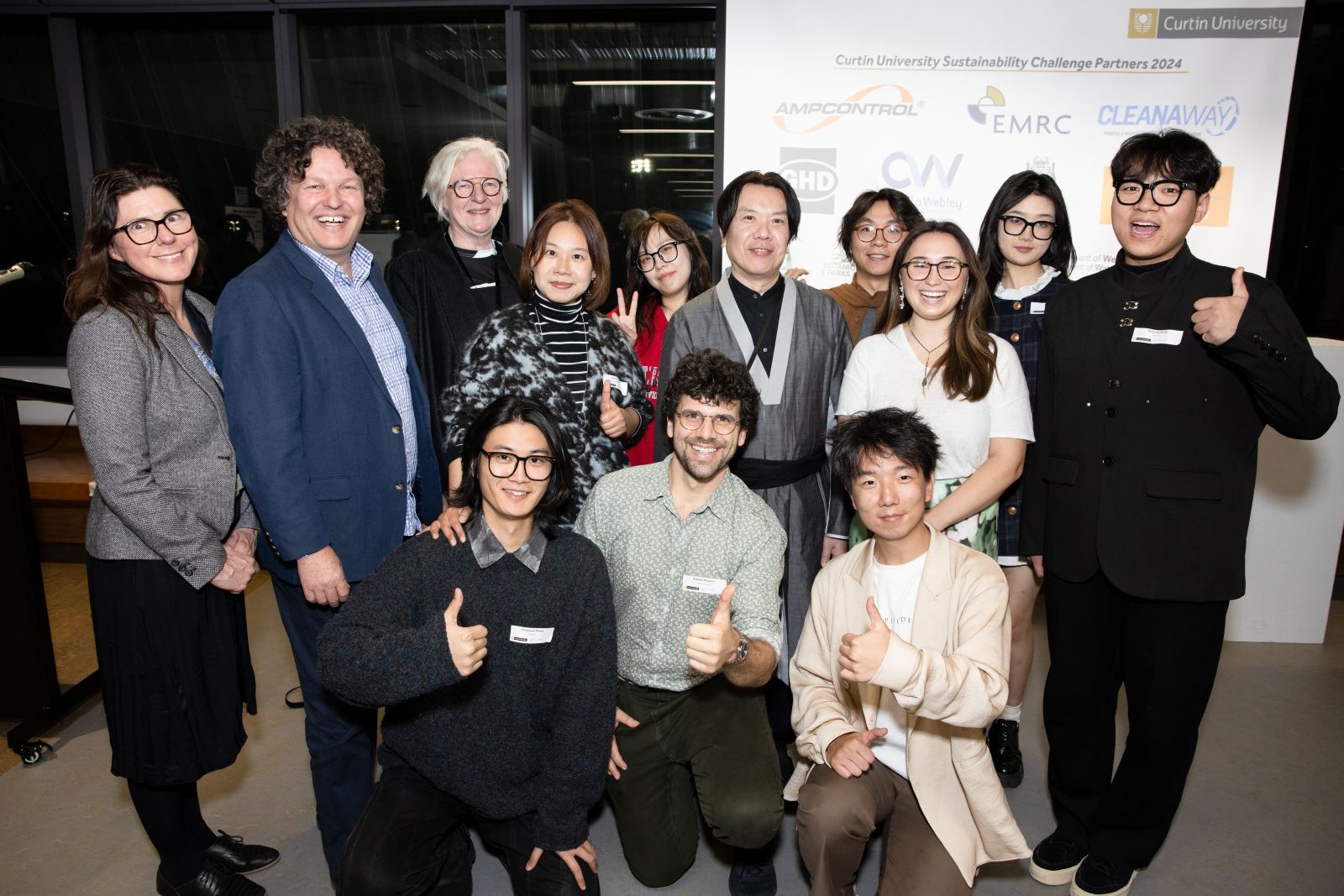
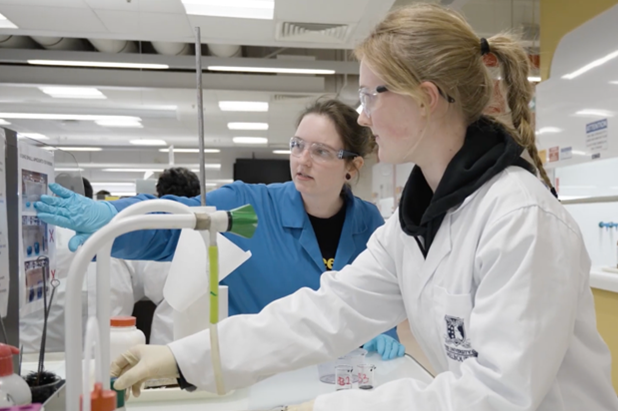
Curtin University’s Sustainability Challenge is an intensive, credit-bearing, challenge-based learning unit that equips students with the skills, confidence and experience to respond to complex sustainability problems. Delivered over one week during the mid-year trimester break, the program brings together students from across disciplines to work in interdisciplinary teams on real sustainability briefs posed by industry, government, community and university partners.
Structured around the themes of climate action, circular economy and nature positive outcomes, the Challenge mirrors professional sustainability practice. Students work under genuine time pressure, receive mentoring from academic and industry experts, and present their solutions at a public showcase attended by partners, university staff and community members.
Since 2022, the domestic Sustainability Challenge has engaged 500 students and 30 partners. Its companion Global Sustainability Challenge has connected students from Curtin campuses across Australia, Singapore, Sri Lanka, Mauritius, Malaysia and Dubai, demonstrating the model’s international relevance and scalability.
Impacts & Benefits
- Engaged 500 students since 2022, with participation growing from 93 students in 2022 to 150 in 2026.
- Built sustainability capability across disciplines, with 2025 participants representing 22 degree programs across engineering, architecture, design, health sciences, commerce, urban planning and humanities (and similar in 2026).
- Supported equitable access to sustainability learning, with one in three participants from equity backgrounds.
- Delivered value to external and internal partners, including proposals on decarbonisation, circular economy, biodiversity, waste avoidance and resource recovery, housing, transport and campus climate resilience.
- Expanded internationally, with the Global Sustainability Challenge delivered in Singapore and Dubai, and Sri Lanka being planned for 2026.
Leadership & Engagement
- Created a distinctive challenge-based learning model, combining academic credit, real partner briefs, interdisciplinary teamwork and public presentation.
- Embedded partners as co-educators, with industry, government, community and university partners briefing, mentoring and responding to student teams.
- Used a dual-brief structure, allowing students to work on either external sustainability challenges or campus-based problems with direct institutional relevance.
- Strengthened cross-faculty collaboration, involving academic and professional staff from Science and Engineering, Humanities, Business and Law, and other areas.
- Catalysed broader institutional change, informing other Futures Challenge intensives and supporting a growing community of practice around challenge-based learning.
Wider Societal Impact
- Prepared graduates to act on sustainability, giving students practical experience in systems thinking, collaboration, stakeholder engagement and communication.
- Provided fresh thinking for partners, giving industry, government and community organisations interdisciplinary responses to live sustainability challenges.
- Diversified the sustainability workforce pipeline, by supporting equity students to access industry-connected experiential learning.
- Created a replicable model for all disciplines, showing how sustainability capability can be embedded into any student’s degree without requiring specialist sustainability study.
- Extended sustainability problem-solving beyond campus, with past briefs addressing issues such as textile recycling, ferry decarbonisation, urban forest loss and low-carbon housing.


Top 3 learnings
Supported by
Category finalists
Next Generation Learning & Skills
Next Generation Learning & Skills

Next Generation Learning & Skills
Next Generation Learning & Skills
Next Generation Learning & Skills
Next Generation Learning & Skills

Next Generation Learning & Skills
Next Generation Learning & Skills
Next Generation Learning & Skills category
Curtin University’s Sustainability Challenge is an intensive, credit-bearing, challenge-based learning unit that equips students with the skills, confidence and experience to respond to complex sustainability problems. Delivered over one week during the mid-year trimester break, the program brings together students from across disciplines to work in interdisciplinary teams on real sustainability briefs posed by industry, government, community and university partners.
Structured around the themes of climate action, circular economy and nature positive outcomes, the Challenge mirrors professional sustainability practice. Students work under genuine time pressure, receive mentoring from academic and industry experts, and present their solutions at a public showcase attended by partners, university staff and community members.
Since 2022, the domestic Sustainability Challenge has engaged 500 students and 30 partners. Its companion Global Sustainability Challenge has connected students from Curtin campuses across Australia, Singapore, Sri Lanka, Mauritius, Malaysia and Dubai, demonstrating the model’s international relevance and scalability.
Top 3 learnings
Impacts & Benefits
- Engaged 500 students since 2022, with participation growing from 93 students in 2022 to 150 in 2026.
- Built sustainability capability across disciplines, with 2025 participants representing 22 degree programs across engineering, architecture, design, health sciences, commerce, urban planning and humanities (and similar in 2026).
- Supported equitable access to sustainability learning, with one in three participants from equity backgrounds.
- Delivered value to external and internal partners, including proposals on decarbonisation, circular economy, biodiversity, waste avoidance and resource recovery, housing, transport and campus climate resilience.
- Expanded internationally, with the Global Sustainability Challenge delivered in Singapore and Dubai, and Sri Lanka being planned for 2026.
Leadership & Engagement
- Created a distinctive challenge-based learning model, combining academic credit, real partner briefs, interdisciplinary teamwork and public presentation.
- Embedded partners as co-educators, with industry, government, community and university partners briefing, mentoring and responding to student teams.
- Used a dual-brief structure, allowing students to work on either external sustainability challenges or campus-based problems with direct institutional relevance.
- Strengthened cross-faculty collaboration, involving academic and professional staff from Science and Engineering, Humanities, Business and Law, and other areas.
- Catalysed broader institutional change, informing other Futures Challenge intensives and supporting a growing community of practice around challenge-based learning.
Wider Societal Impact
- Prepared graduates to act on sustainability, giving students practical experience in systems thinking, collaboration, stakeholder engagement and communication.
- Provided fresh thinking for partners, giving industry, government and community organisations interdisciplinary responses to live sustainability challenges.
- Diversified the sustainability workforce pipeline, by supporting equity students to access industry-connected experiential learning.
- Created a replicable model for all disciplines, showing how sustainability capability can be embedded into any student’s degree without requiring specialist sustainability study.
- Extended sustainability problem-solving beyond campus, with past briefs addressing issues such as textile recycling, ferry decarbonisation, urban forest loss and low-carbon housing.
Supported by
Category finalists
Next Generation Learning & Skills
Next Generation Learning & Skills
Next Generation Learning & Skills
Next Generation Learning & Skills
Next Generation Learning & Skills
Next Generation Learning & Skills
Next Generation Learning & Skills
Next Generation Learning & Skills