Staff Champion category
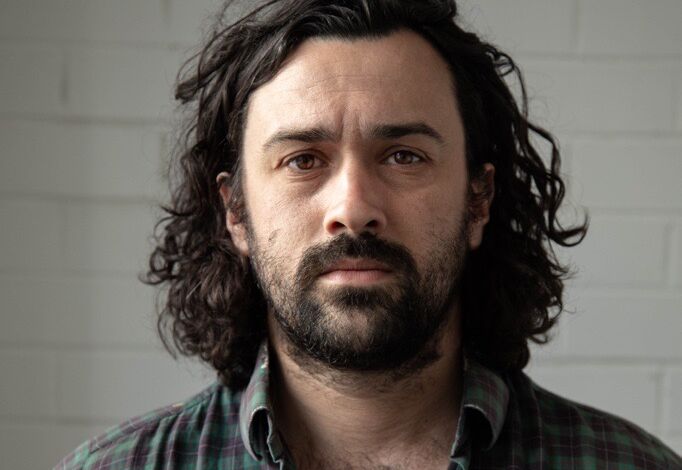
As Head of Operations for the Australian National University (ANU) Residential Experience Division, Millan Pintos-Lopez oversees the facilities and services that support more than 5,500 students living on campus. While sustainability is not a formal part of his role, Millan has made it central to his leadership, driving practical initiatives that reduce the environmental footprint of the ANU residential community.
Since taking on the role, Millan has led a suite of improvements across the residential estate, including redesigned end-of-year waste infrastructure, expanding reuse and donation pathways, adding recycling streams and a formal sustainability interface between the Division and its facilities management contractor. Through personal initiative and stakeholder collaboration, Millan is embedding sustainability into the everyday operations of campus residential life.
Impacts & Benefits
- Diverted significant waste from landfill, including an additional 16.79 tonnes of paper and cardboard annually through expanded recycling infrastructure.
- Expanded reuse and donation pathways, with end-of-year programs now operating across all ANU student accommodation, supporting a long-term decline in bulk waste.
- Reduced green waste impacts, with around 3 tonnes composted on-site each year and returned to the ANU landscape.
- Improved waste access for more than 5,000 residents, with better recycling and recovery infrastructure across all accommodation buildings.
- Embedded sustainability into residential operations to support ongoing improvement.
Leadership & Engagement
- Engaged a broad network of stakeholders, including hall leaders, contractors, catering and cleaning providers and more than 5,000 student residents.
- Led through practical, relationship-based action, working directly with operational teams to understand constraints and create workable sustainability solutions.
- Built coalitions across the residential estate, supporting local leaders and partners to contribute to shared environmental outcomes.
- Created a formal sustainability interface with its facilities management contractor.
- Aligned residential operations with ANU’s sustainability strategy, contributing data and initiatives to whole-of-institution environmental reporting.
Wider Societal Impact
- Supported sustainable habits for thousands of students, helping residents build everyday practices around recycling, reuse and responsible resource use.
- Made sustainable action easier and more visible, by embedding the right infrastructure across the residential living environment.
- Encouraged long-term behavioural change, with students carrying higher expectations for waste reduction and sustainability into future homes and workplaces.
- Demonstrated the influence of operational leadership, showing that sustainability outcomes can be driven from roles beyond formal sustainability positions.
- Provided a practical example for other facilities professionals, encouraging similar action across complex residential and institutional settings.

Top 3 learnings
Supported by

Category finalists
Staff Champion
Staff Champion
Staff Champion
Staff Champion
Staff Champion
Staff Champion
Staff Champion category
As Head of Operations for the Australian National University (ANU) Residential Experience Division, Millan Pintos-Lopez oversees the facilities and services that support more than 5,500 students living on campus. While sustainability is not a formal part of his role, Millan has made it central to his leadership, driving practical initiatives that reduce the environmental footprint of the ANU residential community.
Since taking on the role, Millan has led a suite of improvements across the residential estate, including redesigned end-of-year waste infrastructure, expanding reuse and donation pathways, adding recycling streams and a formal sustainability interface between the Division and its facilities management contractor. Through personal initiative and stakeholder collaboration, Millan is embedding sustainability into the everyday operations of campus residential life.
Top 3 learnings
Impacts & Benefits
- Diverted significant waste from landfill, including an additional 16.79 tonnes of paper and cardboard annually through expanded recycling infrastructure.
- Expanded reuse and donation pathways, with end-of-year programs now operating across all ANU student accommodation, supporting a long-term decline in bulk waste.
- Reduced green waste impacts, with around 3 tonnes composted on-site each year and returned to the ANU landscape.
- Improved waste access for more than 5,000 residents, with better recycling and recovery infrastructure across all accommodation buildings.
- Embedded sustainability into residential operations to support ongoing improvement.
Leadership & Engagement
- Engaged a broad network of stakeholders, including hall leaders, contractors, catering and cleaning providers and more than 5,000 student residents.
- Led through practical, relationship-based action, working directly with operational teams to understand constraints and create workable sustainability solutions.
- Built coalitions across the residential estate, supporting local leaders and partners to contribute to shared environmental outcomes.
- Created a formal sustainability interface with its facilities management contractor.
- Aligned residential operations with ANU’s sustainability strategy, contributing data and initiatives to whole-of-institution environmental reporting.
Wider Societal Impact
- Supported sustainable habits for thousands of students, helping residents build everyday practices around recycling, reuse and responsible resource use.
- Made sustainable action easier and more visible, by embedding the right infrastructure across the residential living environment.
- Encouraged long-term behavioural change, with students carrying higher expectations for waste reduction and sustainability into future homes and workplaces.
- Demonstrated the influence of operational leadership, showing that sustainability outcomes can be driven from roles beyond formal sustainability positions.
- Provided a practical example for other facilities professionals, encouraging similar action across complex residential and institutional settings.
Supported by
Related finalists
Staff Champion
Staff Champion
Staff Champion
Staff Champion
Staff Champion
Staff Champion