Staff Champion category
Ibrahim Faseeh is the Manager, Research Operations at the Minderoo OceanOmics Centre at The University of Western Australia, where he oversees laboratory operations, safety, resource management, and sustainability initiatives within advanced wet laboratory research environments.
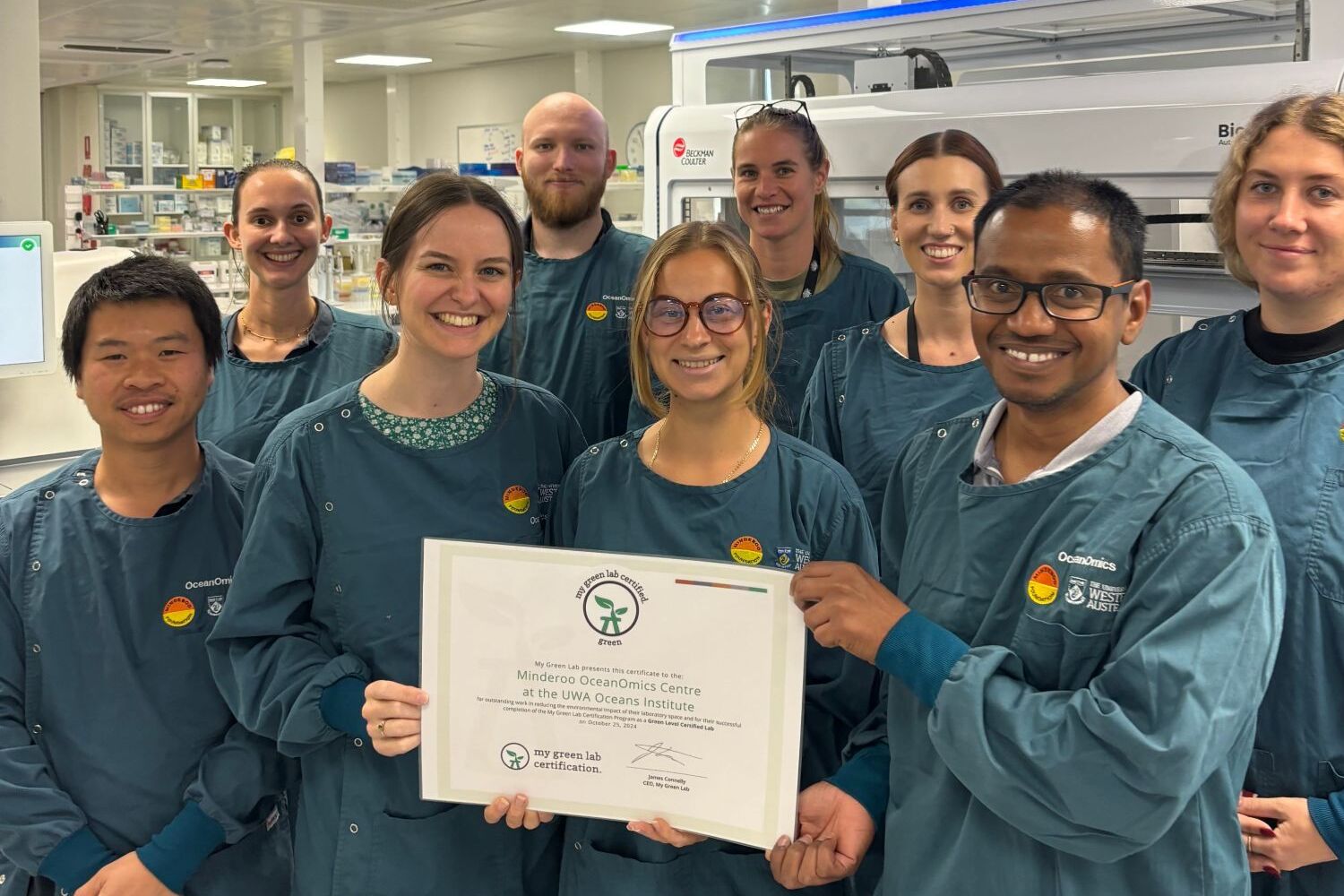
With a strong background in quality assurance, operational management, and regulatory compliance in life science research, Ibrahim is passionate about improving the environmental sustainability of research laboratories through practical and evidence-based solutions. He has led the implementation of internationally recognised laboratory sustainability frameworks, helping the OceanOmics Centre become the first research laboratory in Western Australia to achieve My Green Lab Green certification and the first laboratory at UWA to achieve LEAF Gold certification.
Through collaboration, staff engagement, and operational leadership, Ibrahim continues to champion sustainable laboratory practices and contribute to broader institutional sustainability initiatives across the university sector.
Impacts & Benefits
- Significantly reduced laboratory waste, increasing single-use plastic recycling from around 20% to 80% and diverting hundreds of kilograms from landfill each year.
- Reduced resource consumption, including an estimated 150,000 fewer pipette tips used annually.
- Cut energy use and costs, with freezer temperature changes and shutdown procedures reducing emissions, electricity use and operating expenses.
- Achieved sector-leading certifications, with OceanOmics becoming the first WA laboratory to achieve My Green Lab Green certification and UWA’s first LEAF Gold-certified lab.
- Inspired wider change, helping drive LEAF adoption across more than 10 UWA laboratories and embedding sustainability into everyday research practice.
Leadership & Engagement
- Championed sustainability beyond his formal role, leading change in a specialised research environment without an existing laboratory sustainability framework.
- Embedded sustainability into daily lab operations, showing that environmental improvements can be achieved without compromising research quality, safety or productivity.
- Built collaboration and shared ownership across researchers, students, lab staff, waste contractors and UWA sustainability teams.
- Challenged traditional lab waste practices by improving understanding of material recovery pathways and directing waste to better outcomes.
- Created a practical model for sustainable laboratories, helping demonstrate how recognised frameworks can be implemented across Australian research settings.
Wider Societal Impact
- Demonstrated that specialised research environments can reduce their impact without compromising scientific outcomes, safety or efficiency.
- Created a practical model for sustainable laboratories that can be adapted by other institutions nationally and internationally.
- Built sustainability awareness among researchers, students and staff, helping shape a future workforce focused on resource efficiency and environmental stewardship.
- Strengthened collaboration and lab culture by engaging staff around a shared sustainability goal.
- Supported sector-wide momentum, contributing to the rollout of LEAF across UWA, with more than 20 labs participating and 10 achieving certification.

Top 3 learnings
Supported by

Category finalists
Staff Champion
Staff Champion
Staff Champion
Staff Champion
Staff Champion
Staff Champion
Staff Champion category
Ibrahim Faseeh is the Manager, Research Operations at the Minderoo OceanOmics Centre at The University of Western Australia, where he oversees laboratory operations, safety, resource management, and sustainability initiatives within advanced wet laboratory research environments.
With a strong background in quality assurance, operational management, and regulatory compliance in life science research, Ibrahim is passionate about improving the environmental sustainability of research laboratories through practical and evidence-based solutions. He has led the implementation of internationally recognised laboratory sustainability frameworks, helping the OceanOmics Centre become the first research laboratory in Western Australia to achieve My Green Lab Green certification and the first laboratory at UWA to achieve LEAF Gold certification.
Through collaboration, staff engagement, and operational leadership, Ibrahim continues to champion sustainable laboratory practices and contribute to broader institutional sustainability initiatives across the university sector.
Top 3 learnings
Impacts & Benefits
- Significantly reduced laboratory waste, increasing single-use plastic recycling from around 20% to 80% and diverting hundreds of kilograms from landfill each year.
- Reduced resource consumption, including an estimated 150,000 fewer pipette tips used annually.
- Cut energy use and costs, with freezer temperature changes and shutdown procedures reducing emissions, electricity use and operating expenses.
- Achieved sector-leading certifications, with OceanOmics becoming the first WA laboratory to achieve My Green Lab Green certification and UWA’s first LEAF Gold-certified lab.
- Inspired wider change, helping drive LEAF adoption across more than 10 UWA laboratories and embedding sustainability into everyday research practice.
Leadership & Engagement
- Championed sustainability beyond his formal role, leading change in a specialised research environment without an existing laboratory sustainability framework.
- Embedded sustainability into daily lab operations, showing that environmental improvements can be achieved without compromising research quality, safety or productivity.
- Built collaboration and shared ownership across researchers, students, lab staff, waste contractors and UWA sustainability teams.
- Challenged traditional lab waste practices by improving understanding of material recovery pathways and directing waste to better outcomes.
- Created a practical model for sustainable laboratories, helping demonstrate how recognised frameworks can be implemented across Australian research settings.
Wider Societal Impact
- Demonstrated that specialised research environments can reduce their impact without compromising scientific outcomes, safety or efficiency.
- Created a practical model for sustainable laboratories that can be adapted by other institutions nationally and internationally.
- Built sustainability awareness among researchers, students and staff, helping shape a future workforce focused on resource efficiency and environmental stewardship.
- Strengthened collaboration and lab culture by engaging staff around a shared sustainability goal.
- Supported sector-wide momentum, contributing to the rollout of LEAF across UWA, with more than 20 labs participating and 10 achieving certification.
Supported by
Related finalists
Staff Champion
Staff Champion
Staff Champion
Staff Champion
Staff Champion
Staff Champion