Powerful Partnerships category
Victoria University’s ‘Stopping Broken Powerlines Before They Spark Disaster’ is an eight-year partnership with Powercor addressing a critical bushfire protection gap in rural and regional electricity infrastructure. The project responds to the risks posed by ageing Single Wire Earth Return powerlines, which supply electricity across approximately 200,000 kilometres of rural and regional Australia and can ignite vegetation if they break while energised.
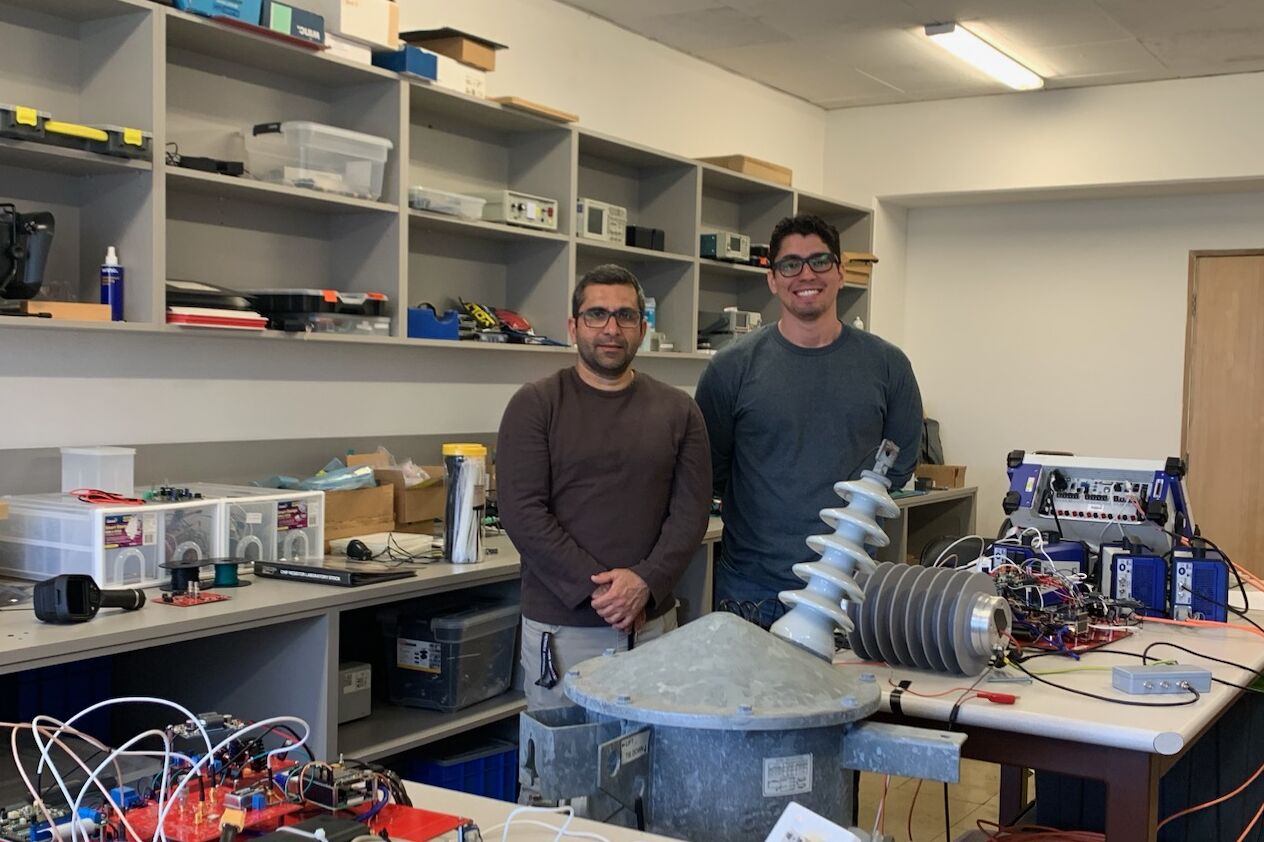
Led by Dr Douglas Gomes, the partnership has developed the only proven detection system globally capable of identifying a broken SWER powerline before it reaches the ground. Within approximately one second, the system can send a signal to cut power during the critical ignition window, helping reduce the risk of infrastructure-linked bushfires.
The initiative combines Victoria University’s research capability with Powercor’s live-network access, operational expertise and field crews. Now trialled across five regional Victorian SWER networks and moving towards rollout across ten additional networks by 2027, the project demonstrates how sustained university–industry collaboration can deliver practical climate resilience and public safety outcomes.
Impacts & Benefits
- Developed a world-first broken-line detection system for SWER powerlines, addressing a long-standing bushfire protection gap.
- Trialled the technology across five regional Victorian networks, with continuous operation in active regional networks since 2023.
- Created a scalable, low-cost protection pathway, achieving deployment costs of approximately $1,500 per kilometre, well below the $5,000 target.
- Supported bushfire risk reduction, helping protect rural communities, ecosystems, farmland, homes and essential services.
- Generated broader operational value, including live-network datasets, cloud monitoring systems and potential future applications in fault localisation and asset diagnostics.
Leadership & Engagement
- Sustained an eight-year university–industry partnership, with Victoria University and Powercor working together from research development through to live-network trials.
- Integrated research with operational reality, using field logistics, safety requirements, communications reliability and installation constraints to shape the technology.
- Expanded collaboration across the electricity sector, involving Powercor, AusNet Services, United Energy, government programs and commercialisation partners.
- Built research translation capability, progressing from laboratory simulation to live deployment, patent activity, manufacturable hardware and commercialisation planning.
- Created opportunities for students and researchers, with 10–15 Victoria University staff, HDR students and researchers contributing to testing, software, engineering and deployment.
Wider Societal Impact
- Addresses a major public safety challenge, reducing the risk of powerline-related bushfires in communities increasingly exposed to climate-driven fire risk.
- Supports regional resilience and reliability, enabling faster fault identification, reduced outage impacts and stronger emergency preparedness.
- Protects environmental and community assets, helping avoid damage to ecosystems, biodiversity, homes, farmland and infrastructure.
- Offers national and international scalability, with relevance to SWER networks across Australia and countries including New Zealand, Canada, Brazil, South Africa and the United States.
- Demonstrates the value of applied research partnerships, showing how universities and industry can translate innovation into practical climate adaptation solutions.


Top 3 learnings
Supported by

Category finalists
Powerful Partnerships
Powerful Partnerships
Powerful Partnerships
Powerful Partnerships
Powerful Partnerships
Powerful Partnerships
Powerful Partnerships
Powerful Partnerships
Powerful Partnerships
Powerful Partnerships
Powerful Partnerships category
Victoria University’s ‘Stopping Broken Powerlines Before They Spark Disaster’ is an eight-year partnership with Powercor addressing a critical bushfire protection gap in rural and regional electricity infrastructure. The project responds to the risks posed by ageing Single Wire Earth Return powerlines, which supply electricity across approximately 200,000 kilometres of rural and regional Australia and can ignite vegetation if they break while energised.
Led by Dr Douglas Gomes, the partnership has developed the only proven detection system globally capable of identifying a broken SWER powerline before it reaches the ground. Within approximately one second, the system can send a signal to cut power during the critical ignition window, helping reduce the risk of infrastructure-linked bushfires.
The initiative combines Victoria University’s research capability with Powercor’s live-network access, operational expertise and field crews. Now trialled across five regional Victorian SWER networks and moving towards rollout across ten additional networks by 2027, the project demonstrates how sustained university–industry collaboration can deliver practical climate resilience and public safety outcomes.
Top 3 learnings
Impacts & Benefits
- Developed a world-first broken-line detection system for SWER powerlines, addressing a long-standing bushfire protection gap.
- Trialled the technology across five regional Victorian networks, with continuous operation in active regional networks since 2023.
- Created a scalable, low-cost protection pathway, achieving deployment costs of approximately $1,500 per kilometre, well below the $5,000 target.
- Supported bushfire risk reduction, helping protect rural communities, ecosystems, farmland, homes and essential services.
- Generated broader operational value, including live-network datasets, cloud monitoring systems and potential future applications in fault localisation and asset diagnostics.
Leadership & Engagement
- Sustained an eight-year university–industry partnership, with Victoria University and Powercor working together from research development through to live-network trials.
- Integrated research with operational reality, using field logistics, safety requirements, communications reliability and installation constraints to shape the technology.
- Expanded collaboration across the electricity sector, involving Powercor, AusNet Services, United Energy, government programs and commercialisation partners.
- Built research translation capability, progressing from laboratory simulation to live deployment, patent activity, manufacturable hardware and commercialisation planning.
- Created opportunities for students and researchers, with 10–15 Victoria University staff, HDR students and researchers contributing to testing, software, engineering and deployment.
Wider Societal Impact
- Addresses a major public safety challenge, reducing the risk of powerline-related bushfires in communities increasingly exposed to climate-driven fire risk.
- Supports regional resilience and reliability, enabling faster fault identification, reduced outage impacts and stronger emergency preparedness.
- Protects environmental and community assets, helping avoid damage to ecosystems, biodiversity, homes, farmland and infrastructure.
- Offers national and international scalability, with relevance to SWER networks across Australia and countries including New Zealand, Canada, Brazil, South Africa and the United States.
- Demonstrates the value of applied research partnerships, showing how universities and industry can translate innovation into practical climate adaptation solutions.
Supported by
Category finalists
Powerful Partnerships
Powerful Partnerships
Powerful Partnerships
Powerful Partnerships
Powerful Partnerships
Powerful Partnerships
Powerful Partnerships
Powerful Partnerships
Powerful Partnerships
Powerful Partnerships