Powerful Partnerships category
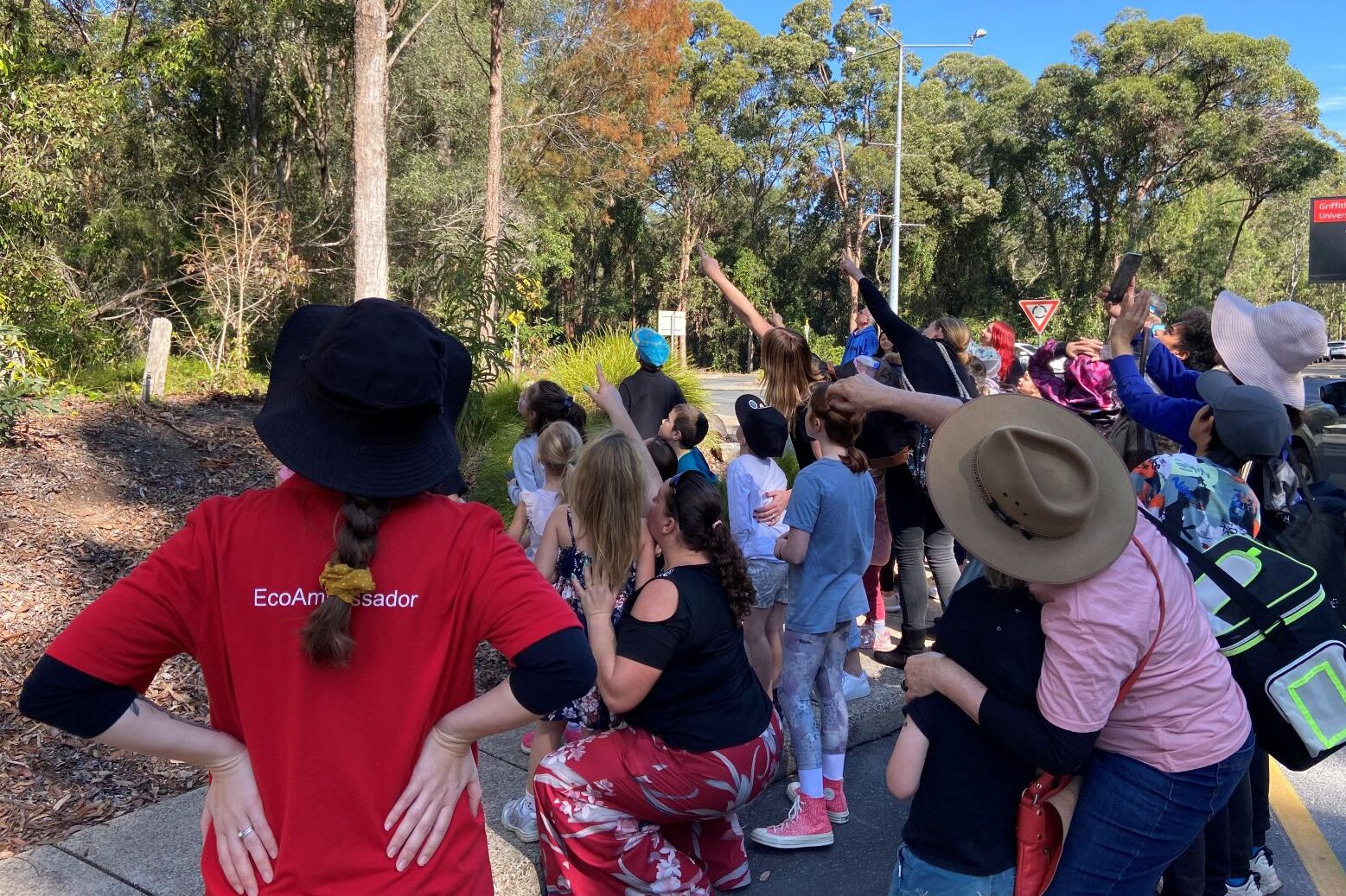
Griffith University’s EcoCentre partnership is a 25-year collaboration with the Queensland Department of Education that connects P–12 education, tertiary learning, environmental research and community engagement through place-based sustainability education. Located on the remnant ecosystems of Toohey Forest at Griffith’s Brisbane South campus, the partnership provides a living laboratory where school students, university students, educators and community members engage directly with biodiversity, climate and sustainability challenges.
The partnership delivers hands-on co-designed programs, shared governance and joint investment, which have sustained the partnership across changing educational and environmental needs. By integrating curriculum development, teacher capability building, community outreach, biodiversity monitoring, sustainable infrastructure and campus stewardship, the EcoCentre Partnership demonstrates how long-term cross-sector collaboration can strengthen environmental literacy, support STEM pathways and inspire lifelong sustainability action.
Impacts & Benefits
- Engages close to 10,000 P–12 students annually, from more than 100 schools.
- Provides strong educational outcomes, with over 90% of visiting teachers very satisfied and 100% confirming programs meet curriculum requirements.
- Builds university student capability, with more than 30 undergraduate and Honours students employed through EcoCentre programs, alongside Work Integrated Learning and EcoAmbassador opportunities.
- Strengthens community connection to nature, with EcoTours, BioBlitz events and wildlife education increasing awareness of Toohey Forest’s biodiversity.
- Supports biodiversity and environmental stewardship, including habitat restoration, koala conservation, native planting, water-sensitive urban design and citizen science records of local species.
Leadership & Engagement
- Sustained a 25-year cross-sector partnership, built on trust, co-design, shared governance and joint investment between Griffith University and the Queensland Department of Education.
- Created a continuous learning pathway, connecting Prep–12 students with tertiary study, research, community engagement and sustainability careers.
- Used Toohey Forest as a living laboratory, integrating teaching, research, operations and public engagement in a rare remnant urban ecosystem.
- Strengthened teacher and student capability, through professional development, curriculum-aligned field learning, student employment and sustainability projects.
- Expanded engagement through community partnerships, involving local government, conservation groups, community organisations, researchers and environmental practitioners.
Wider Societal Impact
- Improved public understanding of local ecosystems, connecting people of all ages with Toohey Forest’s endangered ecosystems and urban biodiversity.
- Supported environmental literacy at scale, helping young people, teachers and community members build practical knowledge, confidence and stewardship.
- Influenced broader sustainability education practice, including contributing to the design and educational approach of the Karawatha Discovery Centre.
- Created a transferable model for place-based learning, relevant to schools, universities, community organisations, local government and conservation sectors.
- Strengthened community resilience and wellbeing, by making nature-based learning accessible in a rapidly urbanising region and encouraging shared responsibility for local natural assets.


Top 3 learnings
Supported by

Category finalists
Powerful Partnerships
Powerful Partnerships
Powerful Partnerships
Powerful Partnerships
Powerful Partnerships
Powerful Partnerships
Powerful Partnerships
Powerful Partnerships
Powerful Partnerships
Powerful Partnerships
Powerful Partnerships category
Griffith University’s EcoCentre partnership is a 25-year collaboration with the Queensland Department of Education that connects P–12 education, tertiary learning, environmental research and community engagement through place-based sustainability education. Located on the remnant ecosystems of Toohey Forest at Griffith’s Brisbane South campus, the partnership provides a living laboratory where school students, university students, educators and community members engage directly with biodiversity, climate and sustainability challenges.
The partnership delivers hands-on co-designed programs, shared governance and joint investment, which have sustained the partnership across changing educational and environmental needs. By integrating curriculum development, teacher capability building, community outreach, biodiversity monitoring, sustainable infrastructure and campus stewardship, the EcoCentre Partnership demonstrates how long-term cross-sector collaboration can strengthen environmental literacy, support STEM pathways and inspire lifelong sustainability action.
Top 3 learnings
Impacts & Benefits
- Engages close to 10,000 P–12 students annually, from more than 100 schools.
- Provides strong educational outcomes, with over 90% of visiting teachers very satisfied and 100% confirming programs meet curriculum requirements.
- Builds university student capability, with more than 30 undergraduate and Honours students employed through EcoCentre programs, alongside Work Integrated Learning and EcoAmbassador opportunities.
- Strengthens community connection to nature, with EcoTours, BioBlitz events and wildlife education increasing awareness of Toohey Forest’s biodiversity.
- Supports biodiversity and environmental stewardship, including habitat restoration, koala conservation, native planting, water-sensitive urban design and citizen science records of local species.
Leadership & Engagement
- Sustained a 25-year cross-sector partnership, built on trust, co-design, shared governance and joint investment between Griffith University and the Queensland Department of Education.
- Created a continuous learning pathway, connecting Prep–12 students with tertiary study, research, community engagement and sustainability careers.
- Used Toohey Forest as a living laboratory, integrating teaching, research, operations and public engagement in a rare remnant urban ecosystem.
- Strengthened teacher and student capability, through professional development, curriculum-aligned field learning, student employment and sustainability projects.
- Expanded engagement through community partnerships, involving local government, conservation groups, community organisations, researchers and environmental practitioners.
Wider Societal Impact
- Improved public understanding of local ecosystems, connecting people of all ages with Toohey Forest’s endangered ecosystems and urban biodiversity.
- Supported environmental literacy at scale, helping young people, teachers and community members build practical knowledge, confidence and stewardship.
- Influenced broader sustainability education practice, including contributing to the design and educational approach of the Karawatha Discovery Centre.
- Created a transferable model for place-based learning, relevant to schools, universities, community organisations, local government and conservation sectors.
- Strengthened community resilience and wellbeing, by making nature-based learning accessible in a rapidly urbanising region and encouraging shared responsibility for local natural assets.
Supported by
Category finalists
Powerful Partnerships
Powerful Partnerships
Powerful Partnerships
Powerful Partnerships
Powerful Partnerships
Powerful Partnerships
Powerful Partnerships
Powerful Partnerships
Powerful Partnerships
Powerful Partnerships