Powerful Partnerships category
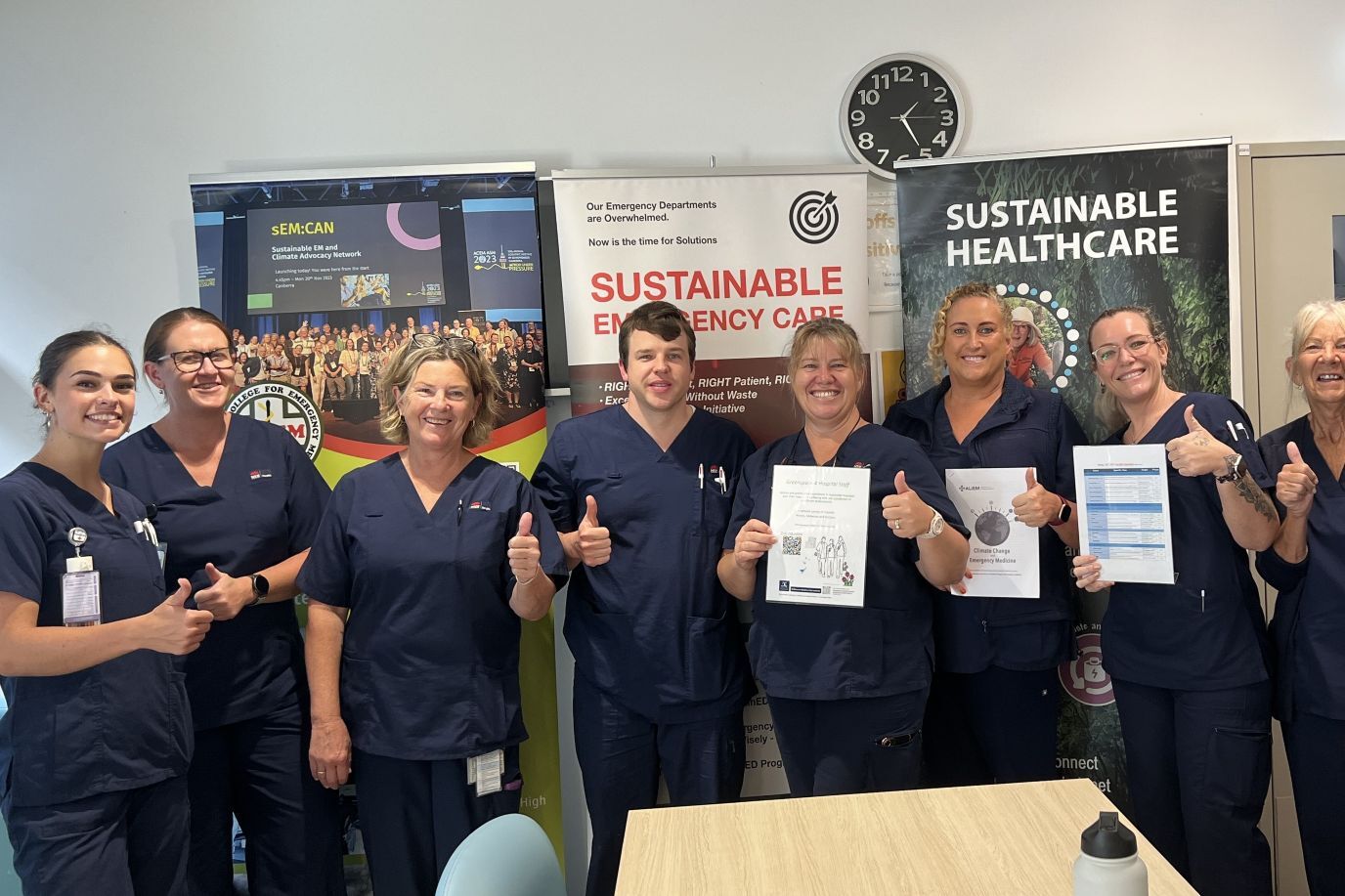
The University of Melbourne’s Health Service Environmental Sustainability Competition is a cross-sector partnership supporting health service staff to design and deliver sustainable healthcare quality improvement projects. Led by the Melbourne Medical School Sustainable Healthcare Team and delivered with university-affiliated health services, the competition combines training, practical tools, local support, impact measurement and recognition to help staff improve care while reducing emissions, waste and costs.
The competition began at the Royal Melbourne Hospital in 2022, expanded to three health services in 2023–2024, and now involves eight participating health services in 2025/26. Through the University’s Sustainability in Quality Improvement (SusQI) expertise, participants receive guidance to identify opportunities, assess impacts and implement practical changes within clinical and operational settings.
Over four years, 76 projects have been submitted, collectively delivering site-reported savings of almost $3 million, approximately 3,700 tCO₂e avoided, 69 tonnes of waste diverted and more than 800,000 items kept from landfill. The partnership demonstrates how universities and health services can work together to build sustainable healthcare capability and scale local innovation.
Impacts & Benefits
- Built University’s teaching and training capacity related to sustainability in health systems quality improvement.
- Delivered major environmental outcomes, avoiding approximately 3,700 tCO₂e, diverting 69 tonnes of waste and keeping more than 800,000 items from landfill.
- Generated almost $3 million in site-reported savings across participating projects over four years.
- Supported 76 staff-led sustainability projects, including 44 projects across the first three years and 32 in the 2025/26 round.
- Reduced low-value resource use in healthcare, including unnecessary IV fluids, PPE, blood gas sampling, oral nutrition supplements and single-use items.
- Improved care quality and staff capability, with projects reducing unnecessary interventions, improving clinical decision-making and strengthening sustainable quality improvement skills.
Leadership & Engagement
- Built a practical university–health service partnership model, combining University of Melbourne coordination oversight, training and measurement support with local health service leadership.
- Expanded from one health service to eight, including the Royal Melbourne Hospital.
- Embedded Sustainability in Quality Improvement training, including a full-day SusQI workshop, attended by 44 participants in 2025.
- Supported cross-site learning and replication, using shared resources, case studies, judging, recognition and published project examples.
- Influenced broader healthcare sustainability programs, inspiring the Safer Care Victoria and Climate Health Victoria SQuDs-ED program and further bespoke SusQI training.
- Facilitated preparation of health services for the mandatory introduction of the Australian Commission on Safety and Quality in Health Care’s Healthcare Sustainability and Resilience Module.
Wider Societal Impact
- Contributed to lower-impact healthcare, helping services reduce emissions, waste and unnecessary resource use while maintaining or improving quality of care.
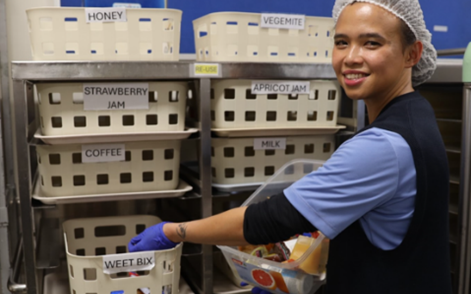
- Created community benefit through reuse and donation, including food recycling, ice pack reuse and partnerships supporting people with disability.
- Built workforce capability for sustainable healthcare, equipping clinical and non-clinical staff with skills increasingly needed across health systems.
- Normalised sustainability as part of quality care, showing that environmental improvement can align with patient safety, cost reduction and better clinical practice.
- Created a scalable model beyond Victoria, with tools, training and published learnings relevant to health services and learning providers nationally.

Top 3 learnings
Supported by

Category finalists
Powerful Partnerships
Powerful Partnerships
Powerful Partnerships
Powerful Partnerships
Powerful Partnerships
Powerful Partnerships
Powerful Partnerships
Powerful Partnerships
Powerful Partnerships
Powerful Partnerships
Powerful Partnerships category
The University of Melbourne’s Health Service Environmental Sustainability Competition is a cross-sector partnership supporting health service staff to design and deliver sustainable healthcare quality improvement projects. Led by the Melbourne Medical School Sustainable Healthcare Team and delivered with university-affiliated health services, the competition combines training, practical tools, local support, impact measurement and recognition to help staff improve care while reducing emissions, waste and costs.
The competition began at the Royal Melbourne Hospital in 2022, expanded to three health services in 2023–2024, and now involves eight participating health services in 2025/26. Through the University’s Sustainability in Quality Improvement (SusQI) expertise, participants receive guidance to identify opportunities, assess impacts and implement practical changes within clinical and operational settings.
Over four years, 76 projects have been submitted, collectively delivering site-reported savings of almost $3 million, approximately 3,700 tCO₂e avoided, 69 tonnes of waste diverted and more than 800,000 items kept from landfill. The partnership demonstrates how universities and health services can work together to build sustainable healthcare capability and scale local innovation.
Top 3 learnings
Impacts & Benefits
- Built University’s teaching and training capacity related to sustainability in health systems quality improvement.
- Delivered major environmental outcomes, avoiding approximately 3,700 tCO₂e, diverting 69 tonnes of waste and keeping more than 800,000 items from landfill.
- Generated almost $3 million in site-reported savings across participating projects over four years.
- Supported 76 staff-led sustainability projects, including 44 projects across the first three years and 32 in the 2025/26 round.
- Reduced low-value resource use in healthcare, including unnecessary IV fluids, PPE, blood gas sampling, oral nutrition supplements and single-use items.
- Improved care quality and staff capability, with projects reducing unnecessary interventions, improving clinical decision-making and strengthening sustainable quality improvement skills.
Leadership & Engagement
- Built a practical university–health service partnership model, combining University of Melbourne coordination oversight, training and measurement support with local health service leadership.
- Expanded from one health service to eight, including the Royal Melbourne Hospital.
- Embedded Sustainability in Quality Improvement training, including a full-day SusQI workshop, attended by 44 participants in 2025.
- Supported cross-site learning and replication, using shared resources, case studies, judging, recognition and published project examples.
- Influenced broader healthcare sustainability programs, inspiring the Safer Care Victoria and Climate Health Victoria SQuDs-ED program and further bespoke SusQI training.
- Facilitated preparation of health services for the mandatory introduction of the Australian Commission on Safety and Quality in Health Care’s Healthcare Sustainability and Resilience Module.
Wider Societal Impact
- Contributed to lower-impact healthcare, helping services reduce emissions, waste and unnecessary resource use while maintaining or improving quality of care.
- Created community benefit through reuse and donation, including food recycling, ice pack reuse and partnerships supporting people with disability.
- Built workforce capability for sustainable healthcare, equipping clinical and non-clinical staff with skills increasingly needed across health systems.
- Normalised sustainability as part of quality care, showing that environmental improvement can align with patient safety, cost reduction and better clinical practice.
- Created a scalable model beyond Victoria, with tools, training and published learnings relevant to health services and learning providers nationally.
Supported by
Category finalists
Powerful Partnerships
Powerful Partnerships
Powerful Partnerships
Powerful Partnerships
Powerful Partnerships
Powerful Partnerships
Powerful Partnerships
Powerful Partnerships
Powerful Partnerships
Powerful Partnerships