Benefitting Society category
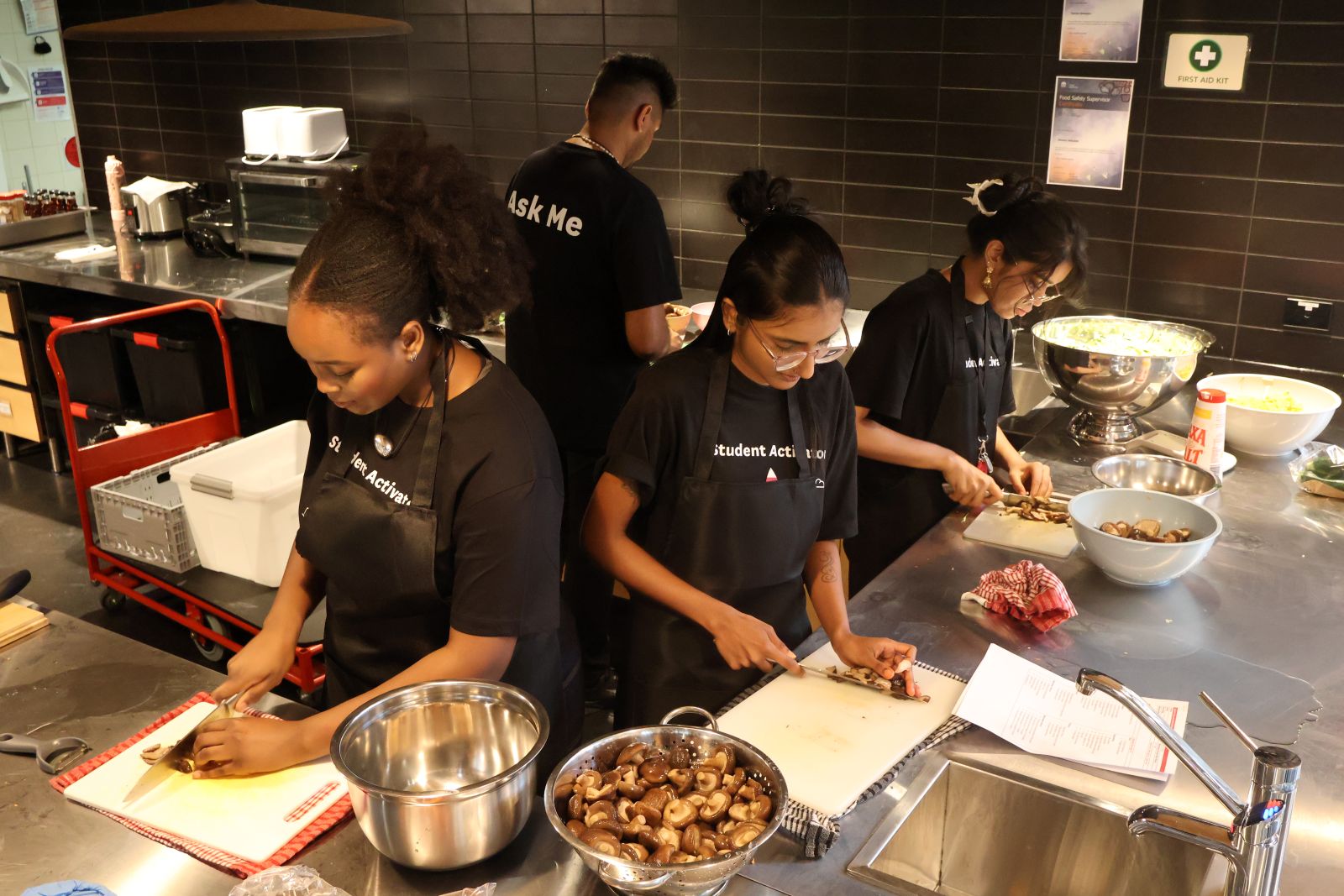
Macquarie University’s Food Hub is a holistic, student-focused initiative addressing rising food insecurity through free and low-cost food access, food literacy, and sustainable food redistribution. The program has evolved from a small breakfast service into a centralised hub offering grocery pick-ups, breakfast and lunch support, cooking workshops, exam-period dinners, Christmas hampers and seasonal support.
By combining immediate food relief with cooking skills, nutrition literacy, community connection and food waste reduction, the Macquarie University Food Hub demonstrates a scalable model for supporting student wellbeing while building more sustainable and resilient food systems.
Impacts & Benefits
- Supported 3,345 unique students, delivering more than 20,420 Food Hub service engagements since 2025.
- Enabled 14,492 grocery pick-up visits, providing students with consistent access to nutritious food and pantry staples.
- Redistributed 2,610 kg of fresh produce and 1,320 loaves of bread, preventing edible food from going to landfill.
- Generated more than $22,000 in rescued food value, delivering around four times the value of direct grocery spend per student visit.
- Built food literacy and life skills, through cooking workshops, nutrition education and sustainable food-use activities.
Leadership & Engagement
- Created a holistic food support model, combining groceries, meals, cooking workshops, food literacy and community connection.
- Engaged a large delivery network, including around 70 Student Belonging Activators, 20 regular staff and 96 faculty staff contributing to Christmas hampers.
- Built strong external partnerships, working with organisations such as Foodbank, One Fruit Box, Beyond Best Before, MILKLAB, Cocobella, KitKat and Vinnies.
- Extended impact beyond campus, through a student-led cooking initiative with Vinnies that shares prepared meals with both students and the wider community.
- Shifted food support from transactional relief to community building, creating spaces for cultural food exchange, shared meals and student connection.
Wider Societal Impact
- Reduced food waste through rescue and redistribution, keeping safe surplus food in productive use and supporting more sustainable resource use.
- Addressed student food insecurity, helping students access nutritious food so they can better focus on study, wellbeing and participation.
- Built long-term student capability, with cooking and nutrition skills that students can carry into households, workplaces and communities.
- Created a replicable model for learning providers, showing how universities can combine food relief, education, partnerships and volunteering.
- Supported broader community need, with Vinnies collaboration extending the Food Hub’s impact beyond Macquarie University into the Sydney community.



Top 3 learnings
Supported by

Category finalists
Benefitting Society
Benefitting Society
Benefitting Society
Benefitting Society
Benefitting Society
Benefitting Society
Benefitting Society
Benefitting Society
Benefitting Society category
Macquarie University’s Food Hub is a holistic, student-focused initiative addressing rising food insecurity through free and low-cost food access, food literacy, and sustainable food redistribution. The program has evolved from a small breakfast service into a centralised hub offering grocery pick-ups, breakfast and lunch support, cooking workshops, exam-period dinners, Christmas hampers and seasonal support.
By combining immediate food relief with cooking skills, nutrition literacy, community connection and food waste reduction, the Macquarie University Food Hub demonstrates a scalable model for supporting student wellbeing while building more sustainable and resilient food systems.
Top 3 learnings
Impacts & Benefits
- Supported 3,345 unique students, delivering more than 20,420 Food Hub service engagements since 2025.
- Enabled 14,492 grocery pick-up visits, providing students with consistent access to nutritious food and pantry staples.
- Redistributed 2,610 kg of fresh produce and 1,320 loaves of bread, preventing edible food from going to landfill.
- Generated more than $22,000 in rescued food value, delivering around four times the value of direct grocery spend per student visit.
- Built food literacy and life skills, through cooking workshops, nutrition education and sustainable food-use activities.
Leadership & Engagement
- Created a holistic food support model, combining groceries, meals, cooking workshops, food literacy and community connection.
- Engaged a large delivery network, including around 70 Student Belonging Activators, 20 regular staff and 96 faculty staff contributing to Christmas hampers.
- Built strong external partnerships, working with organisations such as Foodbank, One Fruit Box, Beyond Best Before, MILKLAB, Cocobella, KitKat and Vinnies.
- Extended impact beyond campus, through a student-led cooking initiative with Vinnies that shares prepared meals with both students and the wider community.
- Shifted food support from transactional relief to community building, creating spaces for cultural food exchange, shared meals and student connection.
Wider Societal Impact
- Reduced food waste through rescue and redistribution, keeping safe surplus food in productive use and supporting more sustainable resource use.
- Addressed student food insecurity, helping students access nutritious food so they can better focus on study, wellbeing and participation.
- Built long-term student capability, with cooking and nutrition skills that students can carry into households, workplaces and communities.
- Created a replicable model for learning providers, showing how universities can combine food relief, education, partnerships and volunteering.
- Supported broader community need, with Vinnies collaboration extending the Food Hub’s impact beyond Macquarie University into the Sydney community.
Supported by
Category finalists
Benefitting Society
Benefitting Society
Benefitting Society
Benefitting Society
Benefitting Society
Benefitting Society
Benefitting Society
Benefitting Society