Nature Positive category
UNSW Sydney’s Nature Positive initiative demonstrates how a major urban university can deliver measurable biodiversity improvement while continuing to grow. Through an institution-wide approach, UNSW has transformed biodiversity from a series of isolated greening projects into a measurable organisational performance outcome.
The initiative established a bespoke Nature Value metric, created a campus baseline, embedded biodiversity requirements into planning and operations, and introduced transparent governance, monitoring and reporting. By 2024, UNSW achieved its Environmental Sustainability Plan target of net gain in Nature Value across the Kensington campus and maintaining this result in 2025.
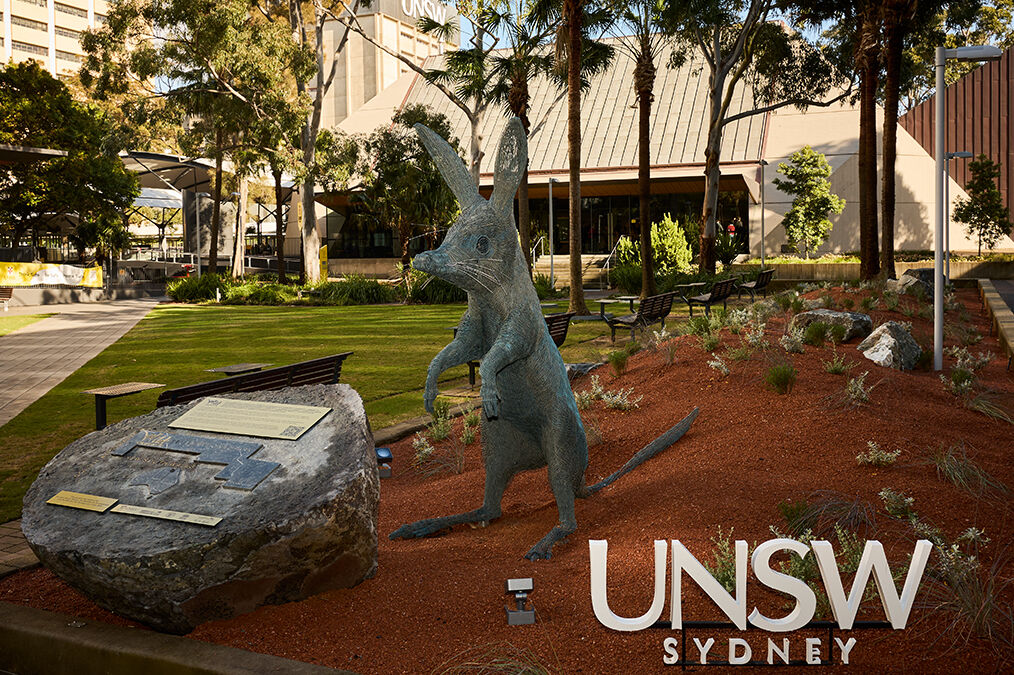
Key actions included converting the D14 building site into green space, expanding tree canopy, strengthening integrated green-blue infrastructure, supporting the Greater Bilby landscape and developing the Muru Mirrung Trail. Through its Nature Positive Roadmap, UNSW is now embedding biodiversity, climate resilience and ecological restoration into long-term institutional decision-making.
Impacts & Benefits
-
- Achieved net gain in Nature Value, increasing UNSW’s Kensington campus score from 25 in 2022 to 27 in 2024 and maintaining it in 2025.
- Increased tree canopy cover, from 21% of campus surface area in 2022 to 23% in 2024 and 2025.
- Expanded integrated green-blue infrastructure, increasing green roofs, walls, facades and water features from 1,094m² to 1,604m².
- Recorded strong biodiversity evidence, with NatureHelm monitoring identifying more than 350 species, including 279 native species, two threatened species and discovering 4 new species (previously unidentified).
- Built community participation in biodiversity monitoring, with the iNaturalist BioBlitz adding more than 500 observations and over 250 species records.
Leadership & Engagement
- Created a bespoke Nature Positive metric, using audited datasets, AI-assisted canopy analysis, GIS and ecological validation.
- Embedded Nature Value across institutional systems, including campus planning, capital works, landscape design, procurement, operations and sustainability reporting.
- Built cross-functional collaboration, involving sustainability, grounds management, capital projects, planning, design, digital engineering, procurement, academic schools, consultants and contractors.
- Strengthened student and staff engagement, through the Nature Positive Universities Student Ambassador Program, iNaturalist BioBlitz and Muru Mirrung Trail.
Wider Societal Impact
- Demonstrated a practical model for urban biodiversity net gain, showing how dense campuses can move beyond harm reduction to measurable Nature Positive outcomes.
- Improved biodiversity literacy and place-based learning, making ecological value visible through monitoring, citizen science and campus-as-living-lab opportunities.
- Strengthened connection to Country, with initiatives such as the Muru Mirrung Trail supporting understanding of Aboriginal knowledge systems and biodiversity stewardship.
- Created a replicable framework for other sectors, relevant to universities, local government, healthcare, commercial property, infrastructure and precinct-scale developments.
- Linked biodiversity with climate resilience and wellbeing, showing how nature-based approaches can improve campus facilities, reduce climate risks and support more sustainable urban environments.



Top 3 learnings
Supported by

Category finalists
Nature Positive
Nature Positive
Nature Positive
Nature Positive
Nature Positive category
UNSW Sydney’s Nature Positive initiative demonstrates how a major urban university can deliver measurable biodiversity improvement while continuing to grow. Through an institution-wide approach, UNSW has transformed biodiversity from a series of isolated greening projects into a measurable organisational performance outcome.
The initiative established a bespoke Nature Value metric, created a campus baseline, embedded biodiversity requirements into planning and operations, and introduced transparent governance, monitoring and reporting. By 2024, UNSW achieved its Environmental Sustainability Plan target of net gain in Nature Value across the Kensington campus and maintaining this result in 2025.
Key actions included converting the D14 building site into green space, expanding tree canopy, strengthening integrated green-blue infrastructure, supporting the Greater Bilby landscape and developing the Muru Mirrung Trail. Through its Nature Positive Roadmap, UNSW is now embedding biodiversity, climate resilience and ecological restoration into long-term institutional decision-making.
Top 3 learnings
Impacts & Benefits
-
- Achieved net gain in Nature Value, increasing UNSW’s Kensington campus score from 25 in 2022 to 27 in 2024 and maintaining it in 2025.
- Increased tree canopy cover, from 21% of campus surface area in 2022 to 23% in 2024 and 2025.
- Expanded integrated green-blue infrastructure, increasing green roofs, walls, facades and water features from 1,094m² to 1,604m².
- Recorded strong biodiversity evidence, with NatureHelm monitoring identifying more than 350 species, including 279 native species, two threatened species and discovering 4 new species (previously unidentified).
- Built community participation in biodiversity monitoring, with the iNaturalist BioBlitz adding more than 500 observations and over 250 species records.
Leadership & Engagement
- Created a bespoke Nature Positive metric, using audited datasets, AI-assisted canopy analysis, GIS and ecological validation.
- Embedded Nature Value across institutional systems, including campus planning, capital works, landscape design, procurement, operations and sustainability reporting.
- Built cross-functional collaboration, involving sustainability, grounds management, capital projects, planning, design, digital engineering, procurement, academic schools, consultants and contractors.
- Strengthened student and staff engagement, through the Nature Positive Universities Student Ambassador Program, iNaturalist BioBlitz and Muru Mirrung Trail.
Wider Societal Impact
- Demonstrated a practical model for urban biodiversity net gain, showing how dense campuses can move beyond harm reduction to measurable Nature Positive outcomes.
- Improved biodiversity literacy and place-based learning, making ecological value visible through monitoring, citizen science and campus-as-living-lab opportunities.
- Strengthened connection to Country, with initiatives such as the Muru Mirrung Trail supporting understanding of Aboriginal knowledge systems and biodiversity stewardship.
- Created a replicable framework for other sectors, relevant to universities, local government, healthcare, commercial property, infrastructure and precinct-scale developments.
- Linked biodiversity with climate resilience and wellbeing, showing how nature-based approaches can improve campus facilities, reduce climate risks and support more sustainable urban environments.
Supported by
Category finalists
Nature Positive
Nature Positive
Nature Positive
Nature Positive