Nature Positive category
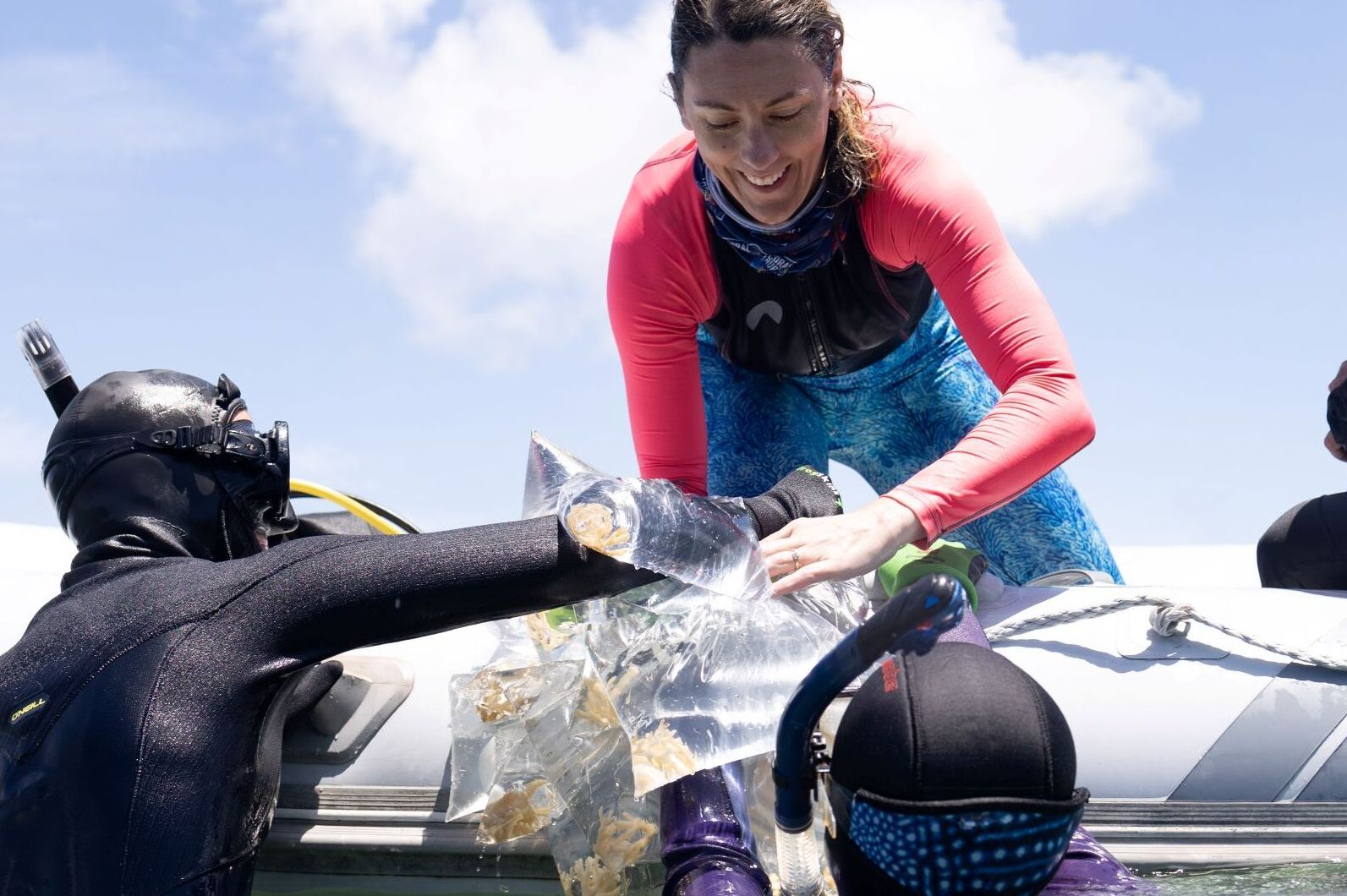
The University of Technology Sydney’s Coral Nurture Program is a science-led, industry-supported reef restoration initiative working to restore high-value sites across the Great Barrier Reef. In partnership with Wavelength Reef Cruises and other tourism operators, researchers, Traditional Owners and local communities, the program combines coral propagation, outplanting and long-term monitoring to enhance biodiversity, coral cover and ecosystem resilience.
The program cultivates coral fragments in underwater nurseries and replants them onto degraded reefs, supported by rigorous scientific methods including species selection, genetic diversity considerations, coral phenotyping for heat tolerance and adaptive monitoring. Innovations such as Coralclip® have helped improve efficiency, survival rates and scalability.
By embedding restoration into tourism operations, the Coral Nurture Program demonstrates how conservation, science, community stewardship and reef-based livelihoods can reinforce one another. With more than 133,000 corals planted across 119 species, the program provides a scalable model for achieving nature-positive outcomes while supporting climate resilience, education and global reef restoration practice.
Impacts & Benefits
- Planted more than 133,000 corals across 119 species, directly supporting coral cover, biodiversity and habitat complexity.
- Achieved strong early survival rates, with more than 80% survival in early months and evidence of corals reaching reproductive maturity.
- Strengthened reef resilience, using coral nurseries, phenotyping and climate-adapted approaches to support future reef recovery.
- Supported reef-dependent livelihoods, embedding restoration into tourism operations.
- Advanced global restoration knowledge, with more than 25 peer-reviewed publications and innovations such as the multi-taxa phenoplate informing best practice.
Leadership & Engagement
- Embedded restoration within the tourism industry, creating a model where conservation and economic activity reciprocally support each other.
- Built a strong multi-stakeholder partnership, connecting scientists, tourism operators, Traditional Owners, students, volunteers and local community members.
- Developed practical restoration innovations, including Coralclip® and heat-tolerance coral phenotyping to improve restoration efficiency and climate readiness.
- Created hands-on learning and workforce pathways, supporting students and early-career practitioners to build skills in coral restoration, monitoring and science communication.
Wider Societal Impact
- Shared knowledge nationally and internationally, including through publications, training, field guides and global use of Coralclip® in more than 20 countries.
- Strengthened community stewardship, engaging tourism staff, volunteers, students, researchers and Traditional Owners in practical reef recovery.
- Supported nature-positive economic resilience, showing how businesses can contribute directly to coral conservation while sustaining livelihoods.
- Created a replicable model for ecosystem restoration, relevant to tourism, fisheries, coastal management, conservation and climate adaptation sectors.


Top 3 learnings
Supported by

Category finalists
Nature Positive
Nature Positive
Nature Positive
Nature Positive
Nature Positive category
The University of Technology Sydney’s Coral Nurture Program is a science-led, industry-supported reef restoration initiative working to restore high-value sites across the Great Barrier Reef. In partnership with Wavelength Reef Cruises and other tourism operators, researchers, Traditional Owners and local communities, the program combines coral propagation, outplanting and long-term monitoring to enhance biodiversity, coral cover and ecosystem resilience.
The program cultivates coral fragments in underwater nurseries and replants them onto degraded reefs, supported by rigorous scientific methods including species selection, genetic diversity considerations, coral phenotyping for heat tolerance and adaptive monitoring. Innovations such as Coralclip® have helped improve efficiency, survival rates and scalability.
By embedding restoration into tourism operations, the Coral Nurture Program demonstrates how conservation, science, community stewardship and reef-based livelihoods can reinforce one another. With more than 133,000 corals planted across 119 species, the program provides a scalable model for achieving nature-positive outcomes while supporting climate resilience, education and global reef restoration practice.
Top 3 learnings
Impacts & Benefits
- Planted more than 133,000 corals across 119 species, directly supporting coral cover, biodiversity and habitat complexity.
- Achieved strong early survival rates, with more than 80% survival in early months and evidence of corals reaching reproductive maturity.
- Strengthened reef resilience, using coral nurseries, phenotyping and climate-adapted approaches to support future reef recovery.
- Supported reef-dependent livelihoods, embedding restoration into tourism operations.
- Advanced global restoration knowledge, with more than 25 peer-reviewed publications and innovations such as the multi-taxa phenoplate informing best practice.
Leadership & Engagement
- Embedded restoration within the tourism industry, creating a model where conservation and economic activity reciprocally support each other.
- Built a strong multi-stakeholder partnership, connecting scientists, tourism operators, Traditional Owners, students, volunteers and local community members.
- Developed practical restoration innovations, including Coralclip® and heat-tolerance coral phenotyping to improve restoration efficiency and climate readiness.
- Created hands-on learning and workforce pathways, supporting students and early-career practitioners to build skills in coral restoration, monitoring and science communication.
Wider Societal Impact
- Shared knowledge nationally and internationally, including through publications, training, field guides and global use of Coralclip® in more than 20 countries.
- Strengthened community stewardship, engaging tourism staff, volunteers, students, researchers and Traditional Owners in practical reef recovery.
- Supported nature-positive economic resilience, showing how businesses can contribute directly to coral conservation while sustaining livelihoods.
- Created a replicable model for ecosystem restoration, relevant to tourism, fisheries, coastal management, conservation and climate adaptation sectors.
Supported by
Category finalists
Nature Positive
Nature Positive
Nature Positive
Nature Positive