Nature Positive category
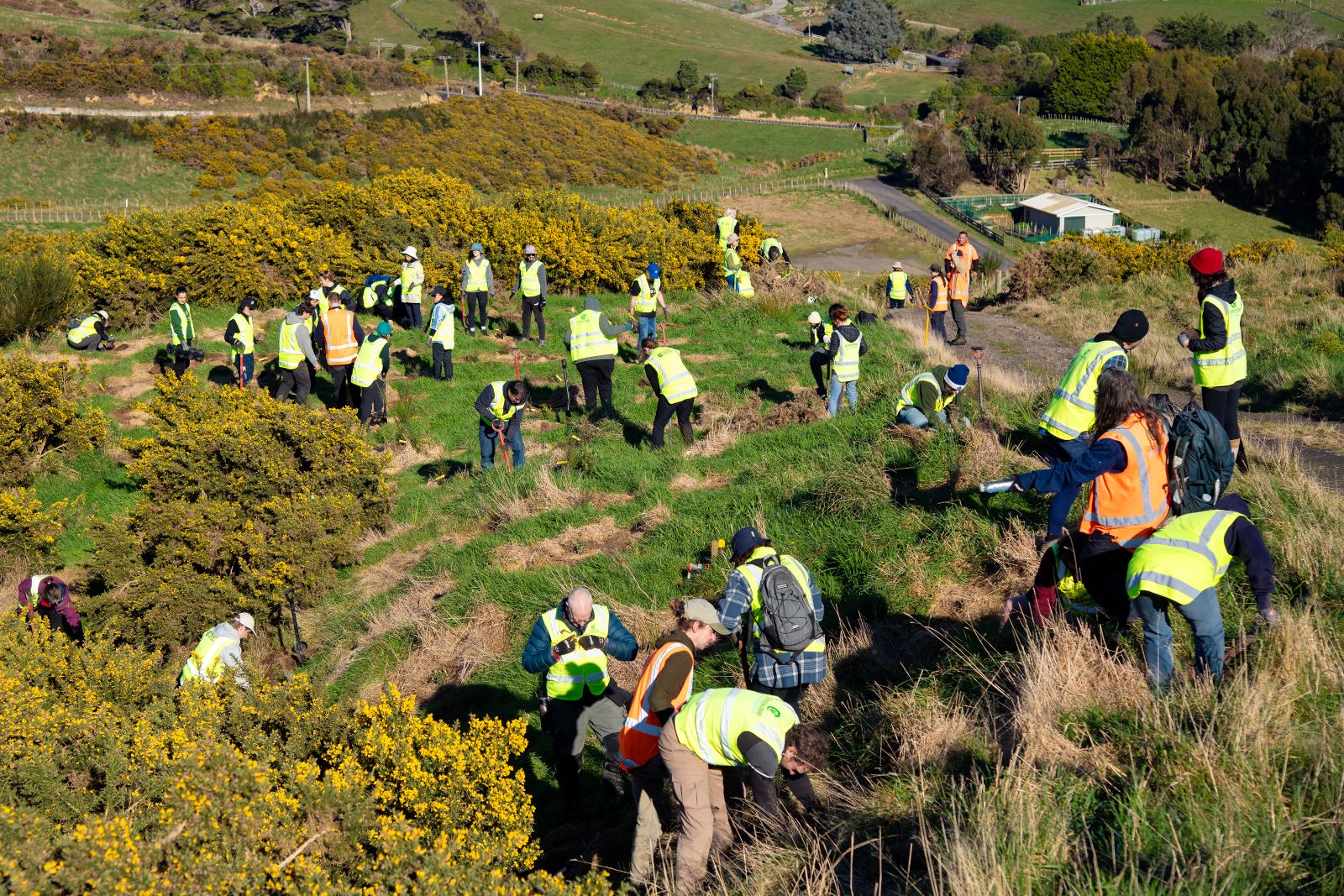
Te Herenga Waka – Victoria University of Wellington’s Growing our Future project is regenerating native forest on a 26-hectare site on the edge of Wellington, creating a restoration area larger than all the University’s campuses combined. Developed in partnership with Wellington City Council, the project responds to the limited space available for large-scale biodiversity enhancement on the University’s urban campuses by restoring nearby public land within the city’s Outer Green Belt.
Since 2021, the project has planted more than 28,000 native trees, helping to close a gap in a corridor of native habitat along Wellington’s western ridge. The restored site provides a stepping stone for native fauna, including kiwi, while contributing to biodiversity, carbon sequestration, soil stabilisation, water filtration and community access to nature.
The project also builds strong social and educational value. Volunteer planting days have engaged 1,050 students, staff and alumni, while the site supports teaching, research and biodiversity monitoring through the University’s Ecology and Biodiversity programme and Centre for Biodiversity and Restoration Ecology.
Impacts & Benefits
- Planted more than 28,000 native trees across a 26-hectare site, creating a restoration area larger than the University’s campuses.
- Increased green space managed by the University by 750% to 30 hectares.
- Created habitat for native fauna, helping plug a gap in Wellington’s Outer Green Belt and providing a stepping stone for kiwi and other species.
- Achieved strong early restoration results, with an average 89% tree survival rate across 30 permanent sample plots and an average 150cm height increase over four years.
- Engaged 1,050 students, staff and alumni, building community connection, sustainability engagement and hands-on restoration experience.
Leadership & Engagement
- Demonstrated long-term institutional commitment, with the University responsible for planning, funding, managing and monitoring restoration over a 33-year lease.
- Built a strong partnership with Wellington City Council, combining public land access with University resources, volunteers and restoration leadership.
- Created a powerful community-building experience, with annual planting days bringing together students, staff, alumni, senior leaders and community partners.
- Embedded kaitiakitanga in practice, reflecting the University’s commitment to guardianship, ecological thinking and intergenerational responsibility.
- Supported applied learning and research, enabling students to contribute to biodiversity monitoring, restoration planning, public communication and long-term field studies.
Wider Societal Impact
- Expanded publicly accessible reserve land, creating long-term recreational, ecological and wellbeing benefits for Wellington residents and visitors.
- Strengthened urban biodiversity, supporting native birds, lizards, pollination, soil health, water filtration, carbon sequestration and climate resilience.
- Created a replicable council-university partnership model, showing how land-constrained urban institutions can restore nearby public land.
- Supported cultural and spiritual connection to place, creating a sense of tūrangawaewae for volunteers and those closely connected to the project.
- Demonstrated tangible kaitiakitanga, showing how universities can acknowledge ecological impacts, restore local environments and contribute to nature-positive futures.


Top 3 learnings
Supported by

Category finalists
Nature Positive
Nature Positive
Nature Positive
Nature Positive
Nature Positive category
Te Herenga Waka – Victoria University of Wellington’s Growing our Future project is regenerating native forest on a 26-hectare site on the edge of Wellington, creating a restoration area larger than all the University’s campuses combined. Developed in partnership with Wellington City Council, the project responds to the limited space available for large-scale biodiversity enhancement on the University’s urban campuses by restoring nearby public land within the city’s Outer Green Belt.
Since 2021, the project has planted more than 28,000 native trees, helping to close a gap in a corridor of native habitat along Wellington’s western ridge. The restored site provides a stepping stone for native fauna, including kiwi, while contributing to biodiversity, carbon sequestration, soil stabilisation, water filtration and community access to nature.
The project also builds strong social and educational value. Volunteer planting days have engaged 1,050 students, staff and alumni, while the site supports teaching, research and biodiversity monitoring through the University’s Ecology and Biodiversity programme and Centre for Biodiversity and Restoration Ecology.
Top 3 learnings
Impacts & Benefits
- Planted more than 28,000 native trees across a 26-hectare site, creating a restoration area larger than the University’s campuses.
- Increased green space managed by the University by 750% to 30 hectares.
- Created habitat for native fauna, helping plug a gap in Wellington’s Outer Green Belt and providing a stepping stone for kiwi and other species.
- Achieved strong early restoration results, with an average 89% tree survival rate across 30 permanent sample plots and an average 150cm height increase over four years.
- Engaged 1,050 students, staff and alumni, building community connection, sustainability engagement and hands-on restoration experience.
Leadership & Engagement
- Demonstrated long-term institutional commitment, with the University responsible for planning, funding, managing and monitoring restoration over a 33-year lease.
- Built a strong partnership with Wellington City Council, combining public land access with University resources, volunteers and restoration leadership.
- Created a powerful community-building experience, with annual planting days bringing together students, staff, alumni, senior leaders and community partners.
- Embedded kaitiakitanga in practice, reflecting the University’s commitment to guardianship, ecological thinking and intergenerational responsibility.
- Supported applied learning and research, enabling students to contribute to biodiversity monitoring, restoration planning, public communication and long-term field studies.
Wider Societal Impact
- Expanded publicly accessible reserve land, creating long-term recreational, ecological and wellbeing benefits for Wellington residents and visitors.
- Strengthened urban biodiversity, supporting native birds, lizards, pollination, soil health, water filtration, carbon sequestration and climate resilience.
- Created a replicable council-university partnership model, showing how land-constrained urban institutions can restore nearby public land.
- Supported cultural and spiritual connection to place, creating a sense of tūrangawaewae for volunteers and those closely connected to the project.
- Demonstrated tangible kaitiakitanga, showing how universities can acknowledge ecological impacts, restore local environments and contribute to nature-positive futures.
Supported by
Category finalists
Nature Positive
Nature Positive
Nature Positive
Nature Positive