Sustainability Leadership category
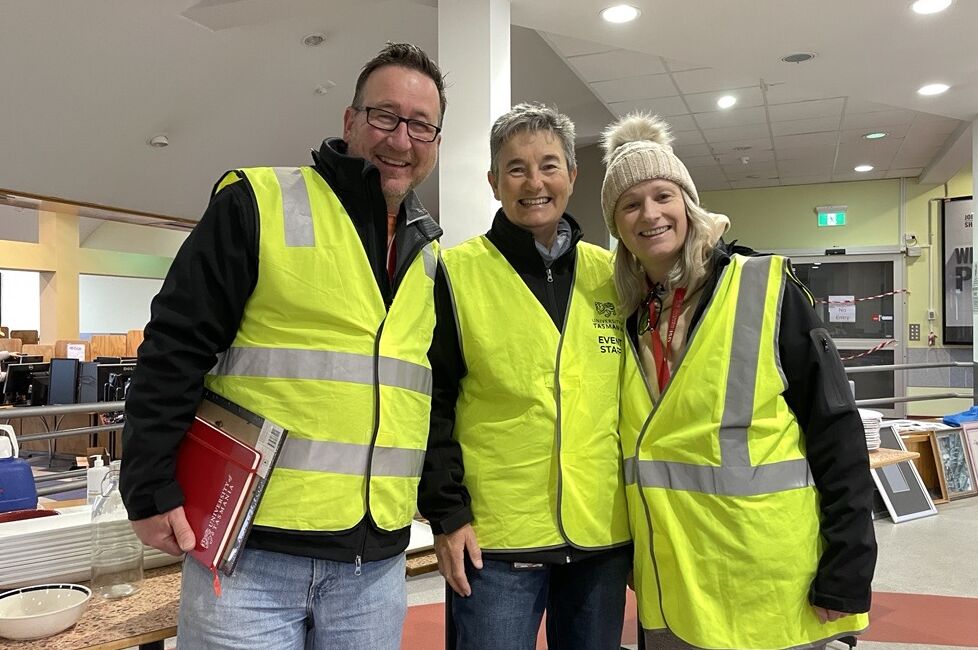
Mary Gill is the Waste Officer at the University of Tasmania, where she leads the operational side of waste management and champions the University’s Reuse Program. Mary brings practical problem-solving, strong values and infectious enthusiasm to her work, helping staff rethink waste as a resource and find better outcomes for materials that might otherwise end up in landfill.
Through her leadership, UTAS has achieved major waste reduction outcomes ahead of target, including a 41% reduction in waste to landfill in 2024. Mary’s work has supported large-scale reuse across campus relocations and building upgrades, with furniture and equipment repurposed within the University and donated to community groups across Tasmania. Her people-centred, solutions-focused approach has delivered environmental, financial and social benefits, earning recognition through the TEFMA Sustainability Clever Campus Award and Circular North Waste NoT Awards.
Impacts & Benefits
- Diverted significant waste from landfill, with the Re-Use Program diverting around 250 tonnes of waste and avoiding over 780 tonnes CO₂-e since 2016.
- Delivered major financial and operational savings, including more than $530,000 and 36,500 staff hours saved in 2025 through furniture reuse.
- Improved UTAS waste performance, increasing landfill diversion from 21% in 2021 to 37% in 2025, while tripling organic waste collected for FOGO.
- Created social and community benefits, including free garage sales, donations to students and community members, and trusted relationships that support better waste outcomes across campus.
Leadership & Engagement
- Inspired a movement around better waste management, encouraging staff and students to engage more actively in reuse and sustainability.
- Built trust across the University, with colleagues valuing Mary’s responsiveness, professionalism and solutions-focused approach.
- Aligned her work with UTAS’ stewardship values, supporting sustainability outcomes that benefit the environment, society and future generations.
- Demonstrated people-centred leadership, using humour, positivity and strong relationships to turn everyday waste challenges into practical solutions.
Wider Societal Impact
- Extended UTAS’ reuse impact into the wider community, donating furniture and equipment to Men’s Sheds, surf clubs, community centres, schools, Scouts, NGOs and other volunteer groups.
- Built strong community networks, finding practical new homes for hard-to-place items such as large shelving, furniture and specialist equipment.
- Created replicable circular economy models, with other institutions interested in adopting UTAS’ reuse program and waste signage.
- Scaled recycling beyond campus, with Recycling Walls diverting hard-to-recycle items from landfill and inspiring similar initiatives in schools and communities.


Top 3 learnings
Supported by

Category finalists

Sustainability Leadership
Sustainability Leadership
Sustainability Leadership
Sustainability Leadership
Sustainability Leadership
Sustainability Leadership
Sustainability Leadership
Sustainability Leadership
Sustainability Leadership category
Mary Gill is the Waste Officer at the University of Tasmania, where she leads the operational side of waste management and champions the University’s Reuse Program. Mary brings practical problem-solving, strong values and infectious enthusiasm to her work, helping staff rethink waste as a resource and find better outcomes for materials that might otherwise end up in landfill.
Through her leadership, UTAS has achieved major waste reduction outcomes ahead of target, including a 41% reduction in waste to landfill in 2024. Mary’s work has supported large-scale reuse across campus relocations and building upgrades, with furniture and equipment repurposed within the University and donated to community groups across Tasmania. Her people-centred, solutions-focused approach has delivered environmental, financial and social benefits, earning recognition through the TEFMA Sustainability Clever Campus Award and Circular North Waste NoT Awards.
Top 3 learnings
Impacts & Benefits
- Diverted significant waste from landfill, with the Re-Use Program diverting around 250 tonnes of waste and avoiding over 780 tonnes CO₂-e since 2016.
- Delivered major financial and operational savings, including more than $530,000 and 36,500 staff hours saved in 2025 through furniture reuse.
- Improved UTAS waste performance, increasing landfill diversion from 21% in 2021 to 37% in 2025, while tripling organic waste collected for FOGO.
- Created social and community benefits, including free garage sales, donations to students and community members, and trusted relationships that support better waste outcomes across campus.
Leadership & Engagement
- Inspired a movement around better waste management, encouraging staff and students to engage more actively in reuse and sustainability.
- Built trust across the University, with colleagues valuing Mary’s responsiveness, professionalism and solutions-focused approach.
- Aligned her work with UTAS’ stewardship values, supporting sustainability outcomes that benefit the environment, society and future generations.
- Demonstrated people-centred leadership, using humour, positivity and strong relationships to turn everyday waste challenges into practical solutions.
Wider Societal Impact
- Extended UTAS’ reuse impact into the wider community, donating furniture and equipment to Men’s Sheds, surf clubs, community centres, schools, Scouts, NGOs and other volunteer groups.
- Built strong community networks, finding practical new homes for hard-to-place items such as large shelving, furniture and specialist equipment.
- Created replicable circular economy models, with other institutions interested in adopting UTAS’ reuse program and waste signage.
- Scaled recycling beyond campus, with Recycling Walls diverting hard-to-recycle items from landfill and inspiring similar initiatives in schools and communities.
Supported by
Related finalists
Sustainability Leadership
Sustainability Leadership
Sustainability Leadership
Sustainability Leadership
Sustainability Leadership
Sustainability Leadership
Sustainability Leadership
Sustainability Leadership