Sustainability Leadership category
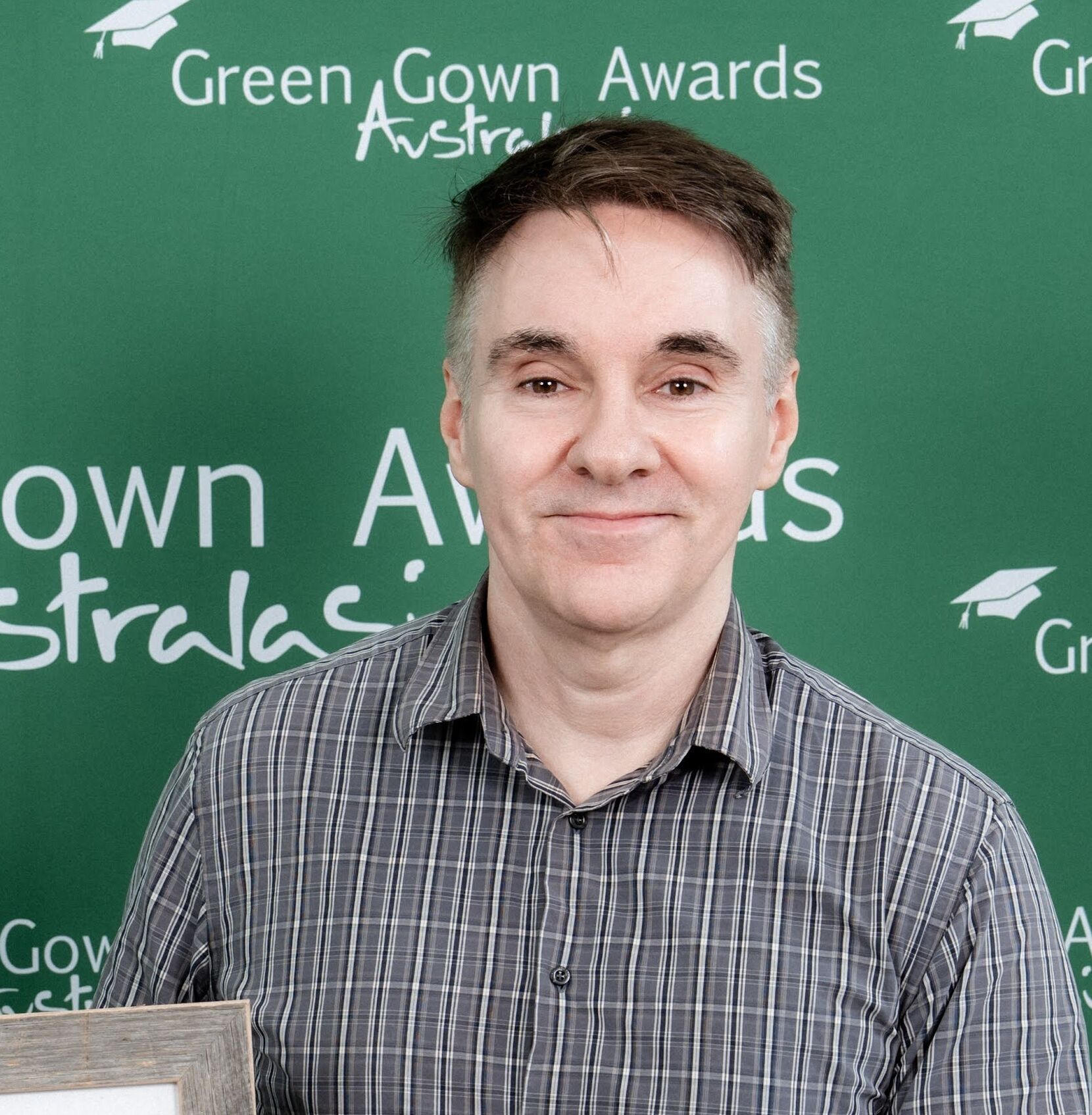
John Macris has led high-impact biodiversity initiatives across 17 years as Biodiversity Advisor at Macquarie University, delivering measurable ecological outcomes while helping transform the campus into a living laboratory for interdisciplinary learning. Through strong partnerships across faculties, curriculum-aligned field experiences and international study tour opportunities, John has embedded biodiversity into teaching, research and student engagement.
John developed the biodiversity KPI for the University’s Sustainability-Linked Loan, only the second of its kind in Australia, creating a peer-reviewed, data-driven framework to measure forest condition and restoration. His leadership has also supported restoration of the endangered Turpentine-Ironbark Forest and long-term rehabilitation of Mars Creek. His work demonstrates how operational sustainability, research and education can be integrated to deliver lasting environmental and institutional value.
Impacts & Benefits
- Delivered measurable biodiversity gains, including a 9% increase in high-integrity forest within the first two years of the Sustainability-Linked Loan KPI.
- Transformed campus landscapes into living laboratories, integrating biodiversity restoration with education, research and operations.
- Restored a degraded creek ecosystem, creating a healthier habitat and more welcoming space for students, the community and birdwatchers.
- Embedded biodiversity into interdisciplinary teaching, enabling hands-on, field-based learning across multiple courses.
- Strengthened external partnerships, engaging academics, industry, financial institutions, contractors and volunteers in practical restoration and sustainable finance outcomes.
Leadership & Engagement
- Led long-term biodiversity restoration since 2010, advocating for ecosystem health alongside campus development and infrastructure priorities.
- Kept biodiversity on the strategic agenda, ensuring ecological outcomes remain visible within a complex built environment.
- Integrated restoration into sustainable finance, establishing a credible biodiversity KPI for Macquarie University’s Sustainability-Linked Loan.
- Expanded staff engagement in biodiversity action, embedding bushcare practices within operational teams and supporting initiatives such as Green Impact.
- Mentored the next generation of ecologists, working with students each semester through hands-on restoration and field-based learning.
Wider Societal Impact
- Created a model for place-based biodiversity leadership, showing how universities can integrate ecology, education and operations through living laboratories.
- Built ecological literacy across diverse audiences, engaging students, staff, academics, school groups, international visitors and community members.
- Influenced future professionals, embedding hands-on biodiversity learning across disciplines including science, planning and finance.
- Advanced recognition of nature in sustainable finance, demonstrating how biodiversity outcomes can be credibly measured and valued.
- Delivered community benefits through restoration, improving habitat, water quality, wildlife presence and access to green spaces that support wellbeing.


Top 3 learnings
Supported by

Category finalists

Sustainability Leadership
Sustainability Leadership
Sustainability Leadership
Sustainability Leadership
Sustainability Leadership
Sustainability Leadership
Sustainability Leadership category
John Macris has led high-impact biodiversity initiatives across 17 years as Biodiversity Advisor at Macquarie University, delivering measurable ecological outcomes while helping transform the campus into a living laboratory for interdisciplinary learning. Through strong partnerships across faculties, curriculum-aligned field experiences and international study tour opportunities, John has embedded biodiversity into teaching, research and student engagement.
John developed the biodiversity KPI for the University’s Sustainability-Linked Loan, only the second of its kind in Australia, creating a peer-reviewed, data-driven framework to measure forest condition and restoration. His leadership has also supported restoration of the endangered Turpentine-Ironbark Forest and long-term rehabilitation of Mars Creek. His work demonstrates how operational sustainability, research and education can be integrated to deliver lasting environmental and institutional value.
Top 3 learnings
Impacts & Benefits
- Delivered measurable biodiversity gains, including a 9% increase in high-integrity forest within the first two years of the Sustainability-Linked Loan KPI.
- Transformed campus landscapes into living laboratories, integrating biodiversity restoration with education, research and operations.
- Restored a degraded creek ecosystem, creating a healthier habitat and more welcoming space for students, the community and birdwatchers.
- Embedded biodiversity into interdisciplinary teaching, enabling hands-on, field-based learning across multiple courses.
- Strengthened external partnerships, engaging academics, industry, financial institutions, contractors and volunteers in practical restoration and sustainable finance outcomes.
Leadership & Engagement
- Led long-term biodiversity restoration since 2010, advocating for ecosystem health alongside campus development and infrastructure priorities.
- Kept biodiversity on the strategic agenda, ensuring ecological outcomes remain visible within a complex built environment.
- Integrated restoration into sustainable finance, establishing a credible biodiversity KPI for Macquarie University’s Sustainability-Linked Loan.
- Expanded staff engagement in biodiversity action, embedding bushcare practices within operational teams and supporting initiatives such as Green Impact.
- Mentored the next generation of ecologists, working with students each semester through hands-on restoration and field-based learning.
Wider Societal Impact
- Created a model for place-based biodiversity leadership, showing how universities can integrate ecology, education and operations through living laboratories.
- Built ecological literacy across diverse audiences, engaging students, staff, academics, school groups, international visitors and community members.
- Influenced future professionals, embedding hands-on biodiversity learning across disciplines including science, planning and finance.
- Advanced recognition of nature in sustainable finance, demonstrating how biodiversity outcomes can be credibly measured and valued.
- Delivered community benefits through restoration, improving habitat, water quality, wildlife presence and access to green spaces that support wellbeing.
Supported by
Related finalists
Sustainability Leadership
Sustainability Leadership
Sustainability Leadership
Sustainability Leadership
Sustainability Leadership
Sustainability Leadership