Student Engagement category
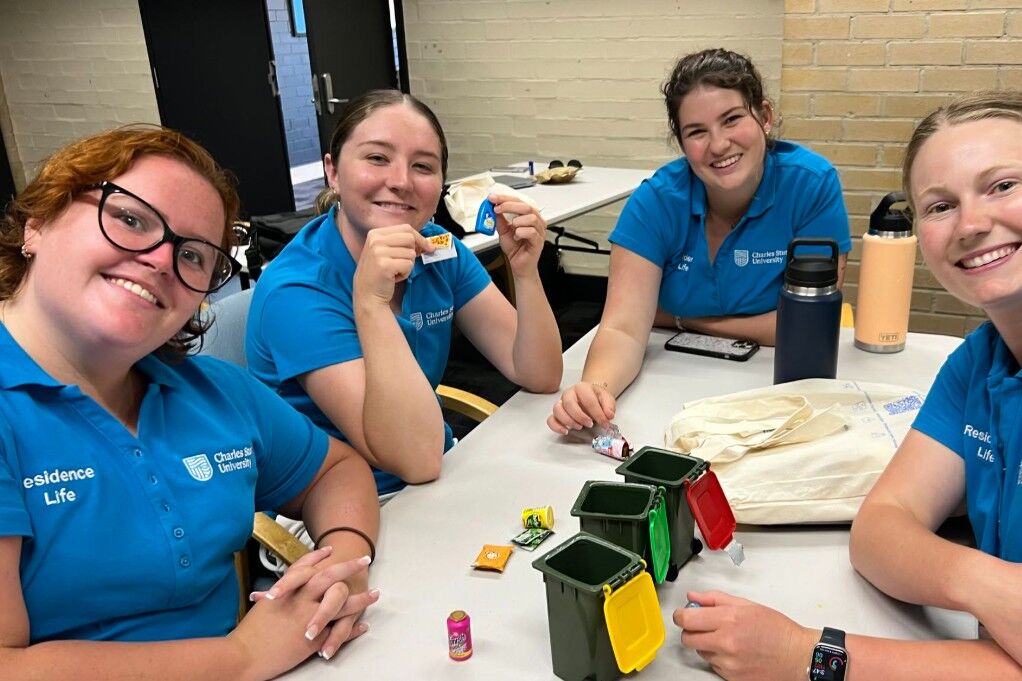
Charles Sturt University’s ‘Student Voices, Sustainable Choices’ initiative empowers students to lead sustainability action through its Student Sustainability Advisers program. Now in its eighth year, the program uses a peer-to-peer model where students design and deliver initiatives that resonate with their campus communities.
Supported by the University’s Sustainability team, advisers help embed sustainable behaviours into everyday student life through education, events, volunteering, resource reuse and community engagement. The program strengthens student leadership while extending the reach of a small professional sustainability team across regional campuses.
By giving students paid, practical experience in sustainability engagement, the initiative builds confidence, employability and a stronger culture of care for people, place and the environment.
Impacts & Benefits
- Educates more than 1,000 on-campus students annually on best-practice waste management and sustainable living.
- Supports student-led sustainability events, with at least 10 targeted events delivered each year across campuses.
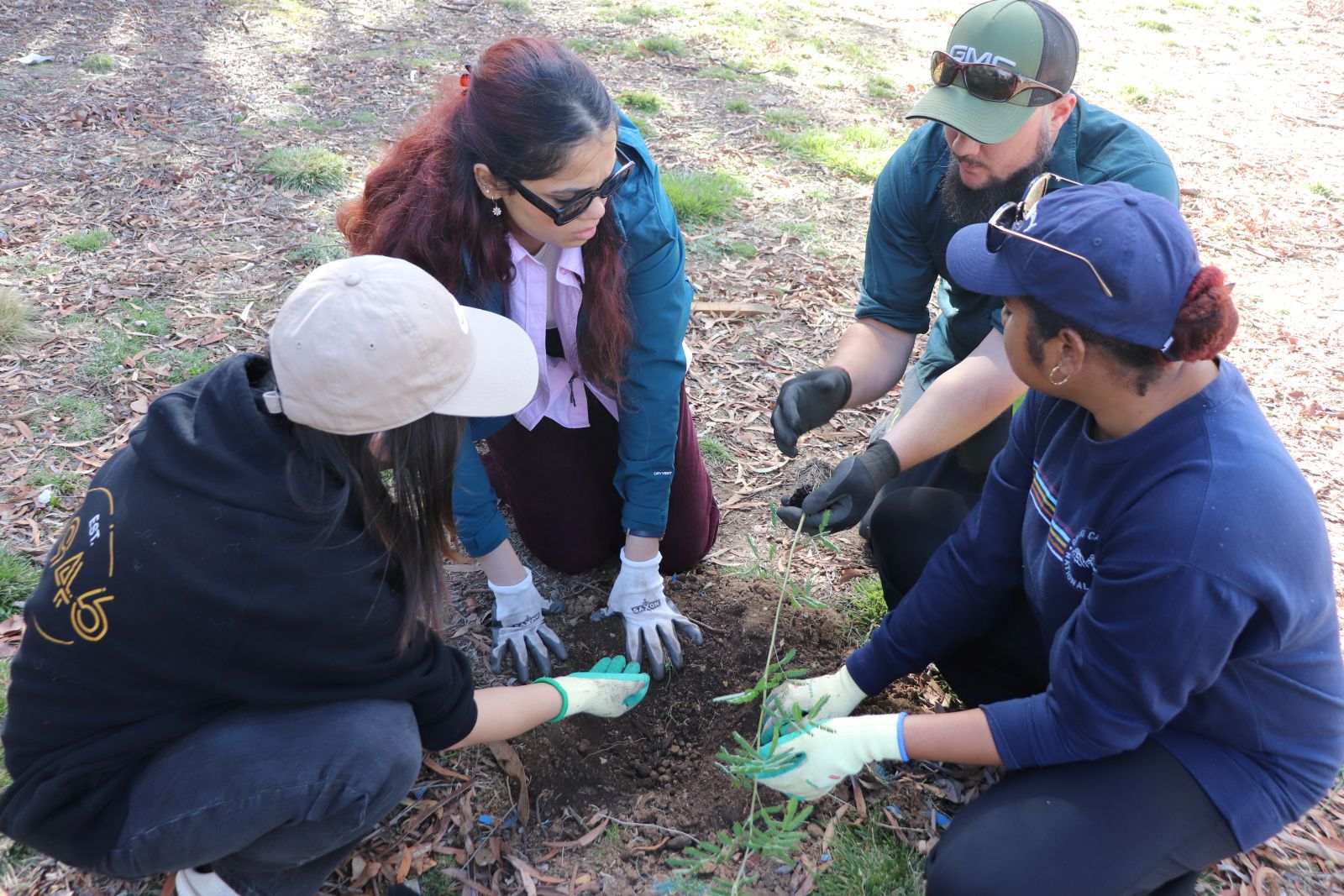
- Contributed to the planting of 4,975 native seedlings over six years through student-supported tree planting activities.
- Built strong online engagement, with more than 11,800 post views over the past 12 months.
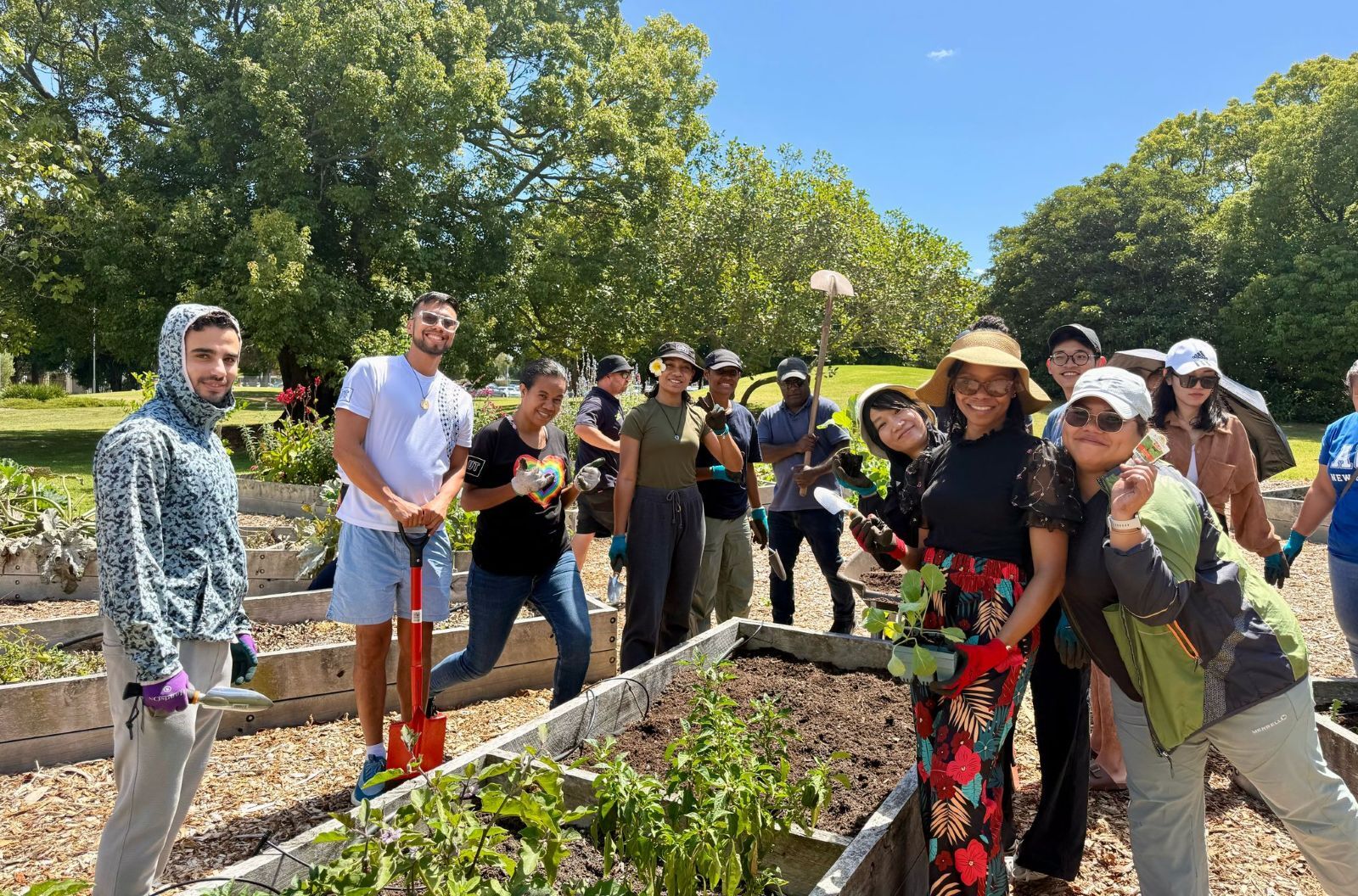
- Strengthened circular economy outcomes, including donation drives, reuse initiatives, student gardens and waste education.
Leadership & Engagement
- Uses an authentic peer-to-peer model, with student advisers living on campus and engaging directly with their peers.
- Positions students as leaders, enabling advisers to design, deliver and adapt initiatives based on student interests and needs.
- Builds professional capability, including project management, budgeting, stakeholder engagement, event coordination, communication and reporting.
- Creates strong staff-student collaboration, supported by the Sustainability team, Residence Life, Facilities Management, Student Representatives and Campus Environment Working Groups.
- Delivers high impact on a modest budget, with advisers working around eight hours per week and operating with a small annual activity budget.
Wider Societal Impact
- Extends impact into local communities, with move-out donations supporting organisations such as OzHarvest and St Vincent de Paul.
- Builds lifelong sustainability habits, helping students carry waste, energy, water, reuse and circular economy practices beyond campus.
- Supports regional environmental outcomes, including collaboration with councils and Landcare on waste education and biodiversity activities.
- Creates a replicable model for student engagement, relevant to residential campuses, regional universities and potentially online student communities.
- Develops future sustainability advocates, preparing graduates to bring practical environmental leadership into workplaces and communities.


Top 3 learnings
Supported by

Category finalists
Student Engagement
Student Engagement
Student Engagement
Student Engagement
Student Engagement category
Charles Sturt University’s ‘Student Voices, Sustainable Choices’ initiative empowers students to lead sustainability action through its Student Sustainability Advisers program. Now in its eighth year, the program uses a peer-to-peer model where students design and deliver initiatives that resonate with their campus communities.
Supported by the University’s Sustainability team, advisers help embed sustainable behaviours into everyday student life through education, events, volunteering, resource reuse and community engagement. The program strengthens student leadership while extending the reach of a small professional sustainability team across regional campuses.
By giving students paid, practical experience in sustainability engagement, the initiative builds confidence, employability and a stronger culture of care for people, place and the environment.
Top 3 learnings
Impacts & Benefits
- Educates more than 1,000 on-campus students annually on best-practice waste management and sustainable living.
- Supports student-led sustainability events, with at least 10 targeted events delivered each year across campuses.
- Contributed to the planting of 4,975 native seedlings over six years through student-supported tree planting activities.
- Built strong online engagement, with more than 11,800 post views over the past 12 months.
- Strengthened circular economy outcomes, including donation drives, reuse initiatives, student gardens and waste education.
Leadership & Engagement
- Uses an authentic peer-to-peer model, with student advisers living on campus and engaging directly with their peers.
- Positions students as leaders, enabling advisers to design, deliver and adapt initiatives based on student interests and needs.
- Builds professional capability, including project management, budgeting, stakeholder engagement, event coordination, communication and reporting.
- Creates strong staff-student collaboration, supported by the Sustainability team, Residence Life, Facilities Management, Student Representatives and Campus Environment Working Groups.
- Delivers high impact on a modest budget, with advisers working around eight hours per week and operating with a small annual activity budget.
Wider Societal Impact
- Extends impact into local communities, with move-out donations supporting organisations such as OzHarvest and St Vincent de Paul.
- Builds lifelong sustainability habits, helping students carry waste, energy, water, reuse and circular economy practices beyond campus.
- Supports regional environmental outcomes, including collaboration with councils and Landcare on waste education and biodiversity activities.
- Creates a replicable model for student engagement, relevant to residential campuses, regional universities and potentially online student communities.
- Develops future sustainability advocates, preparing graduates to bring practical environmental leadership into workplaces and communities.
Supported by
Category finalists
Student Engagement
Student Engagement
Student Engagement
Student Engagement