Student Engagement category
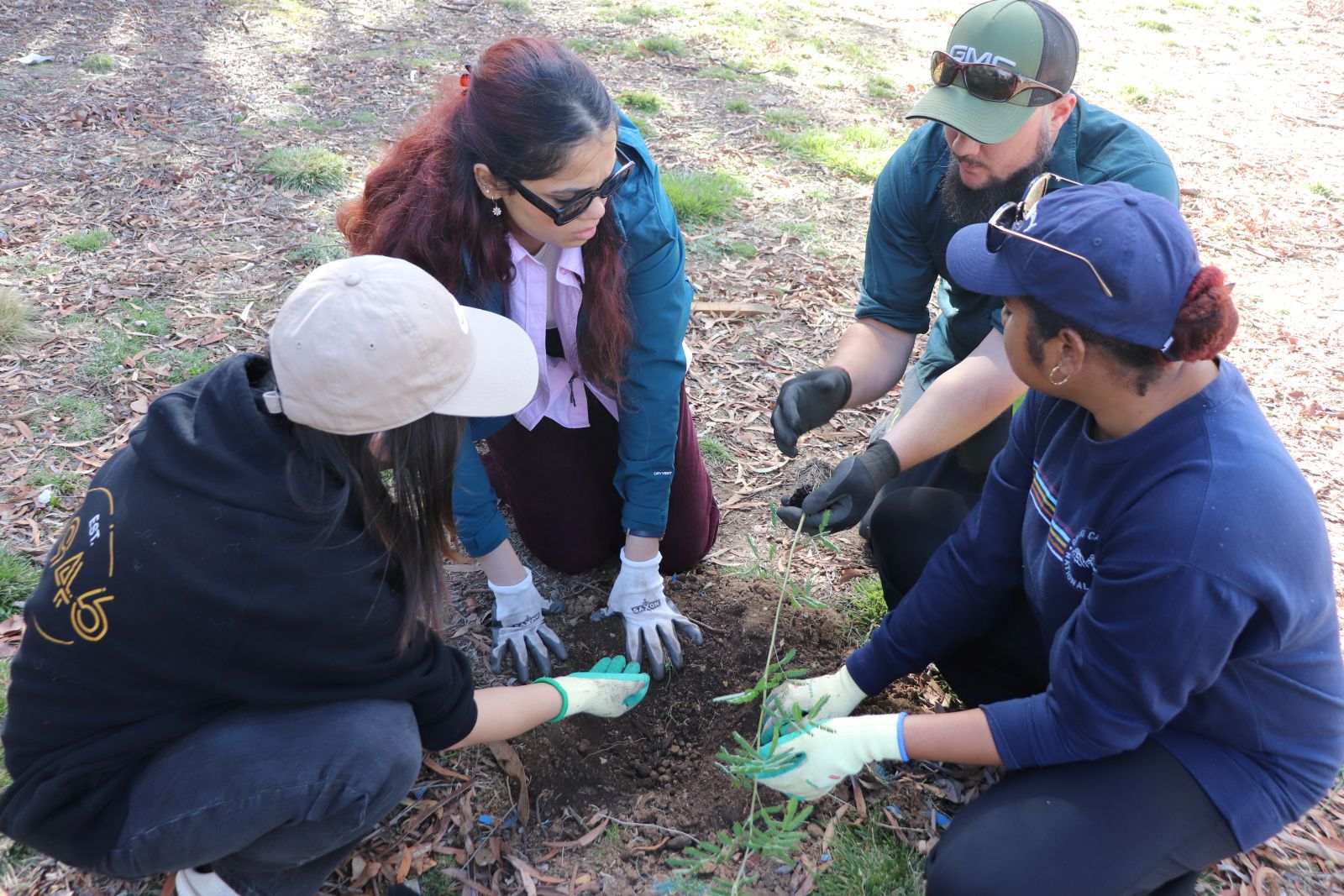
The Australian National University’s ‘Campus as Classroom’ initiative brings students directly into the University’s operational sustainability work through work-integrated internships, course-embedded projects and collaborative learning opportunities. The program treats the campus as a living classroom, where students contribute to real institutional sustainability challenges while developing practical skills for future careers.
Through co-designed projects, students work alongside professional sustainability staff to investigate, shape and deliver work that supports ANU’s environmental goals. The program connects students from diverse disciplines with applied sustainability practice, helping them understand how climate action, resource efficiency, behaviour change and governance are addressed within a complex organisation.
By combining academic learning with meaningful operational contribution, the initiative builds student confidence, strengthens sustainability literacy and expands the capacity of the University’s sustainability team. It demonstrates a practical model for engaging students as partners in institutional change, not just participants in sustainability activities.
Impacts & Benefits
- Supported 30 student internships since 2020, across disciplines including engineering, business, science, computing, law, economics and public policy.
- Engaged several hundred students annually, through internships, guest lectures, course-embedded projects and collaborative assessments.
- Advanced real sustainability priorities, including decarbonisation, transport, procurement, biodiversity, climate risk, behaviour change and emissions planning.
- Expanded the capacity of a small sustainability team, enabling scoping studies, audits, frameworks and engagement projects that may otherwise have been delayed.
- Improved graduate capability, with 100% of surveyed interns reporting confidence or strong confidence entering a professional workplace.
Leadership & Engagement
- Positioned students as genuine contributors, giving them responsibility for research, stakeholder engagement, analysis and recommendations.
- Used co-design to shape each placement, aligning institutional needs with students’ interests, skills and development goals.
- Created cross-disciplinary sustainability learning, reaching students whose future careers may not be formally sustainability-focused.
- Embedded internships within existing academic pathways, including college internship programs and the ANU McCusker Institute’s SoCIETIE initiative.
- Shared student work publicly, publishing intern reports on the ANU sustainability website to recognise contributions and support wider learning.
Wider Societal Impact
- Prepared graduates to apply sustainability in many professions.
- Strengthened community and government partnerships, connecting student work with organisations such as ACT Government, Pedal Power, Mojo Cycles and See-Change.
- Built practical sustainability knowledge beyond campus, with publicly available student reports contributing to shared sector learning.
- Created a replicable model for work-integrated sustainability learning, relevant to universities, government agencies, councils, not-for-profits and private organisations.
- Supported long-term cultural change, showing that students can help shape institutional sustainability while developing skills they carry into future workplaces.


Top 3 learnings
Supported by

Category finalists
Student Engagement
Student Engagement
Student Engagement
Student Engagement
Student Engagement category
The Australian National University’s ‘Campus as Classroom’ initiative brings students directly into the University’s operational sustainability work through work-integrated internships, course-embedded projects and collaborative learning opportunities. The program treats the campus as a living classroom, where students contribute to real institutional sustainability challenges while developing practical skills for future careers.
Through co-designed projects, students work alongside professional sustainability staff to investigate, shape and deliver work that supports ANU’s environmental goals. The program connects students from diverse disciplines with applied sustainability practice, helping them understand how climate action, resource efficiency, behaviour change and governance are addressed within a complex organisation.
By combining academic learning with meaningful operational contribution, the initiative builds student confidence, strengthens sustainability literacy and expands the capacity of the University’s sustainability team. It demonstrates a practical model for engaging students as partners in institutional change, not just participants in sustainability activities.
Top 3 learnings
Impacts & Benefits
- Supported 30 student internships since 2020, across disciplines including engineering, business, science, computing, law, economics and public policy.
- Engaged several hundred students annually, through internships, guest lectures, course-embedded projects and collaborative assessments.
- Advanced real sustainability priorities, including decarbonisation, transport, procurement, biodiversity, climate risk, behaviour change and emissions planning.
- Expanded the capacity of a small sustainability team, enabling scoping studies, audits, frameworks and engagement projects that may otherwise have been delayed.
- Improved graduate capability, with 100% of surveyed interns reporting confidence or strong confidence entering a professional workplace.
Leadership & Engagement
- Positioned students as genuine contributors, giving them responsibility for research, stakeholder engagement, analysis and recommendations.
- Used co-design to shape each placement, aligning institutional needs with students’ interests, skills and development goals.
- Created cross-disciplinary sustainability learning, reaching students whose future careers may not be formally sustainability-focused.
- Embedded internships within existing academic pathways, including college internship programs and the ANU McCusker Institute’s SoCIETIE initiative.
- Shared student work publicly, publishing intern reports on the ANU sustainability website to recognise contributions and support wider learning.
Wider Societal Impact
- Prepared graduates to apply sustainability in many professions.
- Strengthened community and government partnerships, connecting student work with organisations such as ACT Government, Pedal Power, Mojo Cycles and See-Change.
- Built practical sustainability knowledge beyond campus, with publicly available student reports contributing to shared sector learning.
- Created a replicable model for work-integrated sustainability learning, relevant to universities, government agencies, councils, not-for-profits and private organisations.
- Supported long-term cultural change, showing that students can help shape institutional sustainability while developing skills they carry into future workplaces.
Supported by
Category finalists
Student Engagement
Student Engagement
Student Engagement
Student Engagement