Creating Impact category
The University of Tasmania’s Circular Creativity Student Workshops is a youth-led project demonstrating how students can inspire community hope and practical sustainability action with limited resources. The project promoted upcycling and encouraged participants to see potential in everyday waste items, while also responding to student cost-of-living pressures by creating opportunities for connection, creativity, saving money and reducing waste.
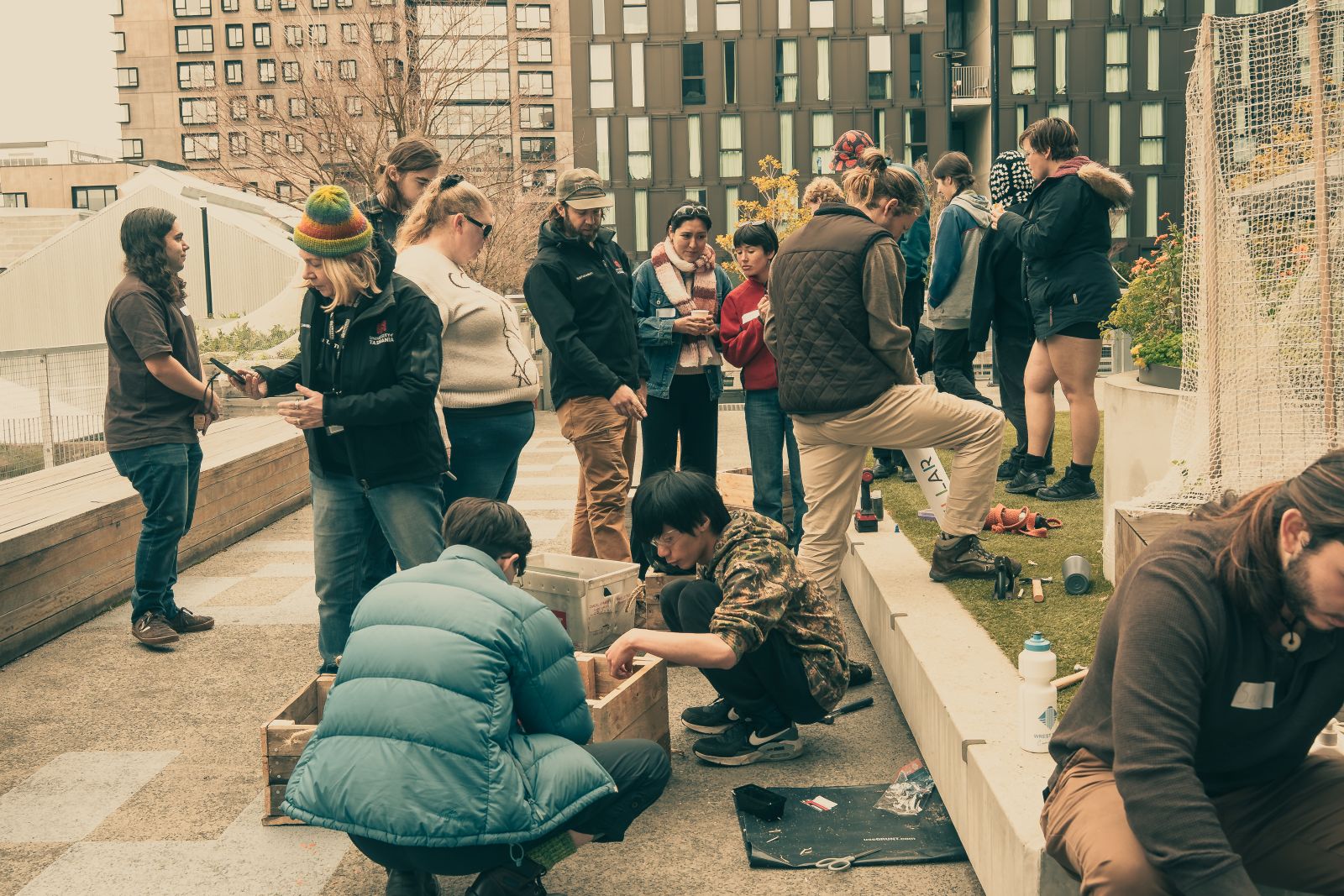
Seven student leaders from the Student Living University Gardening Society, across Hobart and Sandy Bay, and Togatus student magazine collaborated to design and deliver the project. Supported by a Youth Climate Action Fund microgrant, they co-designed and ran three participatory workshops across two campuses, engaging 35 participants, 80% of whom were young people.
Through the workshops, students upcycled waste materials into 12 food garden beds, created origami seed packets from old magazines, and generated online engagement. The project demonstrates a low-cost, replicable model for community-centred circular economy action that builds skills, confidence, social connection and sustainability leadership.
Impacts & Benefits
- Created 12 upcycled planter boxes, turning reclaimed pallets and other campus materials into practical food-growing infrastructure.
- Diverted materials from landfill, saving an estimated 200kg of timber and paper while demonstrating practical circular economy principles.
- Built student confidence, wellbeing and connection, bringing together students from different campuses, years and degrees through hands-on sustainability action.
- Combined circular economy, creativity and wellbeing, showing how practical upcycling workshops can build skills, confidence and social connection.
- Generated strong community reach, with more than 12,000 online views, 300+ images produced and ongoing interest in replicating the workshops.
Leadership & Engagement
- Engaged 35 participants across three workshops, with 80% youth participation and activities delivered across two University of Tasmania campuses.
- Placed project leadership in students’ hands, with seven student leaders responsible for co-design, delivery, creative outputs and community engagement.
- Supported youth leadership through mentoring, with the University of Tasmania Sustainability Team providing guidance, logistics, materials and risk support.
- Strengthened collaboration across student groups and campuses, connecting gardening clubs, Togatus student magazine, the Source Eco Hub and community participants.
- Demonstrated high impact from a low-cost model, using a $7,500 microgrant, local waste materials and student creativity to create meaningful outcomes.
Wider Societal Impact
- Created a replicable model for youth-led circular economy action, showing how small, low-cost projects can address waste, cost-of-living pressures and social isolation.
- Encouraged practical community participation, helping students and community members build skills, confidence and relationships through hands-on workshops.
- Extended impact beyond the University, with the project accepted as a case study for the UN Regional Centre of Expertise 2026 Youth Publication.
- Showed that sustainability can be accessible and creative, encouraging people to rethink everyday materials and take practical action in their own communities.


Top 3 learnings
Supported by

Category finalists
Creating Impact
Creating Impact
Creating Impact
Creating Impact

Creating Impact
Creating Impact
Creating Impact category
The University of Tasmania’s Circular Creativity Student Workshops is a youth-led project demonstrating how students can inspire community hope and practical sustainability action with limited resources. The project promoted upcycling and encouraged participants to see potential in everyday waste items, while also responding to student cost-of-living pressures by creating opportunities for connection, creativity, saving money and reducing waste.
Seven student leaders from the Student Living University Gardening Society, across Hobart and Sandy Bay, and Togatus student magazine collaborated to design and deliver the project. Supported by a Youth Climate Action Fund microgrant, they co-designed and ran three participatory workshops across two campuses, engaging 35 participants, 80% of whom were young people.
Through the workshops, students upcycled waste materials into 12 food garden beds, created origami seed packets from old magazines, and generated online engagement. The project demonstrates a low-cost, replicable model for community-centred circular economy action that builds skills, confidence, social connection and sustainability leadership.
Top 3 learnings
Impacts & Benefits
- Created 12 upcycled planter boxes, turning reclaimed pallets and other campus materials into practical food-growing infrastructure.
- Diverted materials from landfill, saving an estimated 200kg of timber and paper while demonstrating practical circular economy principles.
- Built student confidence, wellbeing and connection, bringing together students from different campuses, years and degrees through hands-on sustainability action.
- Combined circular economy, creativity and wellbeing, showing how practical upcycling workshops can build skills, confidence and social connection.
- Generated strong community reach, with more than 12,000 online views, 300+ images produced and ongoing interest in replicating the workshops.
Leadership & Engagement
- Engaged 35 participants across three workshops, with 80% youth participation and activities delivered across two University of Tasmania campuses.
- Placed project leadership in students’ hands, with seven student leaders responsible for co-design, delivery, creative outputs and community engagement.
- Supported youth leadership through mentoring, with the University of Tasmania Sustainability Team providing guidance, logistics, materials and risk support.
- Strengthened collaboration across student groups and campuses, connecting gardening clubs, Togatus student magazine, the Source Eco Hub and community participants.
- Demonstrated high impact from a low-cost model, using a $7,500 microgrant, local waste materials and student creativity to create meaningful outcomes.
Wider Societal Impact
- Created a replicable model for youth-led circular economy action, showing how small, low-cost projects can address waste, cost-of-living pressures and social isolation.
- Encouraged practical community participation, helping students and community members build skills, confidence and relationships through hands-on workshops.
- Extended impact beyond the University, with the project accepted as a case study for the UN Regional Centre of Expertise 2026 Youth Publication.
- Showed that sustainability can be accessible and creative, encouraging people to rethink everyday materials and take practical action in their own communities.
Supported by
Category finalists
Creating Impact
Creating Impact
Creating Impact
Creating Impact
Creating Impact
Creating Impact