Climate Action category
The University of Technology Sydney recognises climate change as one of the greatest existential threats facing the world and was the first Australian university to sign a Climate Emergency Declaration in 2019. Through UTS towards Climate Positive, the University is applying a whole-of-institution approach to decarbonise as rapidly as possible, achieve net zero and become climate positive by 2029.
The Climate Positive Plan provides the framework for action across education, research, operations and engagement. This includes energy efficiency, renewables, electrification, embodied carbon, circular economy and offsets for residual emissions, supported by strong governance, transparent reporting and executive-level commitment.
Over the past two decades, UTS has made significant progress because of their plan and by embedding sustainability and climate action across curriculum, research, campus operations and partnerships, UTS is building institutional capability and supporting broader climate leadership beyond the University.
Impacts & Benefits
- Reduced greenhouse gas emissions, achieving a 30% reduction by 2021 from a 2007 baseline, despite significant campus growth.
- Achieved major climate milestones, including fossil fuel divestment in 2022 and 100% renewable electricity supply from mid-2025.
- Embedded climate action across education and research, supporting students, researchers and partners to develop practical solutions to climate-related challenges.
- Improved operational sustainability, through energy efficiency, electrification, renewable energy, circular economy initiatives and climate risk adaptation planning.
Leadership & Engagement
- Demonstrated leadership as the first Australian university to sign a Climate Emergency Declaration.
- Led long-term, whole-of-institution climate action, building on decades of sustainability commitment.
- Established strong governance and accountability, through the Sustainability Policy, Sustainability Strategy, Climate Action Working Group, Sustainability Steering Committee and public Sustainability Impact Dashboard.
- Engaged staff and students in planning and delivery, including consultation forums, workshops, student groups, faculty meetings and executive engagement.
- Demonstrated innovation in renewable energy, including an Australian-first direct solar Power Purchase Agreement and a 100% renewable electricity strategy focused on additionality.
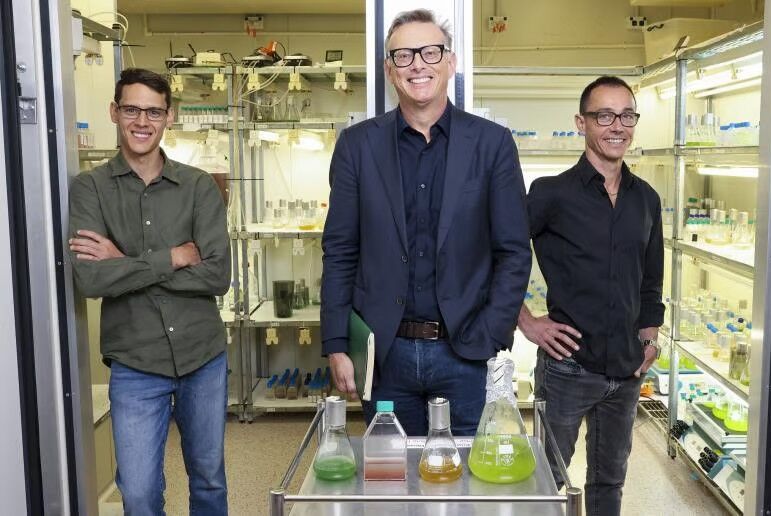
- Built partnerships for climate impact, including collaborations with Climate-KIC Australia, RACE for 2030, Young Henrys, Algenie, the City of Sydney and Climate Action Week Sydney.
Wider Societal Impact
- Created replicable models for institutional climate action, including the Climate Positive Plan, public Sustainability Impact Dashboard and systematic governance approach.
- Influenced renewable energy practice beyond the sector, with UTS’s Australian-first direct solar Power Purchase Agreement helping to demonstrate a model later replicated by other industries.
- Supported community climate resilience, including the Glebe Energy Transitions project, which developed a place-based model for retrofitting social housing to reduce emissions and energy poverty.
- Extended climate education beyond the university, through initiatives such as Net Zero Schools, which connects high school students with researchers and industry.
- Shared practical climate solutions widely, including sustainable building, district water sharing, plastic-free food court leasing, renewable energy and engagement models relevant to education, government, commercial and community sectors.



Top 3 learnings
Supported by

Category finalists
Climate Action
Climate Action

Climate Action
Climate Action
Climate Action
Climate Action
Climate Action category
The University of Technology Sydney recognises climate change as one of the greatest existential threats facing the world and was the first Australian university to sign a Climate Emergency Declaration in 2019. Through UTS towards Climate Positive, the University is applying a whole-of-institution approach to decarbonise as rapidly as possible, achieve net zero and become climate positive by 2029.
The Climate Positive Plan provides the framework for action across education, research, operations and engagement. This includes energy efficiency, renewables, electrification, embodied carbon, circular economy and offsets for residual emissions, supported by strong governance, transparent reporting and executive-level commitment.
Over the past two decades, UTS has made significant progress because of their plan and by embedding sustainability and climate action across curriculum, research, campus operations and partnerships, UTS is building institutional capability and supporting broader climate leadership beyond the University.
Top 3 learnings
Impacts & Benefits
- Reduced greenhouse gas emissions, achieving a 30% reduction by 2021 from a 2007 baseline, despite significant campus growth.
- Achieved major climate milestones, including fossil fuel divestment in 2022 and 100% renewable electricity supply from mid-2025.
- Embedded climate action across education and research, supporting students, researchers and partners to develop practical solutions to climate-related challenges.
- Improved operational sustainability, through energy efficiency, electrification, renewable energy, circular economy initiatives and climate risk adaptation planning.
Leadership & Engagement
- Demonstrated leadership as the first Australian university to sign a Climate Emergency Declaration.
- Led long-term, whole-of-institution climate action, building on decades of sustainability commitment.
- Established strong governance and accountability, through the Sustainability Policy, Sustainability Strategy, Climate Action Working Group, Sustainability Steering Committee and public Sustainability Impact Dashboard.
- Engaged staff and students in planning and delivery, including consultation forums, workshops, student groups, faculty meetings and executive engagement.
- Demonstrated innovation in renewable energy, including an Australian-first direct solar Power Purchase Agreement and a 100% renewable electricity strategy focused on additionality.
- Built partnerships for climate impact, including collaborations with Climate-KIC Australia, RACE for 2030, Young Henrys, Algenie, the City of Sydney and Climate Action Week Sydney.
Wider Societal Impact
- Created replicable models for institutional climate action, including the Climate Positive Plan, public Sustainability Impact Dashboard and systematic governance approach.
- Influenced renewable energy practice beyond the sector, with UTS’s Australian-first direct solar Power Purchase Agreement helping to demonstrate a model later replicated by other industries.
- Supported community climate resilience, including the Glebe Energy Transitions project, which developed a place-based model for retrofitting social housing to reduce emissions and energy poverty.
- Extended climate education beyond the university, through initiatives such as Net Zero Schools, which connects high school students with researchers and industry.
- Shared practical climate solutions widely, including sustainable building, district water sharing, plastic-free food court leasing, renewable energy and engagement models relevant to education, government, commercial and community sectors.
Supported by
Category finalists
Climate Action
Climate Action
Climate Action
Climate Action
Climate Action
Climate Action