Climate Action category
The Australian National University’s Carbon Smart approach is a whole-of-organisation response to climate change, empowering people to make low-emissions choices, embed carbon awareness into decision-making, and direct efforts to where impact is most significant. The program targets emissions reductions across Scopes 1, 2 and 3, supporting ANU’s ambition to reach below zero emissions by 2040 while adapting to emerging climate risks.
The multi-dimensional program combines infrastructure transformation, systems change, and behavioural and cultural engagement. This includes electrifying heating with innovative heat pump technologies, transitioning towards 100% market-based renewable electricity, improving building energy performance, transforming their travel policy, mapping value-chain emissions, expanding EV infrastructure, and creating tools and education opportunities for staff and students.
By integrating research, teaching and operations with real-world climate action, ANU’s Carbon Smart approach demonstrates how a large institution can embed climate responsibility across infrastructure, governance, culture and daily decision-making.
Impacts & Benefits
- Reduced operational emissions, including a 6% reduction in Scope 1 emissions and 100% reduction in market-based Scope 2 emissions since 2019.
- Cut travel-related emissions by 38%, supported by the Carbon Smart Travel Program, behavioural tools and improved emissions tracking.
- Improved energy performance, with 94% market-based renewable electricity across campuses and an 11% reduction in energy-use intensity since 2019.
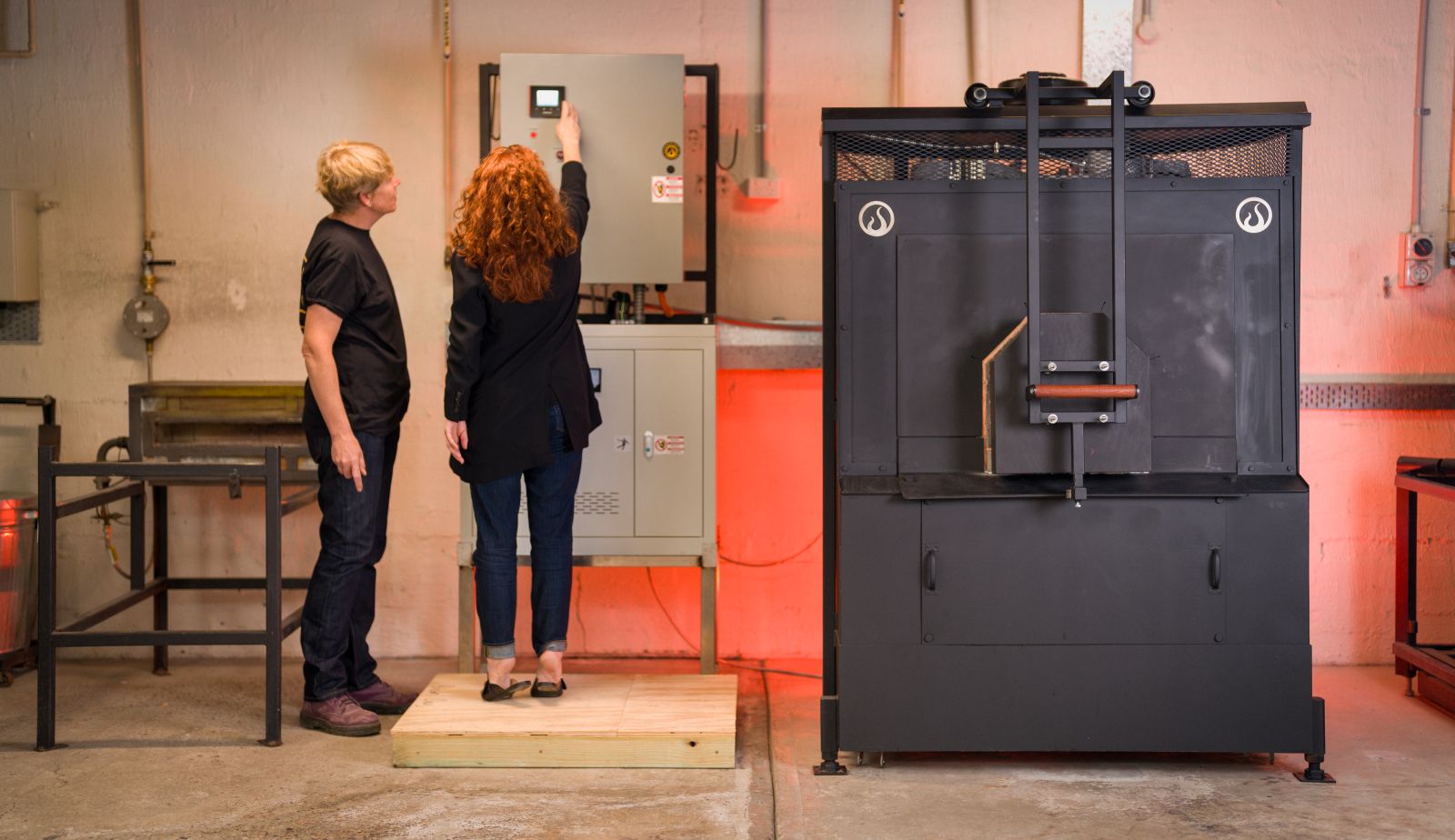
- Advanced infrastructure decarbonisation, including building electrification, cold-climate heat pump systems, EV chargers and replacement of the gas-fired glass furnace.
- Built climate literacy and practical learning, with sustainability education, internships, living lab projects and over 41% of students enrolled in at least one sustainability-related course in 2025.
Leadership & Engagement
- Embedded climate action into institutional strategy, including the ANU’s Environmental Sustainability Plan and Corporate Plan 2025–2028 emissions reduction KPI.
- Engaged staff and students at scale, including over 400 staff in the Carbon Smart Travel Program and more than 1,000 staff and students in commuting and working-from-home research.
- Used participatory design to build ownership, enabling staff, students and researchers to co-design tools, policies and practical solutions.
- Shared leadership across the sector, contributing to ACTS, TEFMA, Go8, IARU and climate scenario work for tertiary institutions.
Wider Societal Impact
- Created replicable decarbonisation models for public institutions, heritage buildings and complex campuses, particularly through cold-climate electrification.
- Shared open tools and methodologies, including Carbon Smart guides, Scope 3 reporting methods, travel emissions tracking and carbon removal principles.
- Supported climate capability beyond the ANU, helping other institutions and sectors adopt stronger approaches to carbon accounting, electrification and behaviour change.
- Prepared graduates for climate-focused careers, giving students practical experience in emissions tracking, climate risk, sustainable procurement, Scope 3 emissions and transdisciplinary problem-solving.



Top 3 learnings
Supported by

Category finalists
Climate Action
Climate Action

Climate Action
Climate Action
Climate Action
Climate Action
Climate Action category
The Australian National University’s Carbon Smart approach is a whole-of-organisation response to climate change, empowering people to make low-emissions choices, embed carbon awareness into decision-making, and direct efforts to where impact is most significant. The program targets emissions reductions across Scopes 1, 2 and 3, supporting ANU’s ambition to reach below zero emissions by 2040 while adapting to emerging climate risks.
The multi-dimensional program combines infrastructure transformation, systems change, and behavioural and cultural engagement. This includes electrifying heating with innovative heat pump technologies, transitioning towards 100% market-based renewable electricity, improving building energy performance, transforming their travel policy, mapping value-chain emissions, expanding EV infrastructure, and creating tools and education opportunities for staff and students.
By integrating research, teaching and operations with real-world climate action, ANU’s Carbon Smart approach demonstrates how a large institution can embed climate responsibility across infrastructure, governance, culture and daily decision-making.
Top 3 learnings
Impacts & Benefits
- Reduced operational emissions, including a 6% reduction in Scope 1 emissions and 100% reduction in market-based Scope 2 emissions since 2019.
- Cut travel-related emissions by 38%, supported by the Carbon Smart Travel Program, behavioural tools and improved emissions tracking.
- Improved energy performance, with 94% market-based renewable electricity across campuses and an 11% reduction in energy-use intensity since 2019.
- Advanced infrastructure decarbonisation, including building electrification, cold-climate heat pump systems, EV chargers and replacement of the gas-fired glass furnace.
- Built climate literacy and practical learning, with sustainability education, internships, living lab projects and over 41% of students enrolled in at least one sustainability-related course in 2025.
Leadership & Engagement
- Embedded climate action into institutional strategy, including the ANU’s Environmental Sustainability Plan and Corporate Plan 2025–2028 emissions reduction KPI.
- Engaged staff and students at scale, including over 400 staff in the Carbon Smart Travel Program and more than 1,000 staff and students in commuting and working-from-home research.
- Used participatory design to build ownership, enabling staff, students and researchers to co-design tools, policies and practical solutions.
- Shared leadership across the sector, contributing to ACTS, TEFMA, Go8, IARU and climate scenario work for tertiary institutions.
Wider Societal Impact
- Created replicable decarbonisation models for public institutions, heritage buildings and complex campuses, particularly through cold-climate electrification.
- Shared open tools and methodologies, including Carbon Smart guides, Scope 3 reporting methods, travel emissions tracking and carbon removal principles.
- Supported climate capability beyond the ANU, helping other institutions and sectors adopt stronger approaches to carbon accounting, electrification and behaviour change.
- Prepared graduates for climate-focused careers, giving students practical experience in emissions tracking, climate risk, sustainable procurement, Scope 3 emissions and transdisciplinary problem-solving.
Supported by
Category finalists
Climate Action
Climate Action
Climate Action
Climate Action
Climate Action
Climate Action