Climate Action category
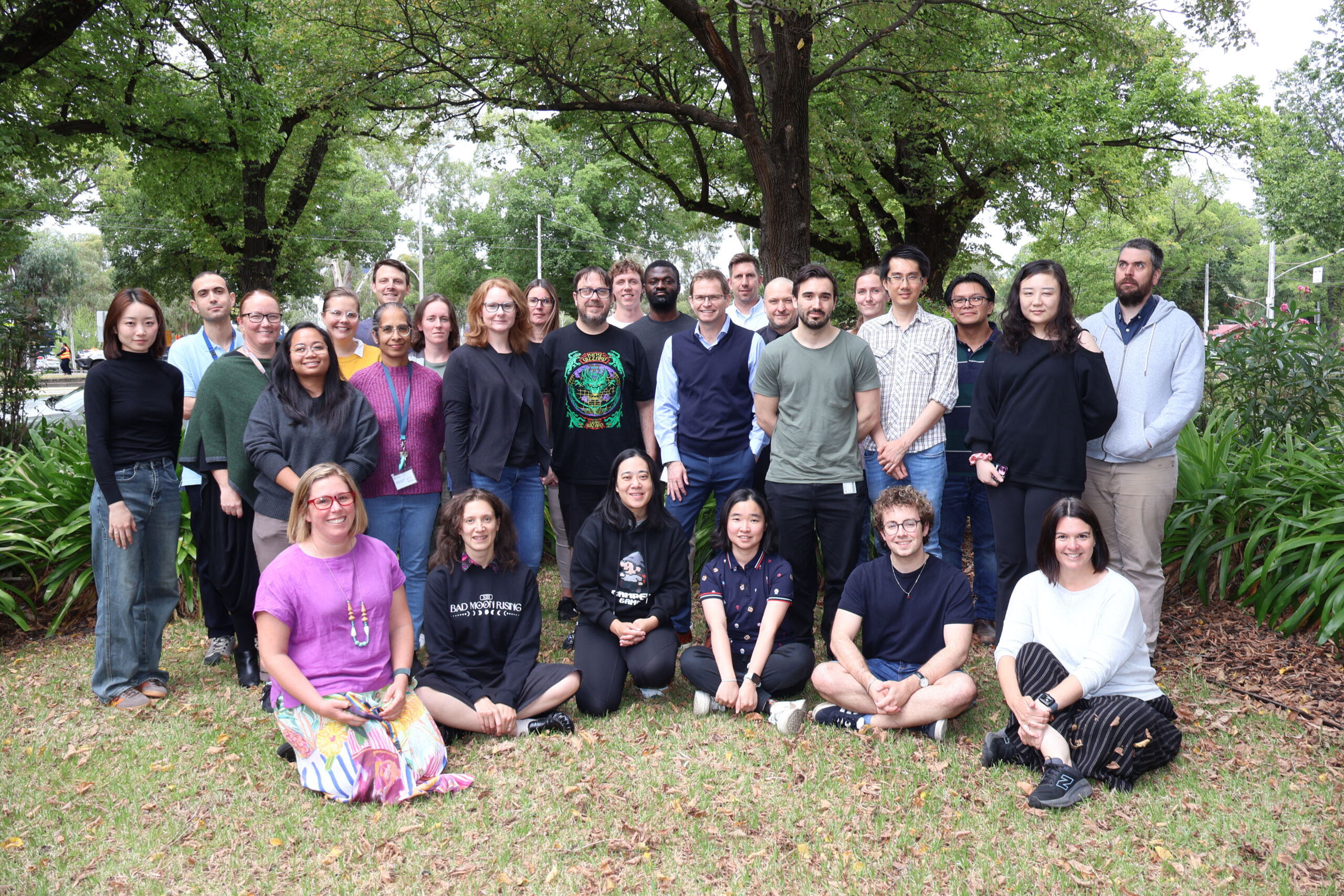
Monash Institute of Pharmaceutical Sciences (MIPS) is addressing the dual challenge that medicines both respond to and contribute to climate change. Through an institute-wide climate health initiative, MIPS is embedding sustainability across research, education and operations, transforming an energy-intensive research environment into a model for low-carbon innovation.
The initiative has implemented coordinated operational and behavioural change at scale, with 80% of laboratories engaged in My Green Lab certification; the highest number of participating My Green Lab laboratories and Green-level certifications nationwide.
By embedding sustainability capability through staff training, student learning and industry partnerships focused on Scope 3 emissions, the initiative is delivering measurable outcomes. It establishes a scalable, sector-leading model for sustainable pharmaceutical science.
Impacts & Benefits
- Delivered significant projected emissions reductions, with My Green Lab data estimating annual savings of approximately 1,228 tCO₂e.
- Scaled sustainable laboratory practice across MIPS, engaging around 80% of laboratories and 326 lab members in My Green Lab certification.
- Generated financial and operational benefits, including projected savings of USD $664,197, an estimated 8.6-day return on investment, and ongoing efficiencies in energy, water and waste.
- Built sustainability capability across staff and students, including 26 trained My Green Lab Accredited Professionals and planned training for more than 1,000 students annually.
Leadership & Engagement
- Led whole-of-institute transformation, integrating sustainability across research, operations, education and industry engagement.
- Created a strong Green Lab Community of Practice, bringing together academic staff, operations, procurement, OHS professionals and lab representatives across 40 research groups.
- Embedded sustainability into everyday laboratory culture, through onboarding, training, standard procedures, data-driven decision-making and recognition programs.
- Secured strong leadership and staff participation, with the Green Lab Community of Practice reporting bi-monthly to the MIPS Executive Committee.
- Extended influence through industry partnerships, working with external suppliers to address Scope 3 emissions and circular laboratory supply chains.
Wider Societal Impact
- Addressed the link between climate change and human health, reducing the environmental footprint of pharmaceutical research while supporting better health outcomes.
- Created a transferable model for sustainable research environments, relevant to universities, medical research institutes, teaching laboratories and pharmaceutical organisations.
- Supported transformation across the pharmaceutical sector, through collaboration on sustainable procurement, lower-carbon products, take-back schemes and circular economy solutions.
- Prepared graduates for sustainable healthcare and pharmaceutical careers, equipping students with practical skills in green chemistry, resource efficiency and lifecycle thinking.
- Demonstrated how research institutions can act as climate action testbeds, aligning scientific innovation, operational change and education to support a more sustainable healthcare system.


Top 3 learnings
Supported by

Category finalists
Climate Action
Climate Action
Climate Action
Climate Action

Climate Action
Climate Action
Climate Action category
Monash Institute of Pharmaceutical Sciences (MIPS) is addressing the dual challenge that medicines both respond to and contribute to climate change. Through an institute-wide climate health initiative, MIPS is embedding sustainability across research, education and operations, transforming an energy-intensive research environment into a model for low-carbon innovation.
The initiative has implemented coordinated operational and behavioural change at scale, with 80% of laboratories engaged in My Green Lab certification; the highest number of participating My Green Lab laboratories and Green-level certifications nationwide.
By embedding sustainability capability through staff training, student learning and industry partnerships focused on Scope 3 emissions, the initiative is delivering measurable outcomes. It establishes a scalable, sector-leading model for sustainable pharmaceutical science.
Top 3 learnings
Impacts & Benefits
- Delivered significant projected emissions reductions, with My Green Lab data estimating annual savings of approximately 1,228 tCO₂e.
- Scaled sustainable laboratory practice across MIPS, engaging around 80% of laboratories and 326 lab members in My Green Lab certification.
- Generated financial and operational benefits, including projected savings of USD $664,197, an estimated 8.6-day return on investment, and ongoing efficiencies in energy, water and waste.
- Built sustainability capability across staff and students, including 26 trained My Green Lab Accredited Professionals and planned training for more than 1,000 students annually.
Leadership & Engagement
- Led whole-of-institute transformation, integrating sustainability across research, operations, education and industry engagement.
- Created a strong Green Lab Community of Practice, bringing together academic staff, operations, procurement, OHS professionals and lab representatives across 40 research groups.
- Embedded sustainability into everyday laboratory culture, through onboarding, training, standard procedures, data-driven decision-making and recognition programs.
- Secured strong leadership and staff participation, with the Green Lab Community of Practice reporting bi-monthly to the MIPS Executive Committee.
- Extended influence through industry partnerships, working with external suppliers to address Scope 3 emissions and circular laboratory supply chains.
Wider Societal Impact
- Addressed the link between climate change and human health, reducing the environmental footprint of pharmaceutical research while supporting better health outcomes.
- Created a transferable model for sustainable research environments, relevant to universities, medical research institutes, teaching laboratories and pharmaceutical organisations.
- Supported transformation across the pharmaceutical sector, through collaboration on sustainable procurement, lower-carbon products, take-back schemes and circular economy solutions.
- Prepared graduates for sustainable healthcare and pharmaceutical careers, equipping students with practical skills in green chemistry, resource efficiency and lifecycle thinking.
- Demonstrated how research institutions can act as climate action testbeds, aligning scientific innovation, operational change and education to support a more sustainable healthcare system.
Supported by
Category finalists
Climate Action
Climate Action
Climate Action
Climate Action
Climate Action
Climate Action