Sustainability Institution of the Year category
The University of Melbourne’s Closing the Loop: A Whole-of-Estate Circular Economy Program embeds circular economy principles across the University’s physical estate, from demolition and capital works to daily waste management, events, dining, and student engagement. Rather than treating circular economy as a standalone initiative, the program integrates reuse, donation, recovery, procurement, and behaviour change into the way the University builds, operates and connects with its community.
Building on the success of the Choose to Reuse program and Furniture and Equipment Reuse Service (FERS), the University has expanded its circular economy approach across major capital works and estate operations. Recent achievements include achieving 98 per cent landfill diversion from the Brownless Library demolition, 90 per cent diversion from AIID early works, and redirecting 110 tonnes of furniture and equipment from landfill through AIID.
Strategic investment in waste infrastructure and the internalisation of key collection processes has transformed waste operations from a contractor-led model to a more actively managed system. This approach has improved waste visibility, strengthened segregation practices, reduced contamination and increased recycling outcomes. By the end of 2025, the University had reduced bulk skip services by 62 per cent and rear-lift collections by 24 per cent, while supporting lower emissions through the transition to an electric waste fleet.
Through contractual sustainability targets, reusable service ware, asset recovery, Indigenous procurement, volunteer engagement and transparent reporting, the University is demonstrating how circular economy principles can be delivered at scale. This work creates environmental, financial and social value while influencing contractor practices and contributing to broader sector change.
Impacts & Benefits
- Achieved major landfill diversion, including 98% diversion from the Brownless Library demolition and 90% from AIID early works.
- Kept significant resources in circulation, including 110 tonnes of furniture and equipment diverted at AIID and 7,006 items redeployed through FERS in 2024.
- Delivered strong financial value, including approximately $200,000 in savings through reuse and avoided disposal costs at AIID, and $2.7 million in replacement value.
- Reduced waste from daily operations, including 43 tonnes of food waste, 0.5 tonnes of soft plastics and 55,714 container deposit items diverted.
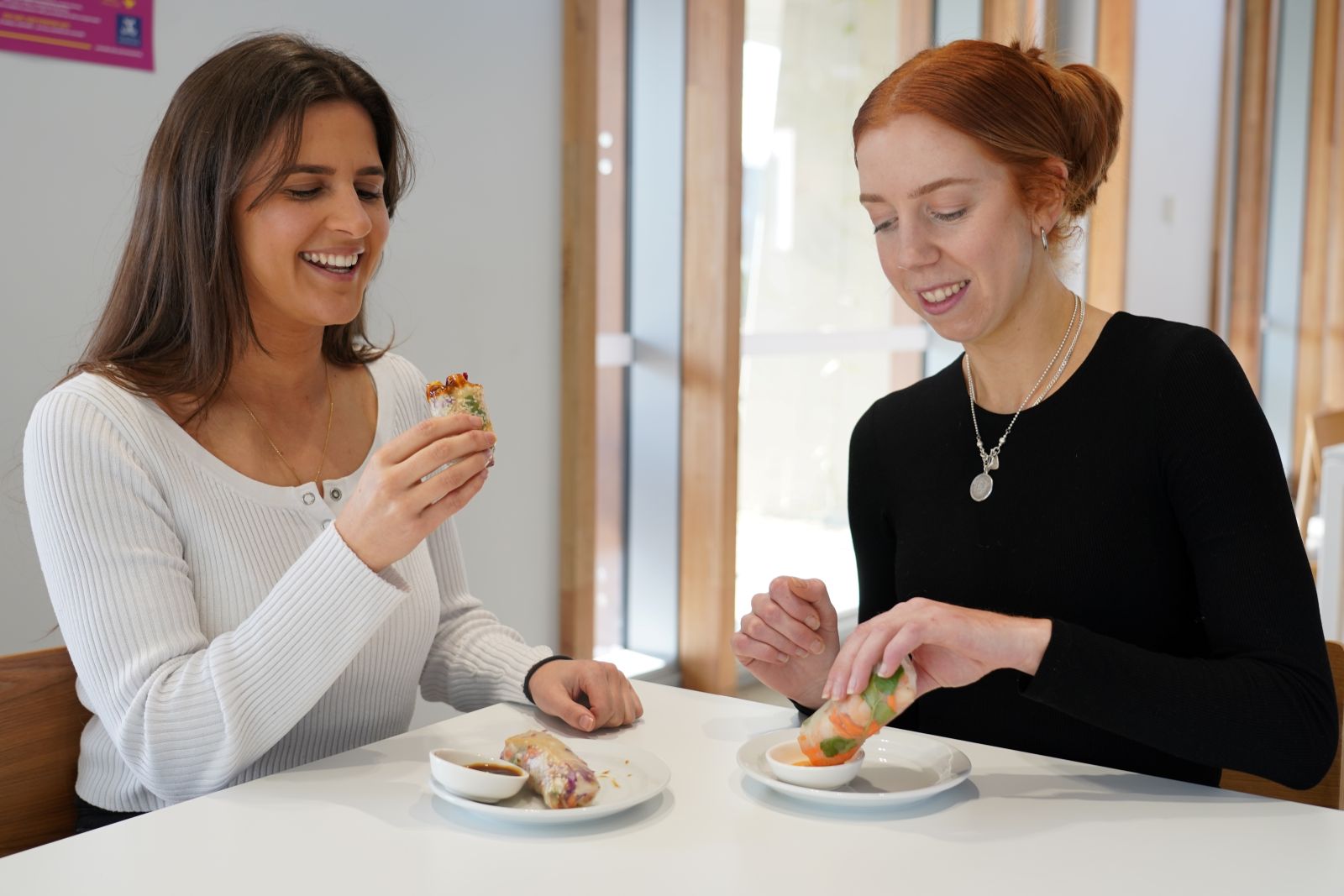
- Expanded reusable systems at scale, with Choose to Reuse washing 292,993 items in 2024 and 251,765 reusable items diverted from January 2025 to April 2026.
Leadership & Engagement
- Used procurement as a driver of change, embedding circular economy, landfill diversion and social procurement targets directly into contracts.
- Taking a holistic approach to circularity by integrating circular economy principles across the University operations, including capital works, asset reuse, waste management, food services, events, and retail partnerships.
- Strengthened circular economy outcomes through community engagement, with 512 volunteers contributing 711 hours across Waste Warriors, C2R Auditors, trainees and Mystery Shoppers.
Wider Societal Impact
- Shifted resources from waste to community value, donating 508 items to Habitat for Humanity Victoria and 30 tonnes of furniture to community organisations.
- Influenced construction and contractor practice, with circular procurement requirements changing supplier behaviour and supporting broader uptake of Indigenous suppliers.
- Created a replicable model for circular campuses, relevant to universities, commercial property, construction, hospitality, and large-scale event management.
- Built practical student sustainability capability, through volunteering, auditing, waste monitoring, stakeholder engagement and Melbourne Plus Sustainability Advocacy credentials.
- Demonstrated circular economy at scale, showing that high diversion rates, reusable service ware and community reuse can become standard operational practice rather than isolated projects.

Top 3 learnings
Supported by

Category finalists
Sustainability Institution of the Year
Sustainability Institution of the Year
Sustainability Institution of the Year
Sustainability Institution of the Year
Sustainability Institution of the Year category
The University of Melbourne’s Closing the Loop: A Whole-of-Estate Circular Economy Program embeds circular economy principles across the University’s physical estate, from demolition and capital works to daily waste management, events, dining, and student engagement. Rather than treating circular economy as a standalone initiative, the program integrates reuse, donation, recovery, procurement, and behaviour change into the way the University builds, operates and connects with its community.
Building on the success of the Choose to Reuse program and Furniture and Equipment Reuse Service (FERS), the University has expanded its circular economy approach across major capital works and estate operations. Recent achievements include achieving 98 per cent landfill diversion from the Brownless Library demolition, 90 per cent diversion from AIID early works, and redirecting 110 tonnes of furniture and equipment from landfill through AIID.
Strategic investment in waste infrastructure and the internalisation of key collection processes has transformed waste operations from a contractor-led model to a more actively managed system. This approach has improved waste visibility, strengthened segregation practices, reduced contamination and increased recycling outcomes. By the end of 2025, the University had reduced bulk skip services by 62 per cent and rear-lift collections by 24 per cent, while supporting lower emissions through the transition to an electric waste fleet.
Through contractual sustainability targets, reusable service ware, asset recovery, Indigenous procurement, volunteer engagement and transparent reporting, the University is demonstrating how circular economy principles can be delivered at scale. This work creates environmental, financial and social value while influencing contractor practices and contributing to broader sector change.
Top 3 learnings
Impacts & Benefits
- Achieved major landfill diversion, including 98% diversion from the Brownless Library demolition and 90% from AIID early works.
- Kept significant resources in circulation, including 110 tonnes of furniture and equipment diverted at AIID and 7,006 items redeployed through FERS in 2024.
- Delivered strong financial value, including approximately $200,000 in savings through reuse and avoided disposal costs at AIID, and $2.7 million in replacement value.
- Reduced waste from daily operations, including 43 tonnes of food waste, 0.5 tonnes of soft plastics and 55,714 container deposit items diverted.
- Expanded reusable systems at scale, with Choose to Reuse washing 292,993 items in 2024 and 251,765 reusable items diverted from January 2025 to April 2026.
Leadership & Engagement
- Used procurement as a driver of change, embedding circular economy, landfill diversion and social procurement targets directly into contracts.
- Taking a holistic approach to circularity by integrating circular economy principles across the University operations, including capital works, asset reuse, waste management, food services, events, and retail partnerships.
- Strengthened circular economy outcomes through community engagement, with 512 volunteers contributing 711 hours across Waste Warriors, C2R Auditors, trainees and Mystery Shoppers.
Wider Societal Impact
- Shifted resources from waste to community value, donating 508 items to Habitat for Humanity Victoria and 30 tonnes of furniture to community organisations.
- Influenced construction and contractor practice, with circular procurement requirements changing supplier behaviour and supporting broader uptake of Indigenous suppliers.
- Created a replicable model for circular campuses, relevant to universities, commercial property, construction, hospitality, and large-scale event management.
- Built practical student sustainability capability, through volunteering, auditing, waste monitoring, stakeholder engagement and Melbourne Plus Sustainability Advocacy credentials.
- Demonstrated circular economy at scale, showing that high diversion rates, reusable service ware and community reuse can become standard operational practice rather than isolated projects.
Supported by
Category finalists
Sustainability Institution of the Year
Sustainability Institution of the Year
Sustainability Institution of the Year
Sustainability Institution of the Year