Diversity, Equity & Inclusion category
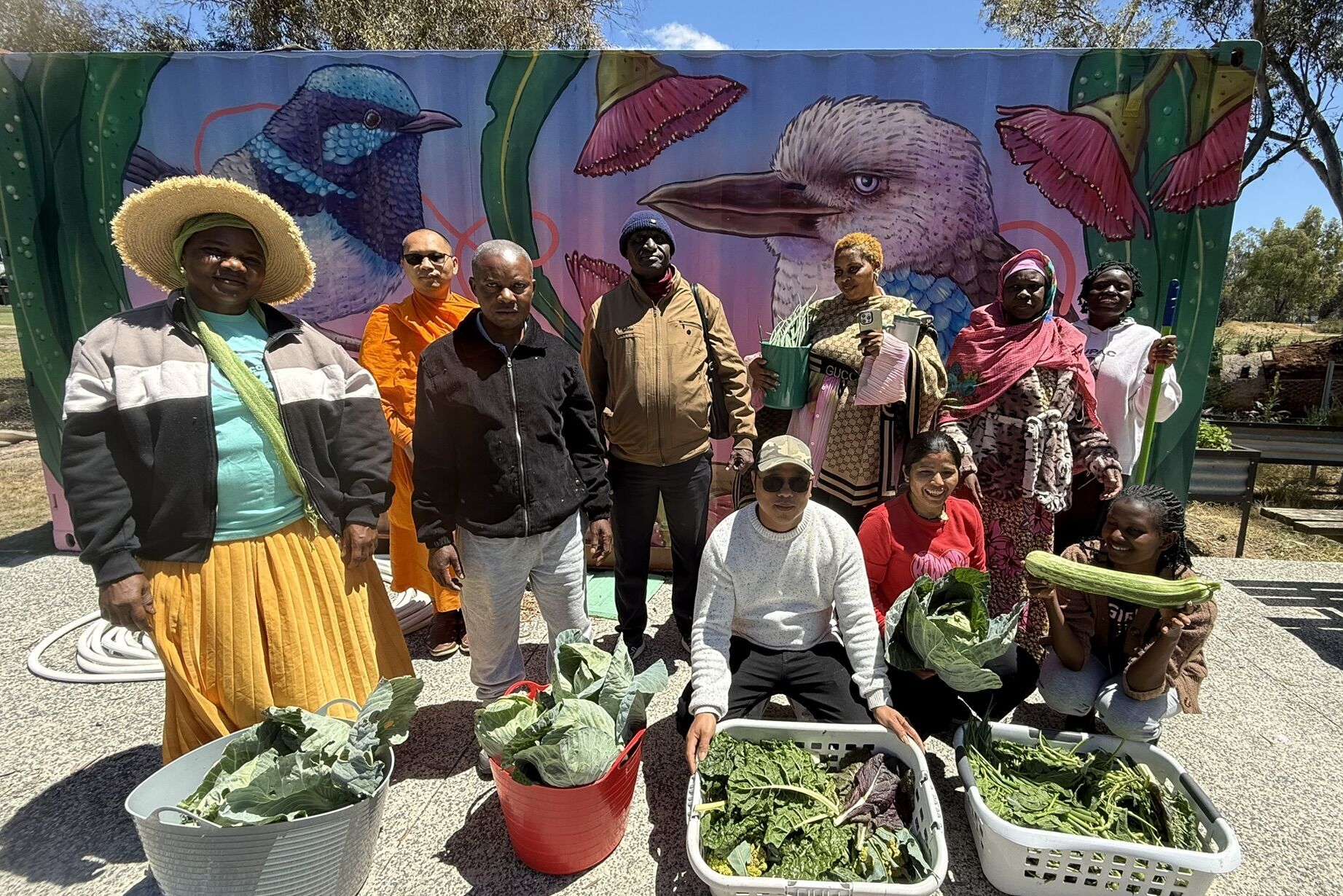
Wodonga Institute of TAFE’s ‘Growing Belonging’ project created an inclusive community garden learning environment for English language students, connecting language development with sustainability, wellbeing and community participation. Designed for culturally and linguistically diverse learners, including students from refugee backgrounds, the project moved learning beyond the classroom into a hands-on outdoor space where communication could develop naturally through shared tasks.
Co-designed by the Environmental Strategic Project Lead and English Language educators, the garden enabled 42 students to contribute to planting decisions, composting, worm farming, food growing, watering, harvesting and garden care. Learners used English in authentic, low-pressure settings while drawing on their own cultural knowledge, agricultural experience and lived expertise.
The project operated on a modest budget, using recycled materials, local partnerships and circular economy practices. It produced approximately 120kg of food for FoodShare, created a worm farm using cafeteria waste and repurposed materials, and strengthened students’ confidence, belonging, sustainability skills and connection to local community networks.
Impacts & Benefits
- Engaged 42 English language learners, supporting confidence, participation and belonging through practical, place-based learning.
- Produced approximately 120kg of food for FoodShare, contributing to local food relief and community wellbeing.
- Built language skills through real tasks, including planting, composting, harvesting, watering, collecting coffee grounds and managing the worm farm.
- Embedded circular economy practice, using cafeteria scraps, coffee grounds, repurposed milk containers and second-hand garden materials.
Leadership & Engagement
- Redesigned learning around learner needs, creating a safe, informal and practical environment for students with low English confidence or disrupted education.
- Positioned learners as contributors, involving students in co-design, planting choices, maintenance and harvesting rather than treating them as passive recipients.
- Valued cultural knowledge, recognising learners’ agricultural experience and lived expertise as strengths within the learning environment.
- Built strong local partnerships, including FoodShare, Nutrisoil, Bunnings, the Wodonga Recycle Centre, the Albury Wodonga Multicultural Community Farm and the Multicultural Interagency Network.
Wider Societal Impact
- Supported social inclusion and community cohesion, helping learners build confidence, relationships and a stronger sense of belonging.
- Created pathways to ongoing community participation, including confidence to engage with local food systems and the Albury Wodonga Multicultural Community Farm.
- Strengthened practical employability skills, including teamwork, communication, problem-solving, responsibility, budgeting and navigating community services.
- Contributed to food security and dignity, with learners both donating produce and connecting with community food relief networks.
- Demonstrated national relevance, offering a scalable model for AMEP providers, TAFEs, ACE providers, settlement services, neighbourhood houses and community education centres.


Top 3 learnings
Supported by

Category finalists
Diversity, Equity & Inclusion
Diversity, Equity & Inclusion

Diversity, Equity & Inclusion
Diversity, Equity & Inclusion
Diversity, Equity & Inclusion category
Wodonga Institute of TAFE’s ‘Growing Belonging’ project created an inclusive community garden learning environment for English language students, connecting language development with sustainability, wellbeing and community participation. Designed for culturally and linguistically diverse learners, including students from refugee backgrounds, the project moved learning beyond the classroom into a hands-on outdoor space where communication could develop naturally through shared tasks.
Co-designed by the Environmental Strategic Project Lead and English Language educators, the garden enabled 42 students to contribute to planting decisions, composting, worm farming, food growing, watering, harvesting and garden care. Learners used English in authentic, low-pressure settings while drawing on their own cultural knowledge, agricultural experience and lived expertise.
The project operated on a modest budget, using recycled materials, local partnerships and circular economy practices. It produced approximately 120kg of food for FoodShare, created a worm farm using cafeteria waste and repurposed materials, and strengthened students’ confidence, belonging, sustainability skills and connection to local community networks.
Top 3 learnings
Impacts & Benefits
- Engaged 42 English language learners, supporting confidence, participation and belonging through practical, place-based learning.
- Produced approximately 120kg of food for FoodShare, contributing to local food relief and community wellbeing.
- Built language skills through real tasks, including planting, composting, harvesting, watering, collecting coffee grounds and managing the worm farm.
- Embedded circular economy practice, using cafeteria scraps, coffee grounds, repurposed milk containers and second-hand garden materials.
Leadership & Engagement
- Redesigned learning around learner needs, creating a safe, informal and practical environment for students with low English confidence or disrupted education.
- Positioned learners as contributors, involving students in co-design, planting choices, maintenance and harvesting rather than treating them as passive recipients.
- Valued cultural knowledge, recognising learners’ agricultural experience and lived expertise as strengths within the learning environment.
- Built strong local partnerships, including FoodShare, Nutrisoil, Bunnings, the Wodonga Recycle Centre, the Albury Wodonga Multicultural Community Farm and the Multicultural Interagency Network.
Wider Societal Impact
- Supported social inclusion and community cohesion, helping learners build confidence, relationships and a stronger sense of belonging.
- Created pathways to ongoing community participation, including confidence to engage with local food systems and the Albury Wodonga Multicultural Community Farm.
- Strengthened practical employability skills, including teamwork, communication, problem-solving, responsibility, budgeting and navigating community services.
- Contributed to food security and dignity, with learners both donating produce and connecting with community food relief networks.
- Demonstrated national relevance, offering a scalable model for AMEP providers, TAFEs, ACE providers, settlement services, neighbourhood houses and community education centres.
Supported by
Category finalists
Diversity, Equity & Inclusion
Diversity, Equity & Inclusion
Diversity, Equity & Inclusion
Diversity, Equity & Inclusion