Leading the Circular Economy category
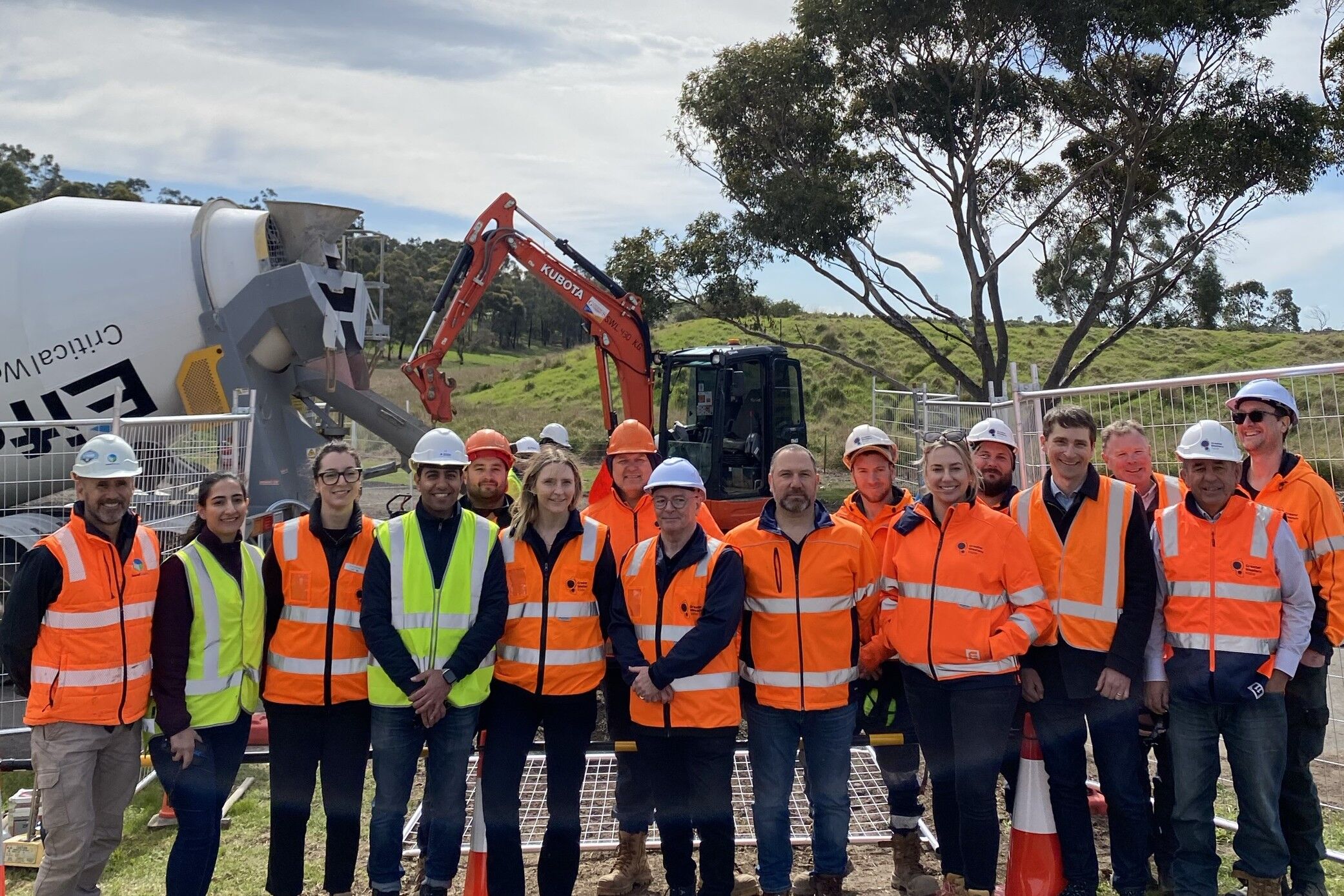
The Green Trench Innovation Alliance, led by Victoria University in collaboration with Greater Western Water and Ground Science, is revolutionising how trench infrastructure is delivered in Australia. This award-winning project developed and trialled two high-performance backfill blends made entirely from recycled glass, plastic, rubber, and crushed concrete. Piloted on live construction sites, these blends replaced virgin materials, reduced carbon emissions, and delivered cost savings—proving that circular economy solutions can outperform traditional approaches. With embedded monitoring, mobile batching, and multi-stakeholder engagement, the project has already begun influencing national standards and presents a scalable model for low-carbon infrastructure transformation.
Environmental and Social Benefits
- The recycled blends divert over 250 tonnes of virgin aggregate and save more than 280 tonnes of CO₂ emissions per 100m of trenching, significantly lowering the environmental footprint of civil works.
- The project repurposes challenging waste streams—including glass fines, soft plastics, crumb rubber and crushed concrete—into functional infrastructure inputs, helping address regional landfill pressures and material shortages.
- Students gained hands-on experience in live construction environments, while local suppliers and councils benefited from knowledge-sharing and material reuse pathways.
Leadership and Engagement
- Green Trench is the first project in Australia to test fully recycled backfill materials under real construction conditions, providing practical evidence of performance and viability.
- Contractors, suppliers, water authorities and academics co-designed the blends and monitoring protocols, ensuring solutions met both technical and operational requirements.
- Over 30 stakeholders contributed, including undergraduate students, PhD researchers, utilities, civil engineers, and local government representatives—fostering deep industry-academic integration.
Significance to the Sector
- The success of Green Trench has informed upcoming revisions to AS/NZS 3725, shifting industry expectations of what’s possible in trench backfill performance and sustainability.
- The mobile batching process and use of low-cost recycled inputs proved that sustainable materials can meet price, performance and policy requirements—without compromising delivery.
- Green Trench moves beyond pilots and prototypes, offering a tested, transferable model for circular practices in civil works, utilities and public infrastructure.
Wider Societal Impact
- Supports climate-resilient and resource-efficient infrastructure that benefits communities long-term.
- Strengthens circular economy supply chains and local industry capabilities, especially in regional areas.
- Positions universities as key innovators in low-carbon construction and practical systems change.


Top 3 learnings
Supported by

Category finalists

Leading the Circular Economy
Leading the Circular Economy

Leading the Circular Economy
Leading the Circular Economy

Leading the Circular Economy
Leading the Circular Economy
Leading the Circular Economy category
The Green Trench Innovation Alliance, led by Victoria University in collaboration with Greater Western Water and Ground Science, is revolutionising how trench infrastructure is delivered in Australia. This award-winning project developed and trialled two high-performance backfill blends made entirely from recycled glass, plastic, rubber, and crushed concrete. Piloted on live construction sites, these blends replaced virgin materials, reduced carbon emissions, and delivered cost savings—proving that circular economy solutions can outperform traditional approaches. With embedded monitoring, mobile batching, and multi-stakeholder engagement, the project has already begun influencing national standards and presents a scalable model for low-carbon infrastructure transformation.
Top 3 learnings
Environmental and Social Benefits
- The recycled blends divert over 250 tonnes of virgin aggregate and save more than 280 tonnes of CO₂ emissions per 100m of trenching, significantly lowering the environmental footprint of civil works.
- The project repurposes challenging waste streams—including glass fines, soft plastics, crumb rubber and crushed concrete—into functional infrastructure inputs, helping address regional landfill pressures and material shortages.
- Students gained hands-on experience in live construction environments, while local suppliers and councils benefited from knowledge-sharing and material reuse pathways.
Leadership and Engagement
- Green Trench is the first project in Australia to test fully recycled backfill materials under real construction conditions, providing practical evidence of performance and viability.
- Contractors, suppliers, water authorities and academics co-designed the blends and monitoring protocols, ensuring solutions met both technical and operational requirements.
- Over 30 stakeholders contributed, including undergraduate students, PhD researchers, utilities, civil engineers, and local government representatives—fostering deep industry-academic integration.
Significance to the Sector
- The success of Green Trench has informed upcoming revisions to AS/NZS 3725, shifting industry expectations of what’s possible in trench backfill performance and sustainability.
- The mobile batching process and use of low-cost recycled inputs proved that sustainable materials can meet price, performance and policy requirements—without compromising delivery.
- Green Trench moves beyond pilots and prototypes, offering a tested, transferable model for circular practices in civil works, utilities and public infrastructure.
Wider Societal Impact
- Supports climate-resilient and resource-efficient infrastructure that benefits communities long-term.
- Strengthens circular economy supply chains and local industry capabilities, especially in regional areas.
- Positions universities as key innovators in low-carbon construction and practical systems change.
Supported by
Category finalists
Leading the Circular Economy
Leading the Circular Economy
Leading the Circular Economy
Leading the Circular Economy
Leading the Circular Economy
Leading the Circular Economy