Next Generation Learning & Skills category
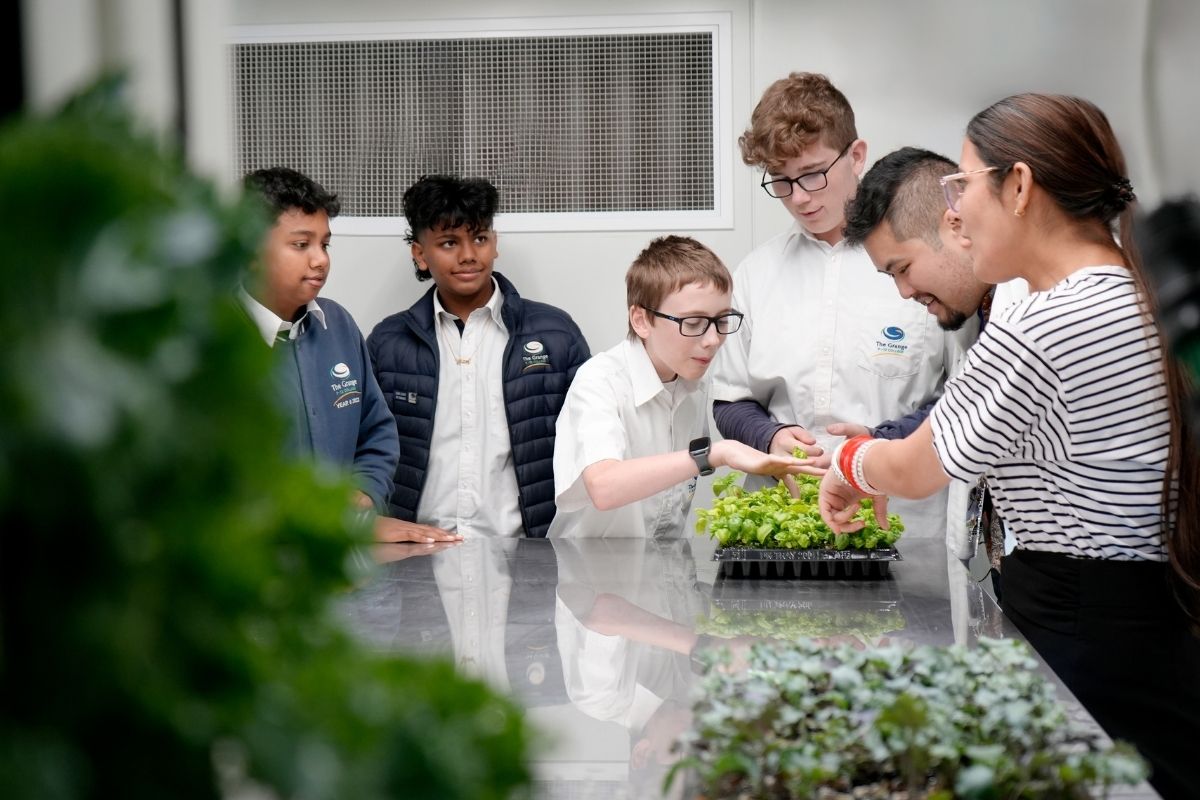
Victoria University’s “The Smart Farm @ Wyndham Tech School” is an innovative educational project that integrates cutting-edge technology with sustainable agriculture to provide hands-on learning experiences for secondary students in Melbourne’s western suburbs. The initiative is centered around a 40ft shipping container converted into a high-tech vertical farm, equipped with an Internet of Things (IoT)-controlled environment. The project aims to engage students in exploring sustainable farming practices while introducing them to the technological, scientific, and business aspects of modern agriculture. Since its inception, the Smart Farm has engaged over 1,600 students and 40 secondary school teachers, far exceeding initial engagement goals.
Environmental and Social Benefits
- Resource Efficiency: The Smart Farm significantly reduces water and energy usage compared to traditional farming methods. The IoT-controlled environment optimises resource management, demonstrating sustainable agriculture practices that can be replicated in urban settings.
- Sustainable Practices: The farm is powered by solar energy and utilises a closed-loop water recycling system, minimising its ecological footprint. These sustainable practices are integral to the farm’s operations and serve as a model for environmentally friendly agriculture.
- Community Engagement: The project has fostered strong community ties by involving local industries, Indigenous groups, and educational institutions. This engagement promotes a deeper understanding of local agricultural heritage and sustainability practices.
Leadership and Engagement
- Collaborative Partnerships: The project is supported by a $368,000 grant from the Victorian Government’s Secondary Schools Agriculture Fund and has partnered with industry leaders such as Velisha Farms and Modular Farms Australia. These partnerships enhance the educational content with real-world insights into agribusiness and technological applications.
- Student-Centered Learning: The initiative provides students with hands-on experiences in sustainable agriculture, integrating practical applications of IoT technology, plant science, and business strategies. The Smart Farm allows students to develop skills that are directly applicable to future careers in the rapidly evolving agritech sector.
- Staff and Community Involvement: The project has engaged the entire Wyndham Tech School staff, who have received specialised training to operate the farm, and has also involved over 300 industry experts in tours and educational activities, demonstrating broad community support and involvement.
Significance to the Sector
- Innovative Educational Model: The Smart Farm’s integration of IoT technology with sustainable agricultural practices offers a unique educational model that can be replicated across other schools and institutions. Its focus on real-world applications and cross-curricular learning sets a new standard for STEM education.
- Scalable Impact: The project’s success in engaging a large number of students and educators in a relatively short time highlights its potential for expansion. Plans to incorporate agritech and agribusiness into vocational training programs demonstrate the initiative’s scalability and relevance to broader educational and industry contexts.
- Sector Leadership: By bridging the gap between technology and agriculture, the Smart Farm positions Victoria University as a leader in innovative educational practices. The project’s success in integrating sustainability into the curriculum serves as a model for other institutions seeking to advance sustainability education.
Wider Societal Impact
- Economic and Social Contributions: The Smart Farm supports local economic development by collaborating with local agricultural businesses and creating a network of industry partners. These collaborations not only enhance the educational experience but also contribute to the local economy and foster sustainable business practices.
- Cultural Integration: The project incorporates Indigenous knowledge and practices through partnerships with local Indigenous nurseries, promoting the use of modern farming techniques to support native revegetation efforts. This integration enriches the educational content and fosters respect for cultural heritage.
- Global Relevance: The Smart Farm’s innovative approach to sustainable agriculture and education has the potential to influence similar projects globally, particularly in urban settings where resource efficiency and sustainable practices are increasingly critical.
Victoria University’s “The Smart Farm @ Wyndham Tech School” is an initiative that successfully combines advanced technology with sustainable agriculture to provide students with practical, hands-on learning experiences. The project not only enhances educational outcomes but also promotes sustainability and community engagement, making it a model for other institutions. Its innovative approach, strong community ties, and potential for scalability underscore its significance within the education sector and beyond, positioning it as a leader in next-generation learning and skills development.

Top 3 learnings
Supported by
Category finalists
Next Generation Learning & Skills/Winners
Next Generation Learning & Skills/Winners
Next Generation Learning & Skills
Next Generation Learning & Skills

Next Generation Learning & Skills
Next Generation Learning & Skills

Next Generation Learning & Skills category
Victoria University’s “The Smart Farm @ Wyndham Tech School” is an innovative educational project that integrates cutting-edge technology with sustainable agriculture to provide hands-on learning experiences for secondary students in Melbourne’s western suburbs. The initiative is centered around a 40ft shipping container converted into a high-tech vertical farm, equipped with an Internet of Things (IoT)-controlled environment. The project aims to engage students in exploring sustainable farming practices while introducing them to the technological, scientific, and business aspects of modern agriculture. Since its inception, the Smart Farm has engaged over 1,600 students and 40 secondary school teachers, far exceeding initial engagement goals.
Top 3 learnings
Environmental and Social Benefits
- Resource Efficiency: The Smart Farm significantly reduces water and energy usage compared to traditional farming methods. The IoT-controlled environment optimises resource management, demonstrating sustainable agriculture practices that can be replicated in urban settings.
- Sustainable Practices: The farm is powered by solar energy and utilises a closed-loop water recycling system, minimising its ecological footprint. These sustainable practices are integral to the farm’s operations and serve as a model for environmentally friendly agriculture.
- Community Engagement: The project has fostered strong community ties by involving local industries, Indigenous groups, and educational institutions. This engagement promotes a deeper understanding of local agricultural heritage and sustainability practices.
Leadership and Engagement
- Collaborative Partnerships: The project is supported by a $368,000 grant from the Victorian Government’s Secondary Schools Agriculture Fund and has partnered with industry leaders such as Velisha Farms and Modular Farms Australia. These partnerships enhance the educational content with real-world insights into agribusiness and technological applications.
- Student-Centered Learning: The initiative provides students with hands-on experiences in sustainable agriculture, integrating practical applications of IoT technology, plant science, and business strategies. The Smart Farm allows students to develop skills that are directly applicable to future careers in the rapidly evolving agritech sector.
- Staff and Community Involvement: The project has engaged the entire Wyndham Tech School staff, who have received specialised training to operate the farm, and has also involved over 300 industry experts in tours and educational activities, demonstrating broad community support and involvement.
Significance to the Sector
- Innovative Educational Model: The Smart Farm’s integration of IoT technology with sustainable agricultural practices offers a unique educational model that can be replicated across other schools and institutions. Its focus on real-world applications and cross-curricular learning sets a new standard for STEM education.
- Scalable Impact: The project’s success in engaging a large number of students and educators in a relatively short time highlights its potential for expansion. Plans to incorporate agritech and agribusiness into vocational training programs demonstrate the initiative’s scalability and relevance to broader educational and industry contexts.
- Sector Leadership: By bridging the gap between technology and agriculture, the Smart Farm positions Victoria University as a leader in innovative educational practices. The project’s success in integrating sustainability into the curriculum serves as a model for other institutions seeking to advance sustainability education.
Wider Societal Impact
- Economic and Social Contributions: The Smart Farm supports local economic development by collaborating with local agricultural businesses and creating a network of industry partners. These collaborations not only enhance the educational experience but also contribute to the local economy and foster sustainable business practices.
- Cultural Integration: The project incorporates Indigenous knowledge and practices through partnerships with local Indigenous nurseries, promoting the use of modern farming techniques to support native revegetation efforts. This integration enriches the educational content and fosters respect for cultural heritage.
- Global Relevance: The Smart Farm’s innovative approach to sustainable agriculture and education has the potential to influence similar projects globally, particularly in urban settings where resource efficiency and sustainable practices are increasingly critical.
Victoria University’s “The Smart Farm @ Wyndham Tech School” is an initiative that successfully combines advanced technology with sustainable agriculture to provide students with practical, hands-on learning experiences. The project not only enhances educational outcomes but also promotes sustainability and community engagement, making it a model for other institutions. Its innovative approach, strong community ties, and potential for scalability underscore its significance within the education sector and beyond, positioning it as a leader in next-generation learning and skills development.
Supported by
Category finalists
Next Generation Learning & Skills/Winners
Next Generation Learning & Skills/Winners
Next Generation Learning & Skills
Next Generation Learning & Skills
Next Generation Learning & Skills
Next Generation Learning & Skills