Diversity, Equity and Inclusion category
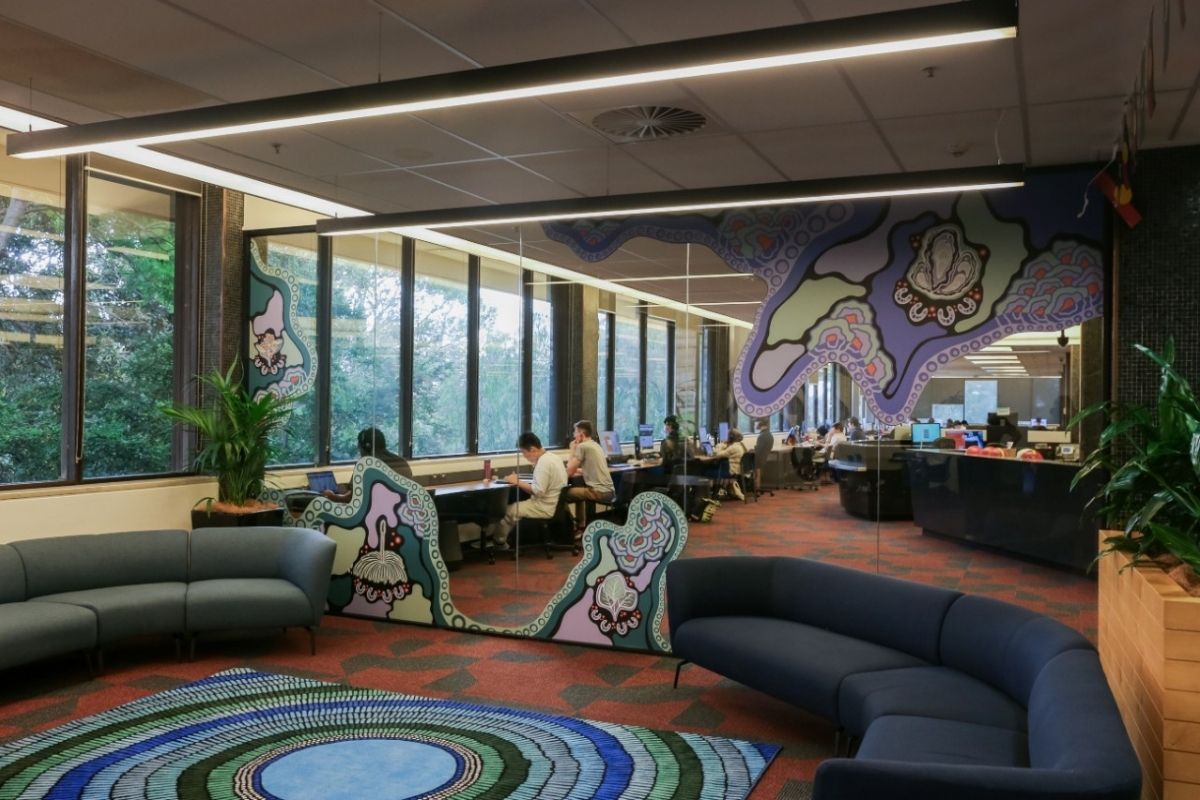
The University of Sydney Library has adopted and integrated sector-leading Aboriginal and Torres Strait Islander cultural protocols that promote culturally safe practices across its services, spaces, and resources. This initiative, the first of its kind in an Australian academic library, addresses critical issues such as access to culturally sacred materials, the presence of racism and inaccuracies in historical content, and the representation of First Nations voices. In the early stages of implementation, the protocols have influenced the design and operation of both physical and digital spaces within the Library, including the Fisher Library rooftop terrace, the Library’s website, and commissioned artworks that connect the University’s spaces with local Gadigal Country.
Environmental and Social Benefits
- Sustainable Landscaping: The Fisher Rooftop Terrace, revitalised with Indigenous gardens designed by the Aboriginal-owned social enterprise IndigiGrow, promotes sustainable landscaping through the use of native species and a self-wicking watering system. This green infrastructure reduces urban heat and improves air quality while supporting local biodiversity.
- Cultural Safety and Inclusion: By embedding Aboriginal and Torres Strait Islander cultural protocols across the library’s operations, the initiative fosters a culturally safe environment, enhancing the sense of belonging and respect for Indigenous students, staff, and community members.
- Educational Enhancement: The inclusion of culturally significant spaces and digital resources enriches the educational experience by integrating Indigenous knowledge and perspectives, promoting awareness and reconciliation among the broader university community.
Leadership and Engagement
- Collaborative Partnerships: The initiative’s success is underpinned by strong partnerships with local Indigenous communities and businesses, such as IndigiGrow and artist Jessie Waratah. These collaborations ensure the authenticity of the cultural elements integrated into the library’s spaces and services.
- Staff and Student Involvement: Over 30 library staff members participated in various phases of the rooftop terrace project, with the opening attracting over 300 staff and students. 16 Aboriginal and Torres Strait Islander students contributed to discussions on cultural wellbeing and safety in digital spaces. Additionally, 20 Indigenous students were consulted to co-design the Aboriginal and Torres Strait Islander student spaces within the Library.
- Ongoing Indigenous Engagement: The Library continues to engage with Indigenous stakeholders to ensure the ongoing relevance and cultural integrity of its spaces and services, exemplifying a commitment to long-term collaboration and cultural sustainability.
Significance to the Sector
- Pioneering Cultural Protocols: As the first academic library in Australia to adopt comprehensive Aboriginal and Torres Strait Islander cultural protocols, this initiative sets a new standard for cultural sensitivity and inclusiveness within the sector. The protocols influence all aspects of library operations, from collection development to the design of physical and digital spaces.
- Replicable Model: The initiative offers a blueprint for other institutions seeking to integrate Indigenous perspectives and practices into their operations. Its emphasis on sustainability, cultural safety, and community partnership makes it a replicable model for educational institutions and other sectors.
- Cultural and Environmental Stewardship: The initiative’s integration of cultural and environmental sustainability principles reflects a holistic approach to library management, demonstrating how cultural respect and environmental responsibility can coexist and enhance institutional operations.
Wider Societal Impact
- Cultural Preservation and Education: By creating culturally significant spaces and incorporating Indigenous cultural protocols, the initiative contributes to the preservation of Aboriginal and Torres Strait Islander cultures. It also educates the wider university community on the importance of cultural respect and sustainability.
- Social Cohesion and Reconciliation: The project fosters social cohesion by promoting an inclusive environment where Indigenous voices are heard and respected. This contributes to broader societal goals of reconciliation and equitable representation within the academic setting.
- Global Relevance: The initiative’s innovative approach to integrating Indigenous cultural protocols into institutional practices has the potential to influence sectors beyond education, offering insights into how organisations worldwide can foster culturally safe and inclusive environments.
The University of Sydney Library’s submission “Creating Culturally Safe and Significant Spaces” illustrates a new approach to embedding Aboriginal and Torres Strait Islander cultural protocols into the fabric of university operations. By fostering cultural safety, promoting sustainability, and enhancing educational outcomes, this collection of initiatives sets a new benchmark for inclusivity and cultural stewardship in academic libraries. Its success demonstrates the powerful impact of integrating Indigenous perspectives into institutional practices and offers a replicable model for other organisations seeking to advance diversity, equity, and inclusion.

Top 3 learnings
Supported by

Category finalists
Diversity, Equity and Inclusion/Highly Commended
Diversity, Equity and Inclusion/Highly Commended
Diversity, Equity and Inclusion/Winners
Diversity, Equity and Inclusion/Winners
Diversity, Equity and Inclusion category
The University of Sydney Library has adopted and integrated sector-leading Aboriginal and Torres Strait Islander cultural protocols that promote culturally safe practices across its services, spaces, and resources. This initiative, the first of its kind in an Australian academic library, addresses critical issues such as access to culturally sacred materials, the presence of racism and inaccuracies in historical content, and the representation of First Nations voices. In the early stages of implementation, the protocols have influenced the design and operation of both physical and digital spaces within the Library, including the Fisher Library rooftop terrace, the Library’s website, and commissioned artworks that connect the University’s spaces with local Gadigal Country.
Top 3 learnings
Environmental and Social Benefits
- Sustainable Landscaping: The Fisher Rooftop Terrace, revitalised with Indigenous gardens designed by the Aboriginal-owned social enterprise IndigiGrow, promotes sustainable landscaping through the use of native species and a self-wicking watering system. This green infrastructure reduces urban heat and improves air quality while supporting local biodiversity.
- Cultural Safety and Inclusion: By embedding Aboriginal and Torres Strait Islander cultural protocols across the library’s operations, the initiative fosters a culturally safe environment, enhancing the sense of belonging and respect for Indigenous students, staff, and community members.
- Educational Enhancement: The inclusion of culturally significant spaces and digital resources enriches the educational experience by integrating Indigenous knowledge and perspectives, promoting awareness and reconciliation among the broader university community.
Leadership and Engagement
- Collaborative Partnerships: The initiative’s success is underpinned by strong partnerships with local Indigenous communities and businesses, such as IndigiGrow and artist Jessie Waratah. These collaborations ensure the authenticity of the cultural elements integrated into the library’s spaces and services.
- Staff and Student Involvement: Over 30 library staff members participated in various phases of the rooftop terrace project, with the opening attracting over 300 staff and students. 16 Aboriginal and Torres Strait Islander students contributed to discussions on cultural wellbeing and safety in digital spaces. Additionally, 20 Indigenous students were consulted to co-design the Aboriginal and Torres Strait Islander student spaces within the Library.
- Ongoing Indigenous Engagement: The Library continues to engage with Indigenous stakeholders to ensure the ongoing relevance and cultural integrity of its spaces and services, exemplifying a commitment to long-term collaboration and cultural sustainability.
Significance to the Sector
- Pioneering Cultural Protocols: As the first academic library in Australia to adopt comprehensive Aboriginal and Torres Strait Islander cultural protocols, this initiative sets a new standard for cultural sensitivity and inclusiveness within the sector. The protocols influence all aspects of library operations, from collection development to the design of physical and digital spaces.
- Replicable Model: The initiative offers a blueprint for other institutions seeking to integrate Indigenous perspectives and practices into their operations. Its emphasis on sustainability, cultural safety, and community partnership makes it a replicable model for educational institutions and other sectors.
- Cultural and Environmental Stewardship: The initiative’s integration of cultural and environmental sustainability principles reflects a holistic approach to library management, demonstrating how cultural respect and environmental responsibility can coexist and enhance institutional operations.
Wider Societal Impact
- Cultural Preservation and Education: By creating culturally significant spaces and incorporating Indigenous cultural protocols, the initiative contributes to the preservation of Aboriginal and Torres Strait Islander cultures. It also educates the wider university community on the importance of cultural respect and sustainability.
- Social Cohesion and Reconciliation: The project fosters social cohesion by promoting an inclusive environment where Indigenous voices are heard and respected. This contributes to broader societal goals of reconciliation and equitable representation within the academic setting.
- Global Relevance: The initiative’s innovative approach to integrating Indigenous cultural protocols into institutional practices has the potential to influence sectors beyond education, offering insights into how organisations worldwide can foster culturally safe and inclusive environments.
The University of Sydney Library’s submission “Creating Culturally Safe and Significant Spaces” illustrates a new approach to embedding Aboriginal and Torres Strait Islander cultural protocols into the fabric of university operations. By fostering cultural safety, promoting sustainability, and enhancing educational outcomes, this collection of initiatives sets a new benchmark for inclusivity and cultural stewardship in academic libraries. Its success demonstrates the powerful impact of integrating Indigenous perspectives into institutional practices and offers a replicable model for other organisations seeking to advance diversity, equity, and inclusion.
Supported by
Category finalists
Diversity, Equity and Inclusion/Highly Commended
Diversity, Equity and Inclusion/Highly Commended
Diversity, Equity and Inclusion/Winners
Diversity, Equity and Inclusion/Winners