Creating Impact/Winners category
The Alliance for Suicide Prevention was established by the University of the Sunshine Coast’s (UniSC) Thompson Institute in 2019 as a strategic framework to address the Sunshine Coast region’s alarming suicide rate, which was 9.1% higher than the national average. The model was adapted from the European Alliance Against Depression, an evidence-based program targeting depressive disorders and suicidal behaviour that resulted in a significant decline in suicides in parts of Germany. UniSC is the first to adapt this European model to an Australian context, with further adaptations to ensure cultural capability and relevance for First Nations People. The purpose of the Alliance is to:
- Reduce the number of suicide attempts and completions;
- Provide evidence-based support for the improvement of mental health education and awareness; and
- Become a nationally recognised model for the prevention of suicide in Australia.
To achieve our purpose and objectives, the Alliance offers an ongoing program of suicide prevention activities, through a scalable and replicable model, with plans to expand beyond the Sunshine Coast over coming years. The Alliance team will work with regional partners to build relationships that embed the model as a foundational structure within the community, promoting a shared sense of responsibility to reduce suicide. In 2021, the Alliance team won the award for Community Engagement at the 2021 Engagement Australia Excellence Awards, which recognises “far-reaching impact and innovation” by universities and their research.
Environmental and social benefits
The Alliance has generated important social and economic benefits through impactful community engagement, including:
- 165 regional organisations have joined as members, representing almost 30,692 employees, with an estimated potential reach of 286,000* (calculated using the number of Alliance partners, training participants, employees at Alliance member organisations, and their customer base. This number projects the maximum reach of the Alliance programs).
- Over 3400 community members have participated in suicide prevention and mental health training.*
- Over 22,000 people have benefitted from Alliance activities (based on increased knowledge and access to resources).*
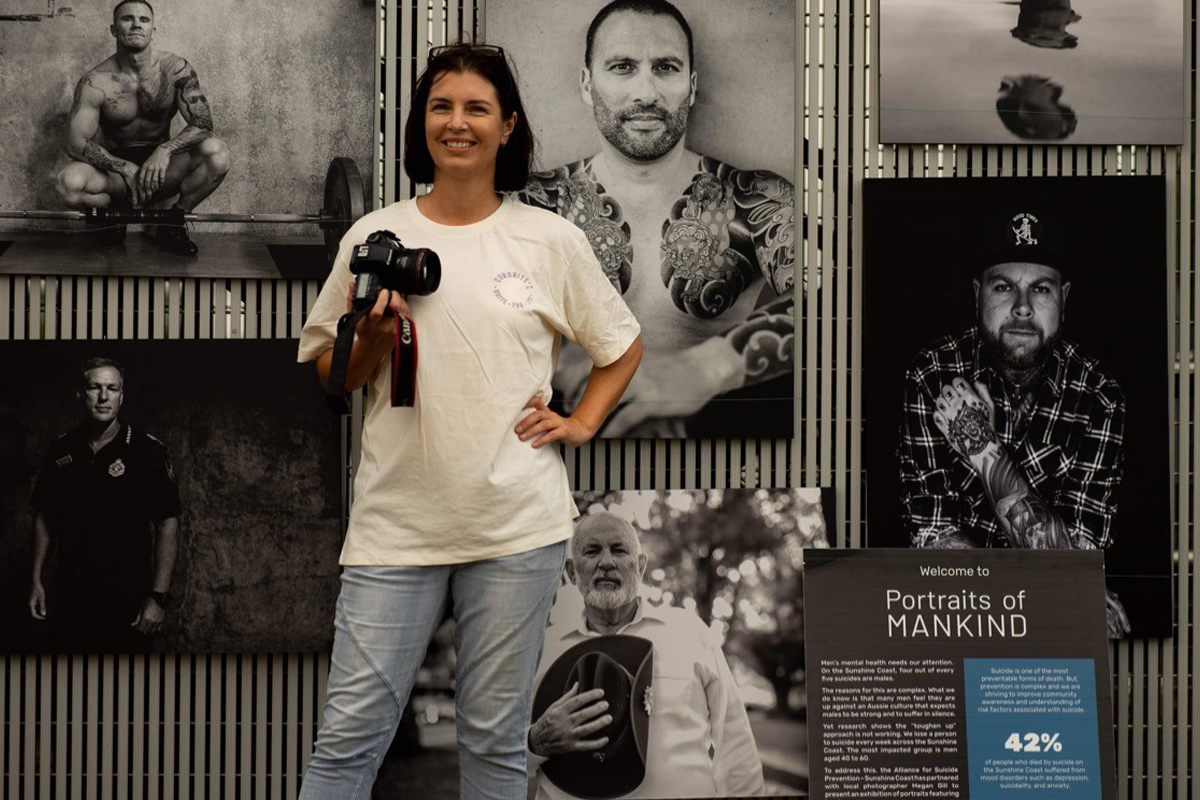
- Enhanced public awareness of the prevalence and impacts of suicide in men aged 40 to 60 through projects such as current photographic exhibition, “Portraits of Mankind” (https://www.thealliance.org.au/get-invloved/portraits-of-mankind/).
- Launched ‘iHelp’, a community co-designed digital tool that identifies and actions pathways to help, tailored to users’ circumstances, demographics and location. TI partnered with award-winning social enterprise My Community Directory, to ensure information is kept up-to-date, crucial for users who may be in crisis.
- Clinical trial on chronic suicidality providing a rapid-acting treatment option that resulted in 69% of participants achieving a clinical improvement within the first 6 weeks (https://pubmed.ncbi.nlm.nih.gov/33542187/)
- The Alliance has built its reputation to be a trusted source, which has encouraged agencies such as Queensland Police to work with us to use real time data of local suicides to help inform a more impactful response to addressing the precursors to suicide.
* ROOY Social Impact Modelling: https://www.thealliance.org.au/our-impact/
Leadership and engagement
Our Alliance team are connected and represented at many board table committees and panels that work on regional challenges including homelessness round tables, youth mental health consortiums, healthy ageing and dementia committees, diversity and inclusion committees, and Sustainable Development Goals working groups – just to name a few. We also host the local Public Health Network’s Suicide Prevention Working Group here at the Thompson Institute. This provides us with first-hand information and opportunities to ensure our priorities are set in alignment with our community’s and partners’ needs.
Our engagement model is particularly distinctive, encouraging strong partnerships centred on the Head, Heart, Hand model:
- Head: Connecting on local issues and the opportunity to participate in an innovative response to a complex social issue.
- Heart: Connecting with honesty and authenticity, focused on aligning the program with the partners’ ability to make change.
- Hand: Providing tangible tools through which partners could contribute to the overall mission, through training and resources, with opportunities for input and collaboration.
Further to this approach, we have built trust and respect with Local, State and Federal Government agencies, national industry representatives, and most importantly our local community members. The Alliance has built its trusted reputation through our core leadership principles:
- Genuine communication: Vital to gain trust, align efforts in the pursuit of goals, and inspire positive change, all communications are clear and transparent. Events were facilitated (networking/Q&A panels) to share the mission and communicate how people can be involved.
- Understanding regional issues: Tailored regional suicide prevention responses were informed through our extensive research into the causes and treatment of suicide and an in-depth understanding of regional issues garnered through community focus groups.
- Leaders and changemakers: Regional leaders with the best voice to influence change were identified and invited to be involved, with the first approached those who were established contacts with a large staff, whose involvement would generate immediate action and encourage others to be involved.
- Ensuring alignment: The program’s mission and values were aligned to the local leaders’ mission to ensure it represented their vision for their community and supported their plan to achieve success.
- Action: Monthly suicide prevention training commenced, inviting representatives of potential partners to experience the training first hand.
The implementation of this model alongside our core leadership practice ensures we are addressing and supporting what is relevant to our community and our surrounding neighbours whilst influencing change by promoting and advocating for the actions needed to reduce suicide.
Significance to the sector
The Alliance project is unique in many ways including:
- UniSC was the first to adapt the European Alliance Against Depression model to an Australian context to prevent suicides, with further adaptations to suit the unique needs of First Nations People in our region.
- It is a university-led program that has a high level of community engagement and partnerships with small, medium and large organisations (165) who would not otherwise have ongoing contact with the university. In two cases, organisations have taken our PdD students to measure the impact of their mental health and suicide prevention activities.
- It is action-orientated with strong participation from industry that includes MOU arrangements with our university sector.
Wider societal impact
The estimated cost of mental illness and suicide to the Australian economy is about $220 billion each year, with a further $151 billion from diminished health and reduced life expectancy. The 2021 Census found that mental health conditions affect 2.2 million Australians, making it the top long-term health disorder in Australia, ahead of arthritis and asthma. It is clear that there can be no health or sustainable development without a focus on mental health.
Learner/Graduate employer impact
The Alliance’s host organisation, UniSC’s Thompson Institute, offers two postgraduate programs in Mental Health and Neuroscience. Both the graduate certificate and graduate diploma include the course Understanding and Preventing Suicide. The Alliance team has worked with the educators of these programs, to ensure graduates learn about suicide prevention engagement and community training activities occurring internationally and hear directly from the Alliance team about the impacts of its work on the Sunshine Coast. The course is undertaken by people in a wide range of professions including teachers, allied health professionals, and first responders, many of whom are considered suicide prevention ‘gatekeepers’ within their respective communities. As our university continues to educate the health workforce, the legacy benefits to graduates and their employers stem from an enhanced understanding of gatekeeper roles, at both the individual and organisational level.


Top 3 learnings
Supported by

Category finalists

Climate Action/Winners
Climate Action/Winners
Benefitting Society/Winners
Benefitting Society/Winners

Sustainability Champion – Student/Winners
Sustainability Champion – Student/Winners

Creating Impact/Winners
Creating Impact/Winners
Sustainability Champion – Student/Winners
Sustainability Champion – Student/Winners
Leading the Circular Economy/Winners
Leading the Circular Economy/Winners
Creating Impact/Winners
Creating Impact/Winners
Diversity, Equity & Inclusion in Sustainability/Winners
Diversity, Equity & Inclusion in Sustainability/Winners
Next Generation Learning & Skills/Winners
Next Generation Learning & Skills/Winners

Creating Impact
Creating Impact
Sustainability Institution of the Year/Winners
Sustainability Institution of the Year/Winners
Leading the Circular Economy/Winners
Leading the Circular Economy/Winners
Next Generation Learning & Skills/Winners
Next Generation Learning & Skills/Winners

Sustainability Champion – Staff/Winners
Sustainability Champion – Staff/Winners
Sustainability Champion – Student/Winners
Sustainability Champion – Student/Winners

Next Generation Learning & Skills/Winners
Next Generation Learning & Skills/Winners
Sustainability Champion – Staff/Winners
Sustainability Champion – Staff/Winners
Creating Impact
Creating Impact
Sustainability Champion – Staff/Winners
Sustainability Champion – Staff/Winners
Student Engagement/Winners
Student Engagement/Winners
Creating Impact/Winners category
The Alliance for Suicide Prevention was established by the University of the Sunshine Coast’s (UniSC) Thompson Institute in 2019 as a strategic framework to address the Sunshine Coast region’s alarming suicide rate, which was 9.1% higher than the national average. The model was adapted from the European Alliance Against Depression, an evidence-based program targeting depressive disorders and suicidal behaviour that resulted in a significant decline in suicides in parts of Germany. UniSC is the first to adapt this European model to an Australian context, with further adaptations to ensure cultural capability and relevance for First Nations People. The purpose of the Alliance is to:
- Reduce the number of suicide attempts and completions;
- Provide evidence-based support for the improvement of mental health education and awareness; and
- Become a nationally recognised model for the prevention of suicide in Australia.
To achieve our purpose and objectives, the Alliance offers an ongoing program of suicide prevention activities, through a scalable and replicable model, with plans to expand beyond the Sunshine Coast over coming years. The Alliance team will work with regional partners to build relationships that embed the model as a foundational structure within the community, promoting a shared sense of responsibility to reduce suicide. In 2021, the Alliance team won the award for Community Engagement at the 2021 Engagement Australia Excellence Awards, which recognises “far-reaching impact and innovation” by universities and their research.
Top 3 learnings
Environmental and social benefits
The Alliance has generated important social and economic benefits through impactful community engagement, including:
- 165 regional organisations have joined as members, representing almost 30,692 employees, with an estimated potential reach of 286,000* (calculated using the number of Alliance partners, training participants, employees at Alliance member organisations, and their customer base. This number projects the maximum reach of the Alliance programs).
- Over 3400 community members have participated in suicide prevention and mental health training.*
- Over 22,000 people have benefitted from Alliance activities (based on increased knowledge and access to resources).*
- Enhanced public awareness of the prevalence and impacts of suicide in men aged 40 to 60 through projects such as current photographic exhibition, “Portraits of Mankind” (https://www.thealliance.org.au/get-invloved/portraits-of-mankind/).
- Launched ‘iHelp’, a community co-designed digital tool that identifies and actions pathways to help, tailored to users’ circumstances, demographics and location. TI partnered with award-winning social enterprise My Community Directory, to ensure information is kept up-to-date, crucial for users who may be in crisis.
- Clinical trial on chronic suicidality providing a rapid-acting treatment option that resulted in 69% of participants achieving a clinical improvement within the first 6 weeks (https://pubmed.ncbi.nlm.nih.gov/33542187/)
- The Alliance has built its reputation to be a trusted source, which has encouraged agencies such as Queensland Police to work with us to use real time data of local suicides to help inform a more impactful response to addressing the precursors to suicide.
* ROOY Social Impact Modelling: https://www.thealliance.org.au/our-impact/
Leadership and engagement
Our Alliance team are connected and represented at many board table committees and panels that work on regional challenges including homelessness round tables, youth mental health consortiums, healthy ageing and dementia committees, diversity and inclusion committees, and Sustainable Development Goals working groups – just to name a few. We also host the local Public Health Network’s Suicide Prevention Working Group here at the Thompson Institute. This provides us with first-hand information and opportunities to ensure our priorities are set in alignment with our community’s and partners’ needs.
Our engagement model is particularly distinctive, encouraging strong partnerships centred on the Head, Heart, Hand model:
- Head: Connecting on local issues and the opportunity to participate in an innovative response to a complex social issue.
- Heart: Connecting with honesty and authenticity, focused on aligning the program with the partners’ ability to make change.
- Hand: Providing tangible tools through which partners could contribute to the overall mission, through training and resources, with opportunities for input and collaboration.
Further to this approach, we have built trust and respect with Local, State and Federal Government agencies, national industry representatives, and most importantly our local community members. The Alliance has built its trusted reputation through our core leadership principles:
- Genuine communication: Vital to gain trust, align efforts in the pursuit of goals, and inspire positive change, all communications are clear and transparent. Events were facilitated (networking/Q&A panels) to share the mission and communicate how people can be involved.
- Understanding regional issues: Tailored regional suicide prevention responses were informed through our extensive research into the causes and treatment of suicide and an in-depth understanding of regional issues garnered through community focus groups.
- Leaders and changemakers: Regional leaders with the best voice to influence change were identified and invited to be involved, with the first approached those who were established contacts with a large staff, whose involvement would generate immediate action and encourage others to be involved.
- Ensuring alignment: The program’s mission and values were aligned to the local leaders’ mission to ensure it represented their vision for their community and supported their plan to achieve success.
- Action: Monthly suicide prevention training commenced, inviting representatives of potential partners to experience the training first hand.
The implementation of this model alongside our core leadership practice ensures we are addressing and supporting what is relevant to our community and our surrounding neighbours whilst influencing change by promoting and advocating for the actions needed to reduce suicide.
Significance to the sector
The Alliance project is unique in many ways including:
- UniSC was the first to adapt the European Alliance Against Depression model to an Australian context to prevent suicides, with further adaptations to suit the unique needs of First Nations People in our region.
- It is a university-led program that has a high level of community engagement and partnerships with small, medium and large organisations (165) who would not otherwise have ongoing contact with the university. In two cases, organisations have taken our PdD students to measure the impact of their mental health and suicide prevention activities.
- It is action-orientated with strong participation from industry that includes MOU arrangements with our university sector.
Wider societal impact
The estimated cost of mental illness and suicide to the Australian economy is about $220 billion each year, with a further $151 billion from diminished health and reduced life expectancy. The 2021 Census found that mental health conditions affect 2.2 million Australians, making it the top long-term health disorder in Australia, ahead of arthritis and asthma. It is clear that there can be no health or sustainable development without a focus on mental health.
Learner/Graduate employer impact
The Alliance’s host organisation, UniSC’s Thompson Institute, offers two postgraduate programs in Mental Health and Neuroscience. Both the graduate certificate and graduate diploma include the course Understanding and Preventing Suicide. The Alliance team has worked with the educators of these programs, to ensure graduates learn about suicide prevention engagement and community training activities occurring internationally and hear directly from the Alliance team about the impacts of its work on the Sunshine Coast. The course is undertaken by people in a wide range of professions including teachers, allied health professionals, and first responders, many of whom are considered suicide prevention ‘gatekeepers’ within their respective communities. As our university continues to educate the health workforce, the legacy benefits to graduates and their employers stem from an enhanced understanding of gatekeeper roles, at both the individual and organisational level.
Supported by
Category finalists
Climate Action/Winners
Climate Action/Winners
Benefitting Society/Winners
Benefitting Society/Winners
Sustainability Champion – Student/Winners
Sustainability Champion – Student/Winners
Creating Impact/Winners
Creating Impact/Winners
Sustainability Champion – Student/Winners
Sustainability Champion – Student/Winners
Leading the Circular Economy/Winners
Leading the Circular Economy/Winners
Creating Impact/Winners
Creating Impact/Winners
Diversity, Equity & Inclusion in Sustainability/Winners
Diversity, Equity & Inclusion in Sustainability/Winners
Next Generation Learning & Skills/Winners
Next Generation Learning & Skills/Winners
Creating Impact
Creating Impact
Sustainability Institution of the Year/Winners
Sustainability Institution of the Year/Winners
Leading the Circular Economy/Winners
Leading the Circular Economy/Winners
Next Generation Learning & Skills/Winners
Next Generation Learning & Skills/Winners
Sustainability Champion – Staff/Winners
Sustainability Champion – Staff/Winners
Sustainability Champion – Student/Winners
Sustainability Champion – Student/Winners
Next Generation Learning & Skills/Winners
Next Generation Learning & Skills/Winners
Sustainability Champion – Staff/Winners
Sustainability Champion – Staff/Winners
Creating Impact
Creating Impact
Sustainability Champion – Staff/Winners
Sustainability Champion – Staff/Winners
Student Engagement/Winners
Student Engagement/Winners