Sustainability Institution of the Year category
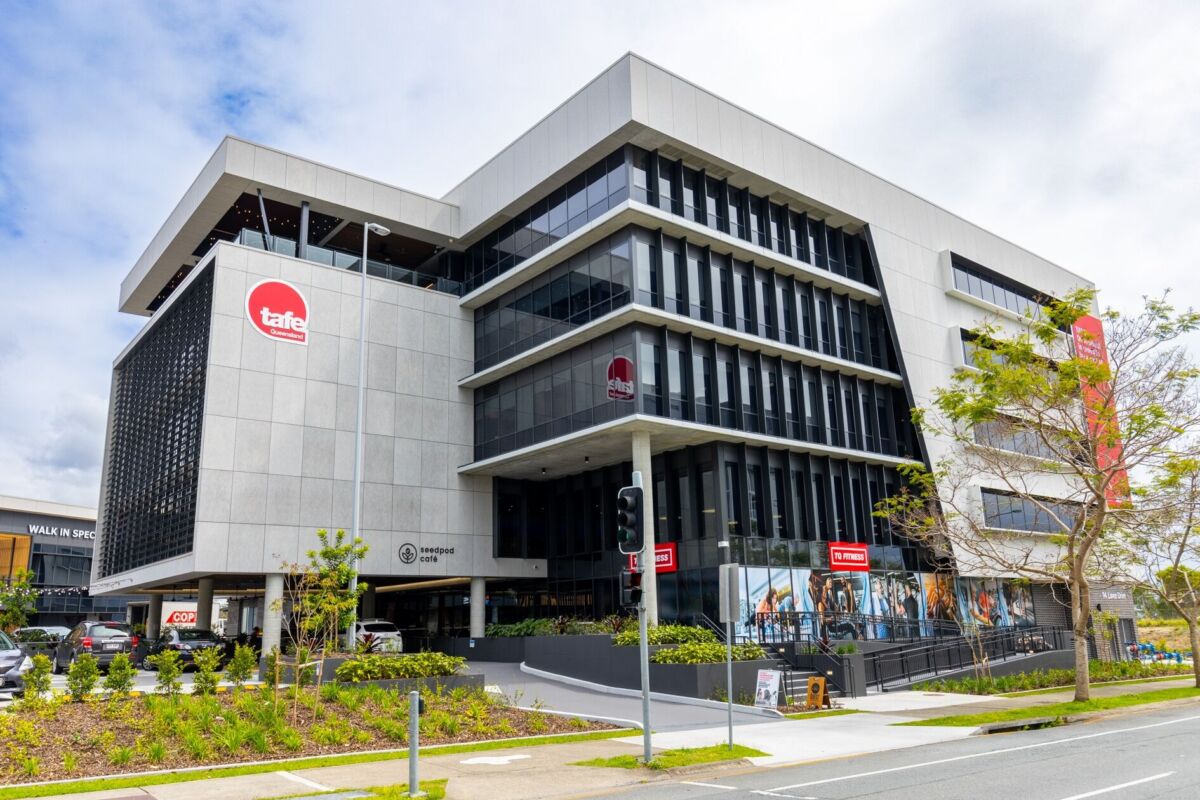
Opened in July 2022, TAFE Queensland’s Robina Campus is Australia’s first fully integrated sustainable vocational education and training (VET) campus. Designed to embed sustainability across its infrastructure, curriculum, operations, and partnerships, the campus exemplifies a whole-of-institution approach. With a five-storey vertical build incorporating solar energy, recycled materials, e-transport infrastructure and immersive green training venues, Robina is a national benchmark for system-level transformation. Its integration of the UN Sustainable Development Goals (SDGs) is reflected through inclusive programs, circular economy initiatives, and innovative delivery models. The campus has earned a Silver STARS rating and international recognition as a Centre of Vocational Excellence. Through education, engagement and enterprise, Robina is redefining sustainability within the VET sector and beyond.
Environmental and Social Benefits
- Solar panels provide 29% of campus power, cutting emissions by 235 tonnes annually; water usage has been reduced by 39%, with 56% of waste diverted from landfill.
- Initiatives such as Stop and Drop tables, clothes swaps and a 988% growth in the Containers for Change program support circularity and social equity.
- Student-led activities and community programs offer inclusive sustainability touchpoints, from murals and markets to bush-kindy playgroups.
Leadership and Engagement
- Executive-level leadership drives accountability, with dedicated roles overseeing infrastructure, culture, teaching and communications.
- Over 170 staff embed sustainability across disciplines; more than 3,000 students from 60 countries have participated in campus-led sustainability initiatives.
- Programs like Green Fields Bar + Restaurant and TQ Fitness model low-waste, local-first service, earning industry awards and engaging the public in sustainability experiences.
Significance to the Sector
- Robina represents whole-of-campus, whole-of-system change in VET—merging infrastructure, pedagogy and community within a cohesive sustainability framework.
- Its initiatives are already being replicated across TAFE Queensland campuses, including circular waste systems and digital-first practices.
- Robina’s model is embedded in the institution’s Social and Environmental Sustainability Action Plan, driving sector-wide influence.
Wider Societal Impact
- Raises sustainability literacy across all disciplines, equipping graduates to lead sustainability in sectors ranging from hospitality to childcare.
- Hosts public events and sustainability forums, strengthening civic awareness and industry engagement.
- Offers a scalable, place-based model for embedding the SDGs into education, inspiring replication across education and local government sectors.

Top 3 learnings
Supported by
Category finalists

Sustainability Institution of the Year
Sustainability Institution of the Year
Sustainability Institution of the Year category
Opened in July 2022, TAFE Queensland’s Robina Campus is Australia’s first fully integrated sustainable vocational education and training (VET) campus. Designed to embed sustainability across its infrastructure, curriculum, operations, and partnerships, the campus exemplifies a whole-of-institution approach. With a five-storey vertical build incorporating solar energy, recycled materials, e-transport infrastructure and immersive green training venues, Robina is a national benchmark for system-level transformation. Its integration of the UN Sustainable Development Goals (SDGs) is reflected through inclusive programs, circular economy initiatives, and innovative delivery models. The campus has earned a Silver STARS rating and international recognition as a Centre of Vocational Excellence. Through education, engagement and enterprise, Robina is redefining sustainability within the VET sector and beyond.
Top 3 learnings
Environmental and Social Benefits
- Solar panels provide 29% of campus power, cutting emissions by 235 tonnes annually; water usage has been reduced by 39%, with 56% of waste diverted from landfill.
- Initiatives such as Stop and Drop tables, clothes swaps and a 988% growth in the Containers for Change program support circularity and social equity.
- Student-led activities and community programs offer inclusive sustainability touchpoints, from murals and markets to bush-kindy playgroups.
Leadership and Engagement
- Executive-level leadership drives accountability, with dedicated roles overseeing infrastructure, culture, teaching and communications.
- Over 170 staff embed sustainability across disciplines; more than 3,000 students from 60 countries have participated in campus-led sustainability initiatives.
- Programs like Green Fields Bar + Restaurant and TQ Fitness model low-waste, local-first service, earning industry awards and engaging the public in sustainability experiences.
Significance to the Sector
- Robina represents whole-of-campus, whole-of-system change in VET—merging infrastructure, pedagogy and community within a cohesive sustainability framework.
- Its initiatives are already being replicated across TAFE Queensland campuses, including circular waste systems and digital-first practices.
- Robina’s model is embedded in the institution’s Social and Environmental Sustainability Action Plan, driving sector-wide influence.
Wider Societal Impact
- Raises sustainability literacy across all disciplines, equipping graduates to lead sustainability in sectors ranging from hospitality to childcare.
- Hosts public events and sustainability forums, strengthening civic awareness and industry engagement.
- Offers a scalable, place-based model for embedding the SDGs into education, inspiring replication across education and local government sectors.
Supported by
Category finalists
Sustainability Institution of the Year
Sustainability Institution of the Year