Diversity Equity & Inclusion category
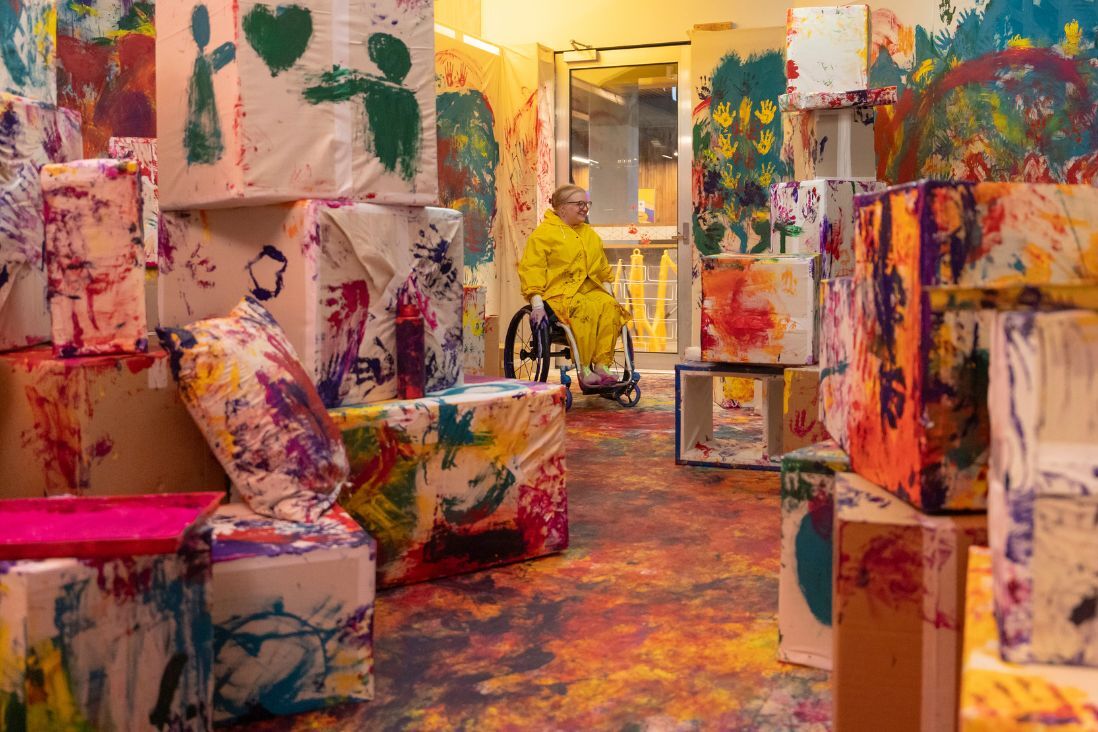
‘Metropolis – A Map and a Mirror’ is a student-led, participatory artwork created by RMIT alumna and wheelchair user Rachel Shugg, co-designed with over 200 students to explore themes of accessibility, belonging, and inclusive design. Part of the Art for Social Change series, the project unfolded over two years and included immersive experiences that highlighted the invisible barriers faced by d/Deaf and Disabled communities. Additionally, it provoked the wider RMIT community to notice the marks you make. Throughh a three-stage process—body mark-making, navigating physical barriers, and witnessing a live artwork performance—the initiative challenged dominant narratives of access and redefined sustainability to include social, emotional, and cultural inclusion. The resulting 4.2-metre tactile artwork remains on public display, acting as a visual reminder of the importance of universal design and diverse voices in shaping equitable environments.
Environmental and Social Benefits
- All materials were selected for their low environmental impact, including unbleached calico, water-based paints, and reusable smocks. The project eliminated single-use items and sourced local, vegan catering. Leftover supplies were redistributed for future inclusive events, aligning with circular economy practices.
- Social benefits included co-creating safe spaces for expression, prioritising cultural safety, and building a connected student community. Paid roundtables, workshops, and inclusive art-making empowered students with lived experience and built a support network that continues today.
- Accessibility was embedded from design to delivery—participants’ access needs were met proactively, with solutions like wheelchair-safe painting methods and Auslan support. This enabled equitable participation and built confidence among both artists and volunteers.
Leadership and Engagement
- Led by a Disabled artist with lived experience, the initiative shifted power structures by embedding access into leadership and decision-making. The project champion, RMIT Student Union’s (RUSU) Disability and Carers Officer Samuel Coombs, ensured authentic representation throughout.
- Over 200 students participated, alongside 46 student facilitators as creative volunteers. Staff across Student Life, RMIT Creative, Sustainability, and Student Equity and RUSU collaborated, demonstrating whole-of-university engagement.
- The artwork now serves as an experiential learning site, featured in international campus tours and highlighted in RMIT’s IDEA Framework as a model for inclusive student engagement.
Significance to the Sector
- Metropolis represents a scalable model of inclusive, experiential learning that integrates lived experience into campus transformation. It redefines placemaking by centring the needs and insights of disabled communities.
- It connects sustainability and inclusion, challenging institutions to expand their definitions of sustainable practice.
- With documented methodology, partner engagement (e.g. Arts Centre Melbourne), and sector recognition, it is ready for replication across other institutions nationally and internationally.
Wider Societal Impact
- Positioned disability as a driver of innovation in design, sustainability, and community building, encouraging public and policy conversations about inclusion.
- Humanised disability through participatory art, fostering allyship, empathy, and systemic change beyond campus.
- Inspired the shift from one-off fixes to systemic, holistic design practices—proving that inclusive design benefits everyone and should be a standard, not an exception.
Top 3 learnings
Supported by
Category finalists

Diversity Equity & Inclusion
Diversity Equity & Inclusion

Diversity Equity & Inclusion
Diversity Equity & Inclusion
Diversity Equity & Inclusion category
‘Metropolis – A Map and a Mirror’ is a student-led, participatory artwork created by RMIT alumna and wheelchair user Rachel Shugg, co-designed with over 200 students to explore themes of accessibility, belonging, and inclusive design. Part of the Art for Social Change series, the project unfolded over two years and included immersive experiences that highlighted the invisible barriers faced by d/Deaf and Disabled communities. Additionally, it provoked the wider RMIT community to notice the marks you make. Throughh a three-stage process—body mark-making, navigating physical barriers, and witnessing a live artwork performance—the initiative challenged dominant narratives of access and redefined sustainability to include social, emotional, and cultural inclusion. The resulting 4.2-metre tactile artwork remains on public display, acting as a visual reminder of the importance of universal design and diverse voices in shaping equitable environments.
Top 3 learnings
Environmental and Social Benefits
- All materials were selected for their low environmental impact, including unbleached calico, water-based paints, and reusable smocks. The project eliminated single-use items and sourced local, vegan catering. Leftover supplies were redistributed for future inclusive events, aligning with circular economy practices.
- Social benefits included co-creating safe spaces for expression, prioritising cultural safety, and building a connected student community. Paid roundtables, workshops, and inclusive art-making empowered students with lived experience and built a support network that continues today.
- Accessibility was embedded from design to delivery—participants’ access needs were met proactively, with solutions like wheelchair-safe painting methods and Auslan support. This enabled equitable participation and built confidence among both artists and volunteers.
Leadership and Engagement
- Led by a Disabled artist with lived experience, the initiative shifted power structures by embedding access into leadership and decision-making. The project champion, RMIT Student Union’s (RUSU) Disability and Carers Officer Samuel Coombs, ensured authentic representation throughout.
- Over 200 students participated, alongside 46 student facilitators as creative volunteers. Staff across Student Life, RMIT Creative, Sustainability, and Student Equity and RUSU collaborated, demonstrating whole-of-university engagement.
- The artwork now serves as an experiential learning site, featured in international campus tours and highlighted in RMIT’s IDEA Framework as a model for inclusive student engagement.
Significance to the Sector
- Metropolis represents a scalable model of inclusive, experiential learning that integrates lived experience into campus transformation. It redefines placemaking by centring the needs and insights of disabled communities.
- It connects sustainability and inclusion, challenging institutions to expand their definitions of sustainable practice.
- With documented methodology, partner engagement (e.g. Arts Centre Melbourne), and sector recognition, it is ready for replication across other institutions nationally and internationally.
Wider Societal Impact
- Positioned disability as a driver of innovation in design, sustainability, and community building, encouraging public and policy conversations about inclusion.
- Humanised disability through participatory art, fostering allyship, empathy, and systemic change beyond campus.
- Inspired the shift from one-off fixes to systemic, holistic design practices—proving that inclusive design benefits everyone and should be a standard, not an exception.
Supported by
Category finalists
Diversity Equity & Inclusion
Diversity Equity & Inclusion
Diversity Equity & Inclusion
Diversity Equity & Inclusion